Measurement software with a new look
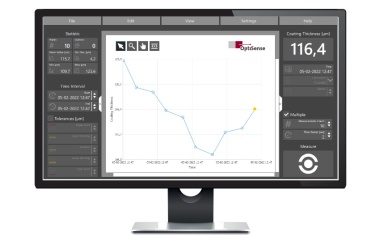
08.04.2022 - Optisense has given the measurement software OS Manager a completely new interface.


08.04.2022 - Optisense has given the measurement software OS Manager a completely new interface.
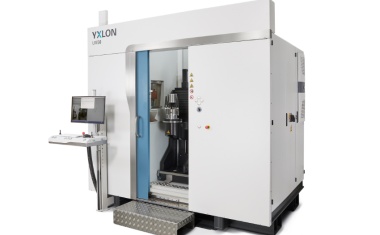
08.04.2022 - Yxlon 's UX50 computed tomography system was specially developed for the production environment and is primarily intended for use in the automotive and foundry industries.
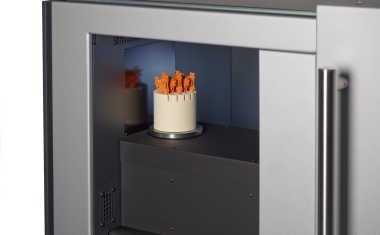
08.04.2022 - With the Tomoscope XS FOV 500 from Werth Messtechnik, high-performance computed tomography is now available at the price of conventional 3D coordinate measuring machines.
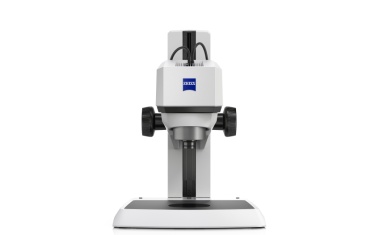
08.04.2022 - Zeiss and Vision Engineering have developed the Deepfocus 1 in cooperation.
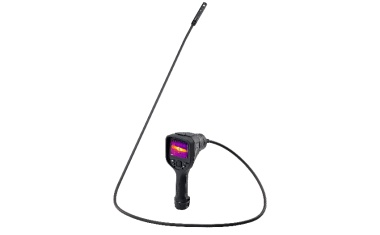
08.04.2022 - Teledyne FLIR introduces two additions to the VS290 thermal and visual industrial videoscope family - the VS290-33 thermal videoscope kit with MSX and the VS290-21 thermal videoscope kit.
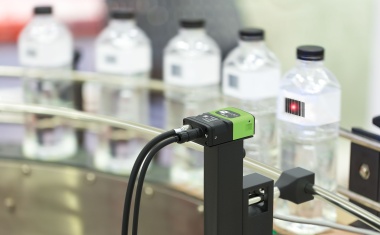
With a family of stationary barcode readers, logistics specialist Zebra Technologies offers users powerful options for effective material flow. They reduce manual effort and make a significant contribution to ensuring that track-and-trace processes run smoothly.
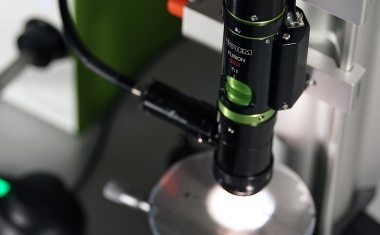
Technologies like MEMS and Silicon Photonics benefit from the extended capabilities of SWIR microscopy. A Whitepaper from Qipotiq explores applications like semiconductor inspection and fluorescence microscopy in further detail and how SWIR microscopes, like the Optem FUSION modular microscope, offer a flexible advantage in SWIR imaging.
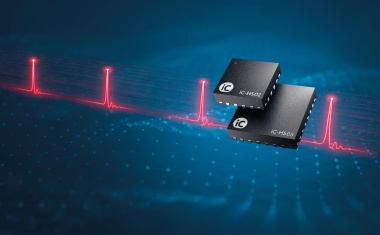
Precise TOF distance measurement, short-range lidar sensors, 3D scanners or laser-induced fluorescence spectroscopy: these are the core applications of the iC-HS laser driver series from iC-Haus.
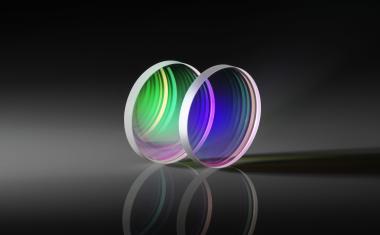
Edmund Optics (EO) has added new optics designed for extreme ultraviolet (EUV) to its portfolio.
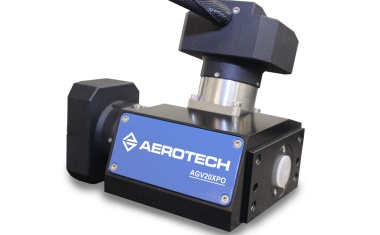
Aerotech has introduced the AGV-XPO. The highly dynamic, 2-axis laser scan head combines low-inertia, highly efficient motors with ultra-high-resolution position feedback and optimized structural dynamics.
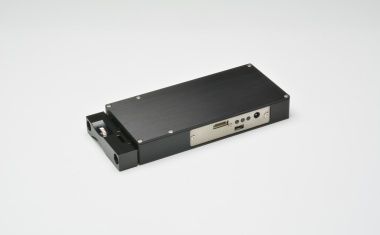
Hamamatsu's C15471 is a mini Raman spectrometer module with a laser diode that provides 50 mW of power. The tripling of power compared to the previous model enables more accurate measurement results at lower concentrations of Raman-active molecules, especially for non-polar substances.

CMOS is becoming increasingly popular, but CCD is far from obsolete. When does which image sensor technology make sense and where do both play out their advantages? So far, CCD sensors still impress with higher image quality and lower noise, whereas CMOS sensors score in terms of energy consumption and smear and blooming effects. With more choice of global shutter sensors, CMOS continues to catch up.
Matrox Imaging has introduced version 2109 of its Design Assistant X vision software. It is available in Germany and Austria through Rauscher.
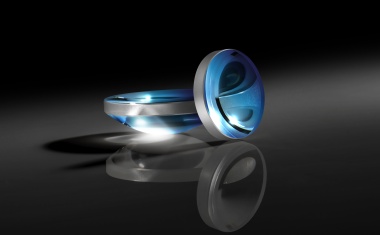
Edmund Optics, a manufacturer and supplier of optical components, has added new aspheres to its product line. The product expansion includes the Techspec series of double-sided aspheres, which are suitable for imaging, and the same series' precision aspheres for the near-infrared spectrum, which offer very high imaging quality.
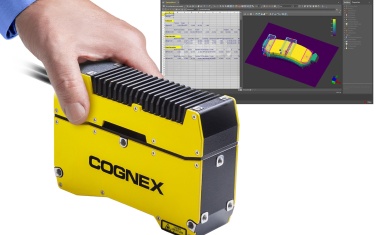
Cognex introduces the In-Sight 3D-L4000 integrated vision system. Equipped with 3D laser profiling technology, this intelligent camera enables engineers to solve a range of inspection applications in automated production lines.
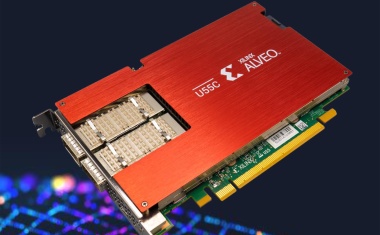
Xilinx has introduced the Alveo U55C data center accelerator card and a new standards-based, API-driven clustering solution for FPGA deployments.
Teledyne Dalsa's Linea HS 16k multifield TDI camera is now in volume production. The Linea HS 16K Multifield can simultaneously capture up to three images with light sources of different wavelengths in a single shot.
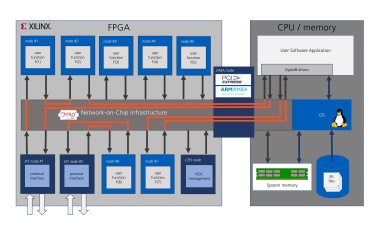
Aries Embedded simplifies and accelerates the use of the Miami FPGA modules with the new version of the FPGA tool Dyplo 2.0 from Topic Embedded Systems.
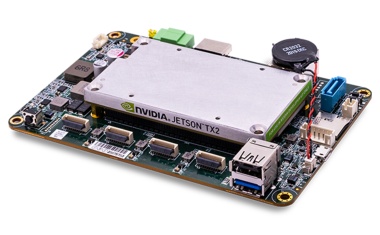
Teledyne Flir's new Quartet TX2 carrier board enables four high-performance USB3 board-level cameras to be streamed simultaneously at full bandwidth.
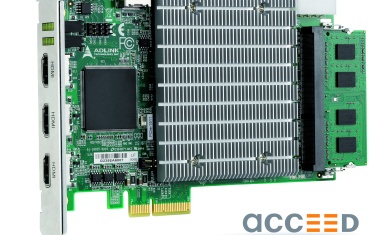
The new high-performance card PCIe-HDV72 available from Acceed in PCI Express x4 Gen2/3 format supports HDMI 2.0 and thus lossless image transmission in 4K or Ultra HD.

Macnica ATD now offers Sony's event-based vision sensor (“EVS”). The two sensors IMX636 and IMX637 were made possible through the cooperation between Sony and Prophesee, another distribution partner of Macnica ATD Europe.
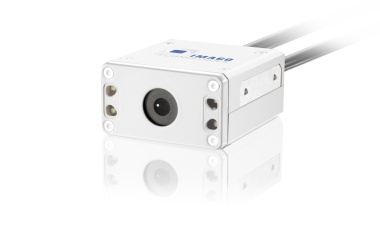
With the Industrial Dashcam, Imago Technologies has developed a new solution for observing industrial processes and thus enables effective condition monitoring to optimize processes in a wide variety of industrial applications.
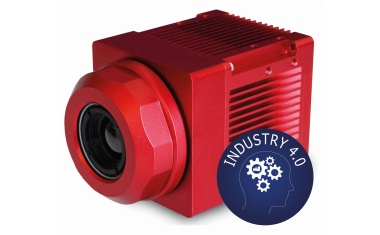
An intelligent infrared camera speaks for itself. It talks about its range of applications in thermal process monitoring in industry, as well as certain evaluation functions.
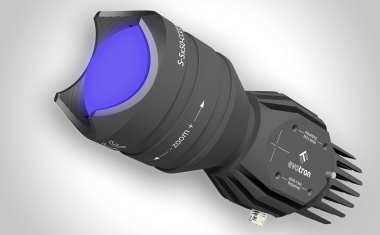
Evotron expands the product portfolio: In the area of high-performance LED spot lighting, the S-5x50 product series, which is equipped with Lumisens technology, is added.
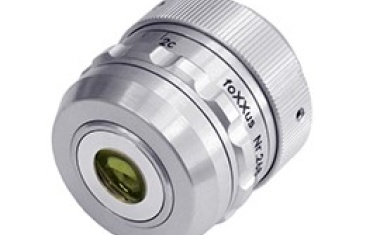
Edmund Optics has expanded its offering with two new lens series from AdlOptica, which enable new applications in the field of laser optics.
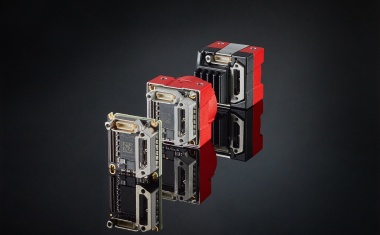
Allied Vision is equipping its Alvium 1800 U camera series with three additional fourth-generation Sony IMX sensors with Pregius S global shutter technology.
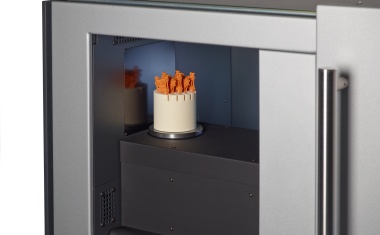
With the Tomoscope XS FOV 500 from Werth, high-performance computed tomography is now available at the price of conventional 3D coordinate measuring machines.
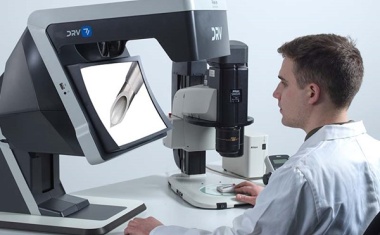
Vision Engineering has announced a new product combination alongside Nikon's stereo microscopes, aiming to expand its range of inspection microscopy systems with a new higher magnification 3D digital inspection solution.
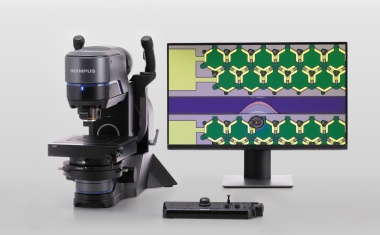
The new software from Olympus for the DSX1000 now extends the digital microscope with measurement functions and improves user-friendliness.
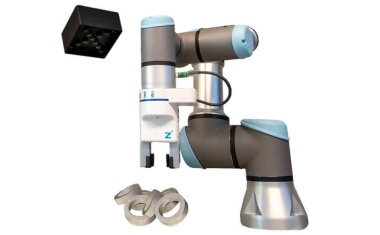
HD Vision Systems is now also offering its own bin picking solution on UR+, the automation platform from robot manufacturer Universal Robots.
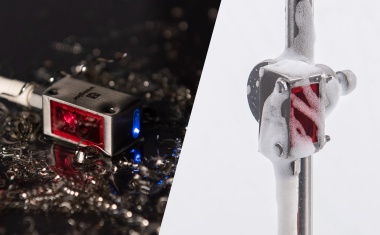
Type 2K photoelectric sensors are the latest members of Wenglor's PNG Smart product line.
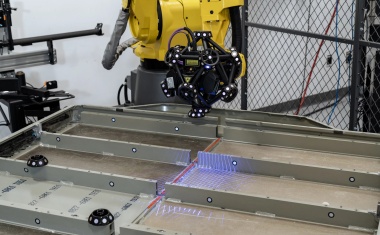
Creaform introduces additions to the R-Series product line, including the new Metrascan-R Black Elite HD 3D scanner with improved performance and a new version of VXelements designed for Long Term Support (LTS).
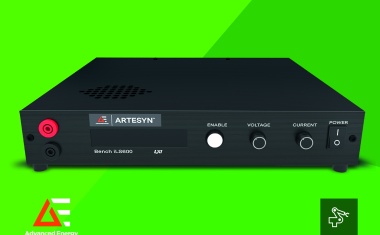
Emtron is expanding its range of high-quality and innovative power supplies with the intelligent and programmable iLS laboratory power supply series from the manufacturer Advanced Energy.
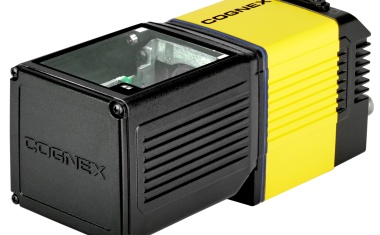
Cognex has launched a high speed steerable mirror.Designed for use with the Dataman 470 barcode reader, this patented technology streamlines barcode scanning and reading across large fields of view in a single, compact system.
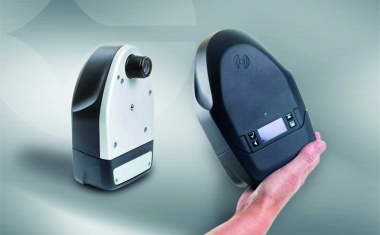
The HSC-2 hyperspectral cameras from Finnish manufacturer Senop are frame-based and provide snapshot images in the VNIR spectral range with up to 1,000 narrow spectral bands.