Microspectrophotometer in Practice
During a three-day Open House in Unterschleißheim near Munich, Optoprim Germany and Craic Technologies demonstrated integrated UV–visible–NIR and Raman microspectroscopy under real research conditions
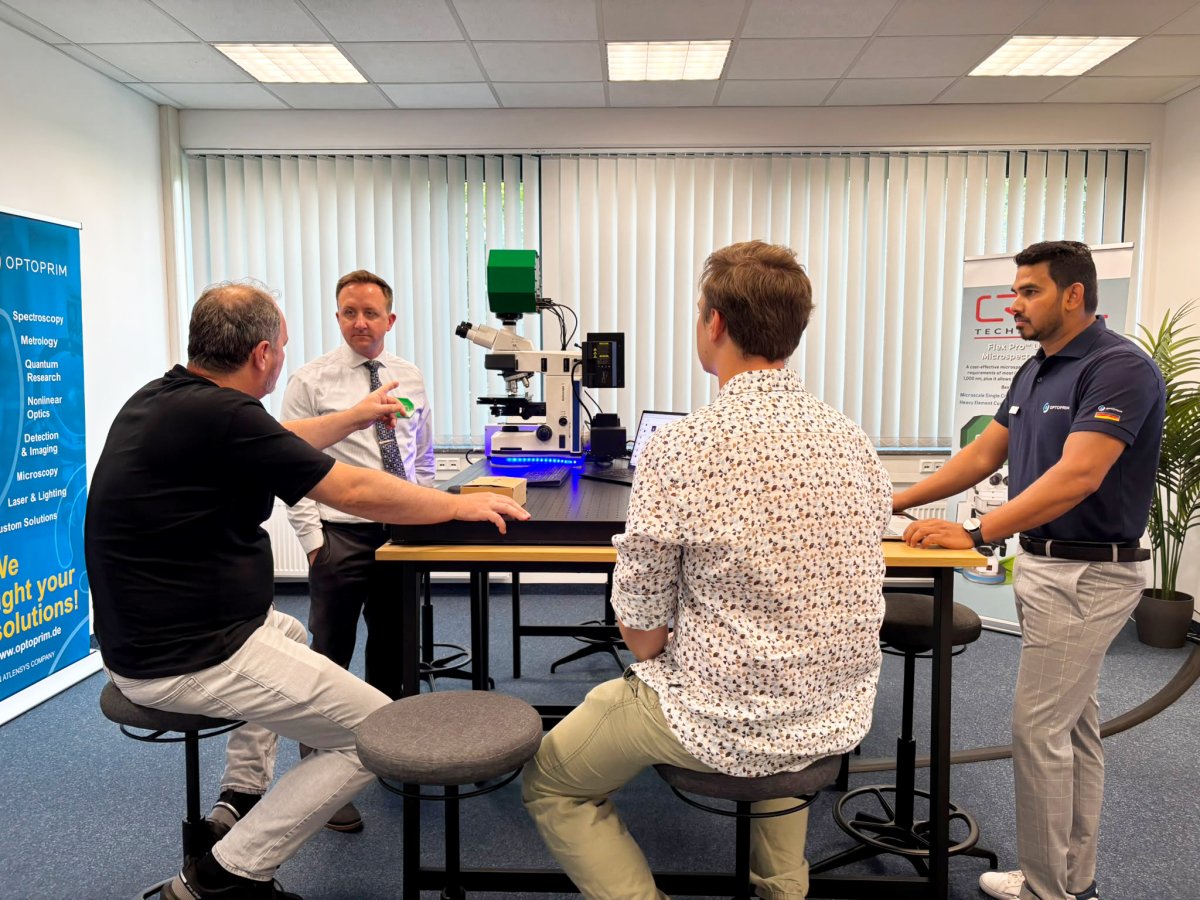
Researchers from across different European countries analyzed their own samples from a wide range of applications, including actinide chemistry, anti-reflection and laser-diode coatings, mineralogy, forensic science, and more.
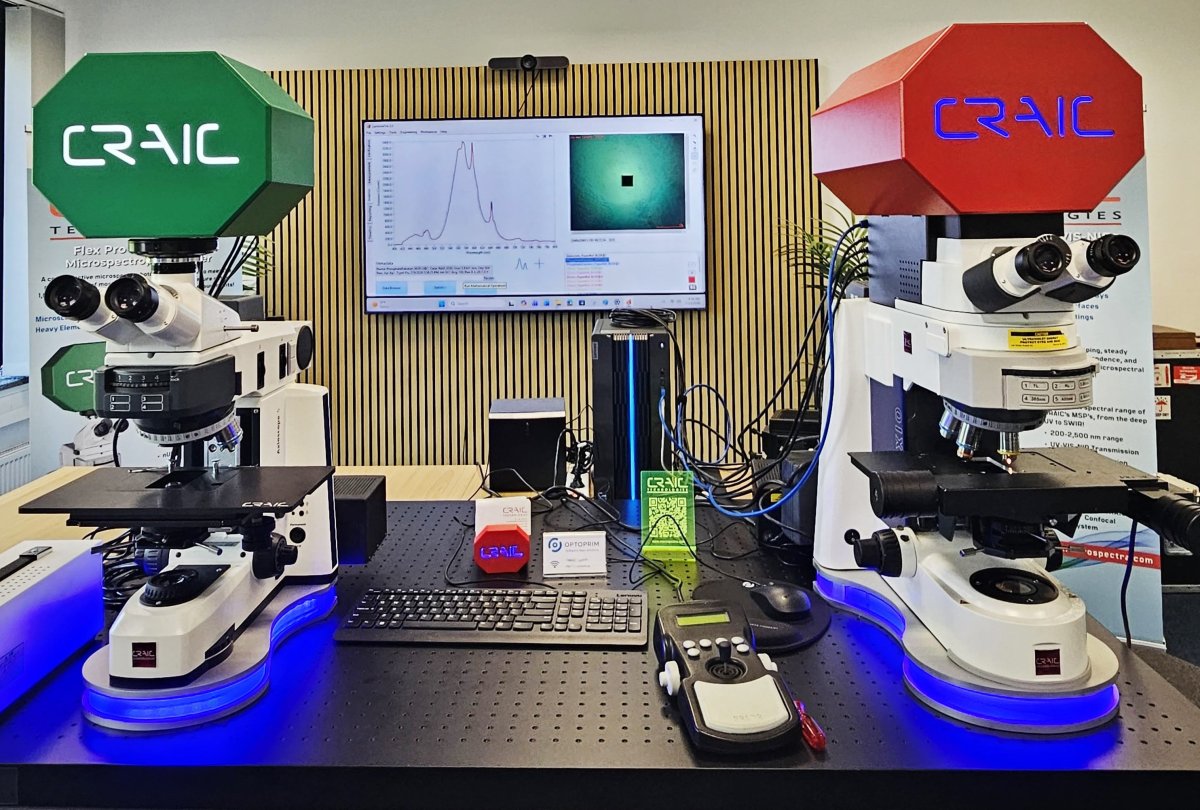
As materials and devices become increasingly sophisticated, researchers require analytical techniques capable of providing reliable spectral information from microscopic sample areas. To demonstrate how integrated UV–visible–NIR and Raman microspectroscopy can address these challenges, Optoprim Germany and CRAIC Technologies hosted a three-day Open House in Unterschleißheim near Munich. Technical presentations, live demonstrations, and application-focused measurements were performed using the Craic 2030PV PRO microspectrophotometer. Covering a spectral range from 200 to 2,500 nm and enabling measurements from areas as small as 1 × 1 µm² up to 100 × 100 µm², the system supports non-destructive characterization from the deep ultraviolet to the near infrared. Participants were invited to investigate their own samples, allowing them to evaluate the technology directly under real conditions.
International expertise and application-driven exchange
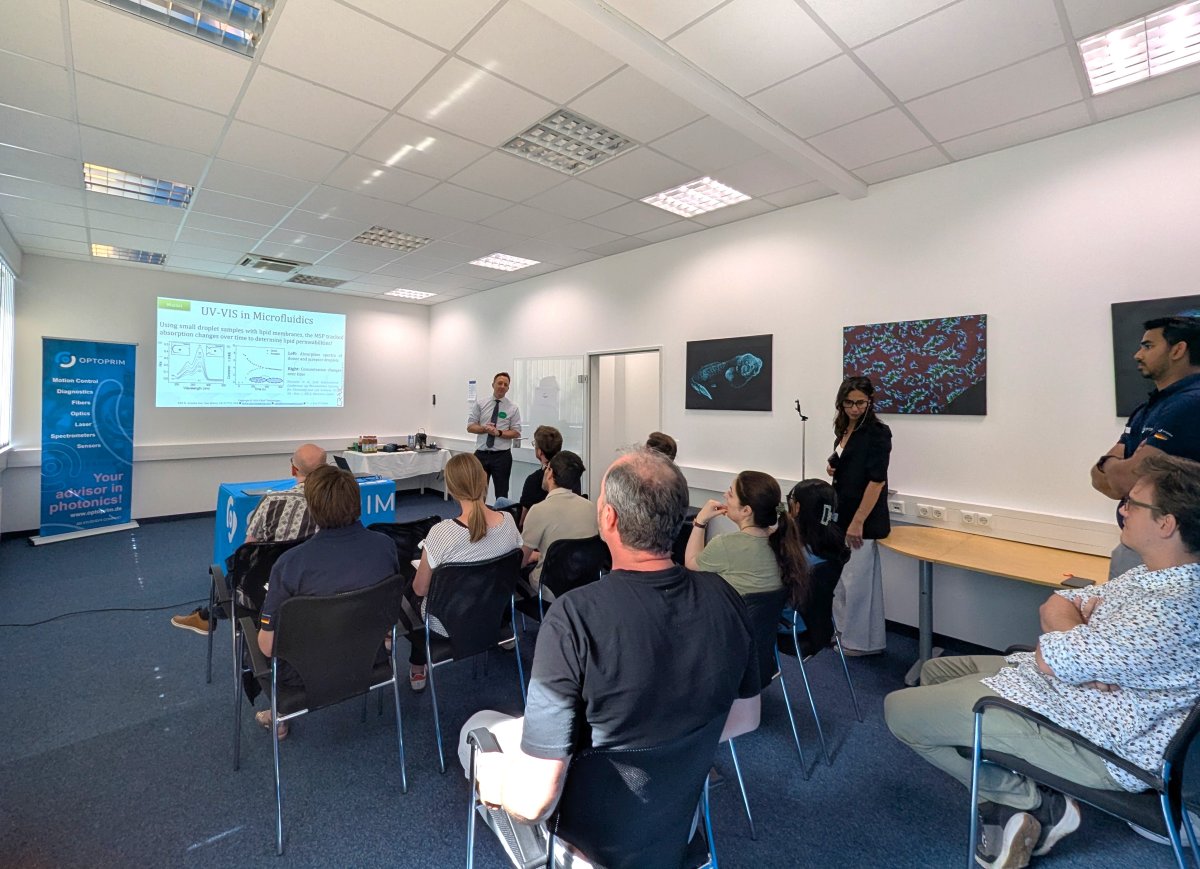
The event was organized as a focused scientific conference, bringing together researchers and application specialists from Germany, Switzerland, Austria, Italy, and Denmark. Representatives from universities, research institutes, and industrial R&D organizations presented their latest research, showcased application case studies, and exchanged ideas on current analytical challenges. Although their work covered diverse scientific fields, they shared a common objectives: identifying robust analytical methods for the characterization of increasingly complex materials and microstructures.
The samples reflected the broad applicability of the microspectrophotometer. Demonstrated applications included actinide chemistry, anti-reflection and laser-diode coatings, lysozyme protein crystals, uranium borate fluorescence, organic semiconductors, gemstone characterization, contamination analysis, mineralogy and forensic science. Together, these examples illustrate how a single analytical tool can support research ranging from fundamental materials science to industrial quality assurance.
Unlike conventional product demonstrations, participants analyzed their own samples and discussed measurement techniques directly with application specialists. This enabled a realistic assessment of the instrument's capabilities for current and future research projects while promoting scientific exchange between participants.
The practical sessions were supported by Dr. Jonathan Burdett, Application Specialist at Craic Technologies (USA), and Kashif Mazhar, Technical Sales Engineer at Optoprim Germany, who provided technical guidance on measurement methodologies and data interpretation.
One platform, multiple measurement modes
A clear trend in modern materials analysis is the growing demand for non-destructive spectroscopic measurements over a broad wavelength range. Driven by increasing component miniaturization, complex coating systems, and new semiconductor materials, laboratories require solutions that combine UV–VIS–NIR spectral analysis with high spatial resolution. Microspectrophotometry addresses this need by enabling precise characterization of microscopic structures without damaging the sample.
The Craic 2030PV PRO combines UV–visible–NIR and Raman microspectroscopy within a single platform. It acquires spectra and microscopic images while supporting transmission, absorbance, reflectance, fluorescence, photoluminescence, polarization and Raman measurements on micro-scale samples. Additional software modules enable thin-film thickness measurements, spectral mapping, quantitative color analysis and automated characterization of larger samples. By integrating complementary techniques into one reproducible workflow, the system reduces sample handling and provides comprehensive analytical information for advanced materials research and industrial applications.