

Photonics West’s in-person return to San Francisco
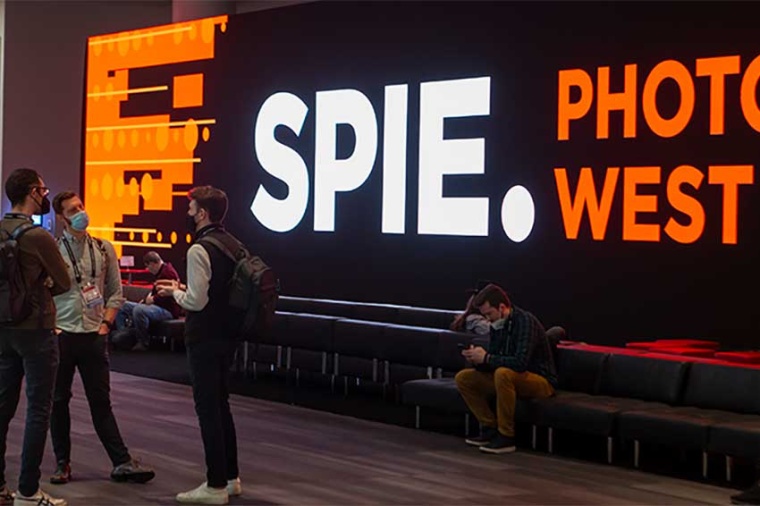
The largest annual photonics conference and exhibition, including its Bios, Lase, and Opto symposia and the AR|VR|MR conference, garnered more than 10,000 registered attendees, hosted more than 950 exhibitors, and included 2,100 technical presentations from 22 to 27 January.
After a two-year hiatus, SPIE had looked forward to once again host its flagship event Photonics West, requiring proof of vaccination and wearing of masks for all attendees following the local regulations and national guidelines for hosting an event of such a size.
“We very much appreciate all the support from exhibitors, attendees, volunteers, and presenters who truly made the event a success,” said SPIE’s CEO Kent Rochford. “Everyone embraced San Francisco’s health and safety protocols, resulting in a safe meeting. There’s nothing like coming home to Photonics West, and the enthusiasm we witnessed throughout the week proves that there is nothing like in-person events.”
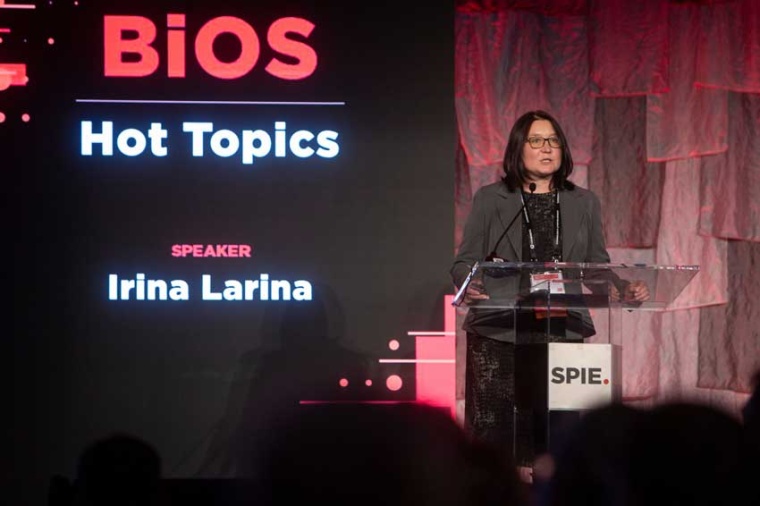
Across Lase, Opto, and Bios, plenary speakers included Irina Larina of Baylor College of Medicine; Aydogan Ozcan of the University of California, Los Angeles; Shy Shoham of New York University; Lihong Wang of Caltech; Andrea Blanco-Redondo of Nokia Bell Labs; Michael Kues of Leibniz University Hannover; and Tammy Ma of Lawrence Livermore National Laboratory.
With the Prism Awards 2022 honoring the top new optics and photonics products on the market and the dynamic Startup Challenge pitch competition, SPIE Photonics West showcased and recognized the best optics and photonics technologies, trends, and entrepreneurial opportunities. The brand-new SPIE Career Hub offered four days of professional development panels, tips, and networking opportunities. In addition, Quantum West – organized in partnership with the Quantum Economic Development Consortium (QED-C) – featured experts and invited speakers discussing market prospects and the path toward a quantum-focused commercial ecosystem, complementing the strong technical program. And, during a special event, SPIE and the University of Rochester announced the establishment of the 1-million-dollar SPIE Graduate Fellowship in Optical Sciences and Engineering.
Following the in-person week, on-demand access to the conference presentations will be available for all paid attendees between 21 and 27 February as part of an extended SPIE Photonics West on-demand program. The nearly 3,000 online presentations will include those recorded live during Photonics West, as well as pre-recorded presentations from authors who were unable to travel or attend in person. In addition to the conference recordings, posters and poster preview videos and all recorded plenary and keynote presentations will be available for viewing. Registration is also available for anyone who could not attend or participate and would like to access the event’s on-demand content.
SPIE Photonics West 2023 will take place 28 January to 2 February at the Moscone Center in San Francisco. The call for papers for the 2023 event will open in spring of 2022.
Company
SPIEPO Box 10
Bellingham WA 98227-0010
US




most read

ZVEI Calls for Swift Protection of Critical Power Infrastructure
The association has issued a statement in response to the recent attempted attacks on substations in Brandenburg and North Rhine-Westphalia and warns of the consequences for Germany's energy security.

Solid-State Transformers for AI Data Centers
As part of a strategic partnership, Siemens and Reinhausen are developing a solid-state transformer for AI data centers with an 800-volt DC system.
Siemens Consolidates Its Automation Business into a New Unit Called Automation
Rainer Brehm, who previously served as COO of the automation business and CTO of Digital Industries, was appointed president of the new unit.
Schaeffler bundles Defense and New Space activities under new CEO
Celia Pelaz takes over the position of CEO Defence & New Space at Schaeffler on October 1, 2026 and becomes Chairwoman of the Management Board of Stech Defence GmbH.
Vision 2026 Breaks Exhibitor Record
About 500 exhibiting companies—about two-thirds of which are from abroad and about 30 percent of which are first-time exhibitors—are showcasing their products at the trade show.