Shaping the Future of Photonics Through Innovation and Collaboration
The photonics industry is evolving rapidly as new technologies, increasing performance demands, and changing customer expectations continue to reshape the market. In this interview, Greg Hollows, Senior Vice President of Imaging & Optical Assemblies and Engineering at Edmund Optics, discusses the key trends in the photonics industry, the importance of innovation and collaboration.

Photonics is becoming increasingly important across many industries. What are the biggest trends you are seeing in photonics today?
Greg Hollows: Photonics has become an enabling technology across almost every high-tech industry. Whether it's semiconductor manufacturing, life sciences, healthcare, industrial automation, or communications, the demand for higher precision, improved performance, and greater efficiency continues to grow. These trends are driving the next generation of optical technologies.
Artificial intelligence is currently one of the biggest technology trends. How does photonics contribute to this development and what role does it play?
Hollows: AI depends on advanced computing infrastructure, but that infrastructure first has to be manufactured with extreme precision. Photonics plays a critical role in enabling this, supporting applications such as semiconductor manufacturing, precision inspection, and metrology. These technologies help ensure the quality and reliability of the chips and components that ultimately power AI systems and data centers. As AI continues to evolve, advances in photonics will remain essential throughout the entire technology supply chain.
As technology moves forward, user expectations are changing as well. Can you explain how?
Hollows: Performance expectations continue to increase, creating demand for solutions that are both highly capable and easy to implement. Customers are looking more and more for complete solutions that simplify system design while delivering higher performance and reliability.
How is the industry responding to these changing requirements?
Hollows: Today's customers expect suppliers to provide more than individual components. They are looking for partners with strong engineering expertise, manufacturing capabilities, and the ability to support complete system development. At Edmund Optics, we continue to invest in these capabilities to help customers solve complex optical challenges.
Speaking of advanced manufacturing capabilities: Edmund Optics is known for its broad optics and photonics portfolio, but today the company also invests heavily in advanced manufacturing. What role does advanced manufacturing play in the future?
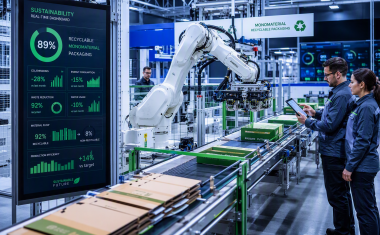
Hollows: As optical systems grow more sophisticated, advanced manufacturing is becoming a key enabler of innovation. It allows new optical technologies to move from concept to production while maintaining the precision and quality customers expect. Capabilities such as precision assembly, advanced metrology, and automated manufacturing will become increasingly important as product complexity continues to grow.
Given the changing customer requirements and the rapid pace of technological innovation, how do you decide which trends are worth investing in?
Hollows: It's important to distinguish between long-term opportunities and short-term hype. We focus on understanding where customer requirements are heading rather than reacting to every new trend. That also means looking beyond today's technologies and identifying the capabilities customers are likely to need in the years ahead. Sometimes, knowing what not to pursue is just as important as identifying the next opportunity, allowing us to focus our investments where they can create the greatest long-term value.
How important is collaboration with customers, universities, and technology partners in driving future innovation?
Hollows: It is very important. I believe innovation starts with listening. Some of our best ideas come from conversations with customers about the challenges they're trying to solve. We also learn a great deal by staying active in the market, whether that's through trade shows, industry associations, or ongoing discussions with customers. Bringing all of those insights together helps us identify future needs and guides our innovation roadmap.
Photonics serves a wide range of industries, each with its own challenges and requirements. How can companies address these diverse application needs while maintaining a consistent innovation strategy?
Hollows: Many customers use similar optical technologies but apply them in very different industries and applications. By listening closely to customers and identifying common trends and evolving requirements across different applications, we can build capabilities that address a broad range of needs and at the same time maintain a focused long-term innovation strategy. While we can and do develop application-specific solutions, we also invest in capabilities that create value across many industries.
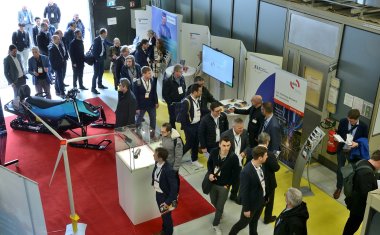
The Vision trade fair in Stuttgart is one of the most important events for the machine vision industry. Which technology trends do you expect to shape this year's show, and what should visitors keep an eye on?
Hollows: Vision has always showcased a wide range of technologies, but the central focus of just factory automation has been shifting for the better part of a decade. We will see more growth and implementations across a wider wavelength range from UV to LWIR, serving applications in life sciences, mobility, and security to name a few. I expect these areas to be more prominently represented with products and services at the trade fair.
Additionally, I feel that speed will continue to be a driving force behind the product developments shown at the event. This goes beyond the sensor and camera and through all other aspects of the system from software, to optics, to illumination. From a business perspective, we have seen a lot of growth and consolidation, as well as changes to many traditional players in the market, I expect to see enhanced visions from a number of these companies as they look at their future directions in imaging.