Powerful in operation, intelligent in collaboration
How Faulhaber Drive Systems Are Bringing Humanoid Robotics Closer to Everyday Use
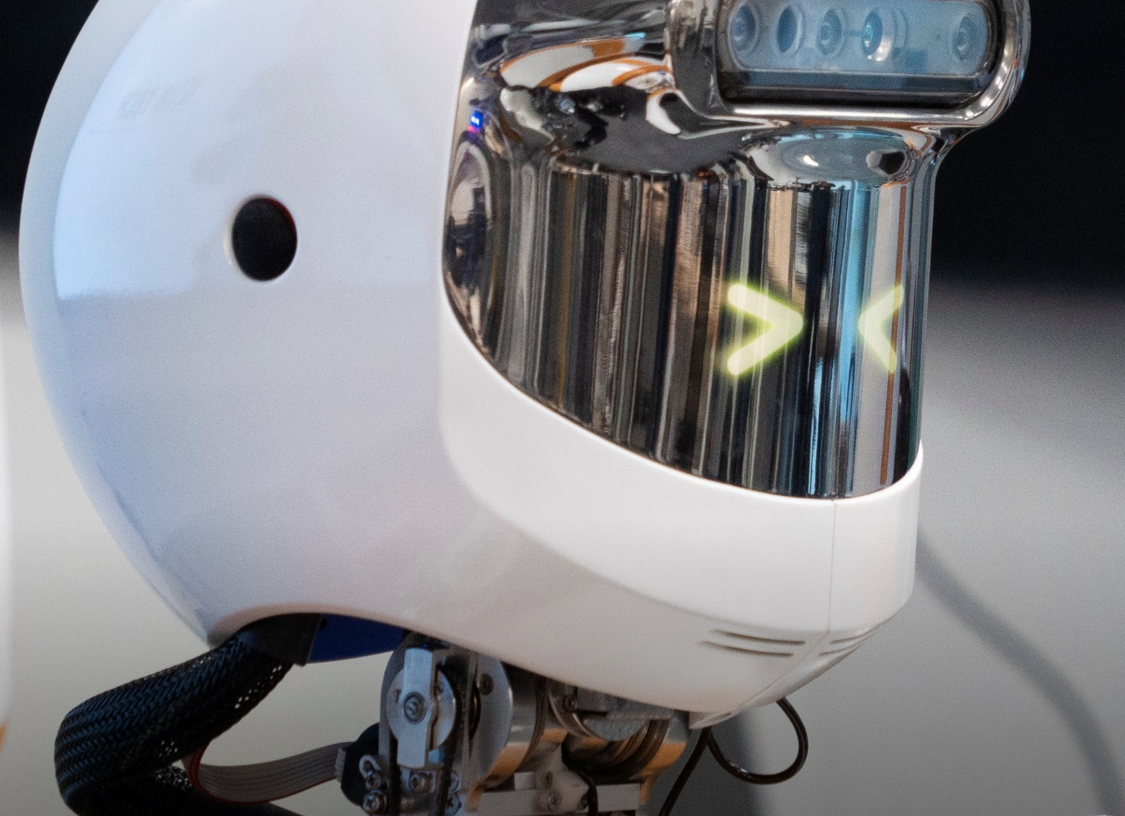
A humanoid robot designed to provide support wherever physical strength and helping hands are required – this was the guiding vision behind the development of ergoCub. The goal is to deploy it in practical, real-world applications, enabling it to take over tasks that are physically demanding or potentially hazardous for humans.
The robot functions as a versatile system intended for a wide range of use cases, with a particular focus on collaborative scenarios. ergoCub is not conceived as an isolated machine, but as a flexible partner that adapts to changing requirements and actively supports human operators. Its mobility and precision are enabled in part by Faulhaber drive systems, which ensure dynamic and finely tuned motion sequences in the neck and forearms.
Standing 1.50 m tall and weighing just under 60 kg, and equipped with integrated artificial intelligence, ergoCub was conceived as a holistic system from the outset. Rather than solving a single isolated technical task, it is designed as a multifunctional assistant that can flexibly adapt to different working environments and actively support humans. The project originated from a strategic collaboration between the Istituto Italiano di Tecnologia (IIT) in Genoa and the Istituto nazionale per l’assicurazione contro gli infortuni sul lavoro (INAIL) in Rome, addressing a key concern of modern occupational safety: the prevention of workplace accidents, as well as widespread musculoskeletal and connective tissue disorders. As the successor to an earlier platform, ergoCub specifically focuses on the requirements of human–robot collaboration. In line with the principles of Industry 5.0, it is intended to act as a proactive “co-worker” that recognizes human needs, reduces fatigue, and anticipates potential errors at an early stage.
Where Drive Systems Enable Motion
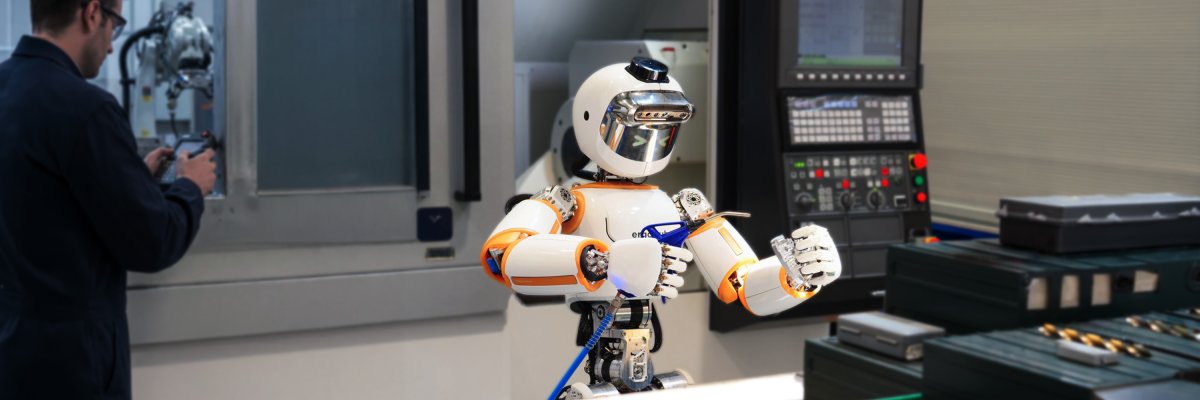
The human-like appearance of ergoCub consistently reflects the concept of a “humanoid” system. Its locomotion is based on natural human walking patterns and is complemented by advanced orientation capabilities derived from a combination of sensors and AI. Functional arms and hands enable precise grasping and handling of objects. The bipedal design takes ergonomic aspects into account, minimizing energy consumption while ensuring smooth and natural motion sequences. For this reason, particular emphasis was placed on performance and compactness when selecting and integrating the drive systems.
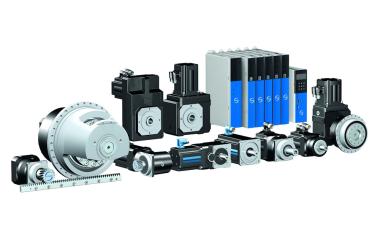
Faulhaber components are used precisely where precision, minimal installation space and dynamic performance are critical: in the robot’s forearms and neck. Two different motor sets are integrated into the forearms: one controls finger opening and closing via a cable-driven mechanism, while the second drives a spherical parallel wrist mechanism, enabling complex and finely controlled movements.
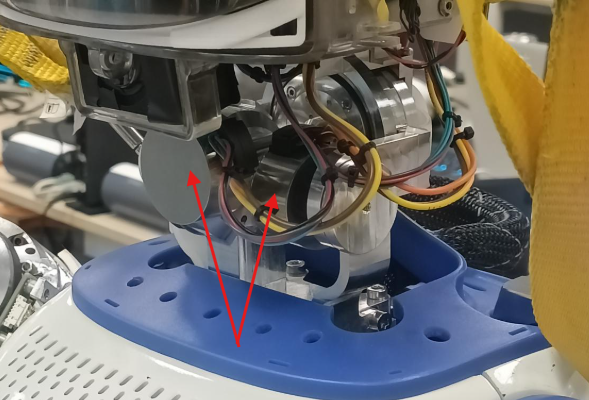
The neck, in contrast, is designed as a serial mechanism and requires particularly efficient use of the limited installation space. Here, the external rotor motors of the BXTH series have proven highly effective, delivering high power density despite their compact dimensions. This made it possible to replace a previously used cable-based mechanism with a more powerful and fully integrated solution.
Why Faulhaber: Reliability in Every Movement
The decision to use Faulhaber was based on a combination of technical and practical criteria closely aligned with the requirements of humanoid robotics. Lorenzo Protopapa, Chief Mechanical Engineer of the facility Mechatronics for Embodied Systems and Humanoids at IIT, explains:
“One decisive factor for us was the high torque-to-size ratio, which allows powerful actuators to be integrated into the highly constrained joint structures of a humanoid system. Equally important were the high reliability and consistent performance of the components, as we work with long-duration test series and iterative development cycles.”
The availability of integrated solutions combining motors, gearheads and encoders was another key advantage, significantly simplifying system integration. Furthermore, the smooth and precise motion characteristics of the drives contribute to safe and natural interaction between humans and robots. Last but not least, technical support played a crucial role by providing essential assistance in selecting, designing and adapting components throughout the development phase.
How Humans and Robots Work Together
Thanks to its human-like design, advanced sensory capabilities, and the option to interact via wearable technologies, ergoCub can realize its full potential in complex, real-world applications. The project places strong emphasis not only on technical performance but also on human factors. The aim is for ergoCub to be perceived not as a controlling machine, but as a trustworthy and supportive partner in everyday working environments.
One potential application scenario lies in industrial and logistics environments, for example in vertically structured warehouses where conventional mobile robot systems reach their limits. In such settings, ergoCub can demonstrate its strengths in cooperative interaction, such as jointly lifting and transporting heavy loads or precisely handling complex objects. In the healthcare sector, ergoCub also opens up forward-looking perspectives. Although widespread clinical deployment is not yet in place, the robot is being developed specifically to support care and medical personnel. In physically demanding tasks such as patient handling or assisted walking, it can help reduce physical strain and improve workplace safety.
Furthermore, ergoCub enables new forms of telepresence and teleoperation by acting as an immersive robotic avatar, allowing operators to extend their perception and actions over long distances. This is complemented by collaborative assistance tasks in everyday scenarios: the robot can perform simple cooperative actions, recognize human activities, manipulate objects with both hands, and semantically understand spatial environments. In doing so, ergoCub demonstrates its ambition to serve as a versatile and integrative partner across a wide range of working and living environments.
From the Laboratory to Everyday Applications
The transition of ergoCub from a controlled laboratory environment to real industrial or medical applications marks a key milestone in its development. However, this step involves significant technological challenges.
One of the most important prerequisites is energy autonomy. The current prototype can operate wirelessly for approximately one hour using an integrated lithium-ion battery – sufficient for research and demonstration purposes. However, practical deployment as a “co-worker” in logistics or healthcare requires significantly longer and more efficient operating times.
Equally critical is ensuring safety in human–robot collaboration. At present, many humanoid systems, including ergoCub, still rely on external safety mechanisms and are not yet fully certified for unsupervised interaction with humans. For real-world deployment, it is essential that safe and reliable behavior is guaranteed even in critical situations, such as system failures or unexpected environmental changes.
In addition, further development of so-called “embodied AI” is becoming increasingly important. While modern AI approaches such as large language models or vision-language-action models significantly enhance cognitive capabilities, the challenge remains to combine these with a robust understanding of physical interactions in the real world.
Only the interplay of energy efficiency, safe interaction, and deeply embodied intelligence will enable humanoid robots like ergoCub to move beyond the prototype stage and into reliable everyday use.