Packaging Is Becoming a Strategic Task in Production
The new EU Packaging Regulation does not only affect packaging manufacturers. Production, logistics, and automation experts must also reassess their processes, materials, and equipment.
Andreas Grösslein (with AI help)
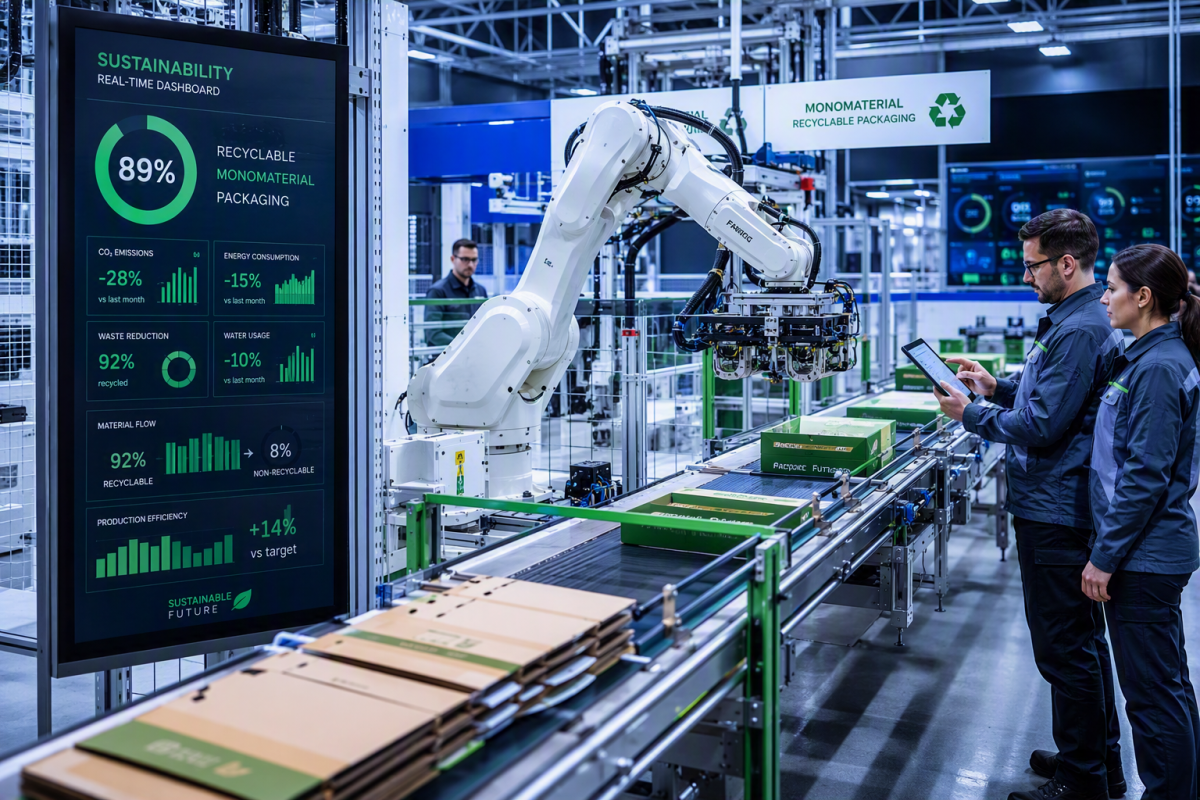
For a long time, packaging was viewed primarily as a logistical issue in many industrial companies. The new European Packaging and Packaging Waste Regulation (PPWR) fundamentally changes this perspective. The regulation aims to reduce packaging waste, strengthen the circular economy, and promote the use of sustainable materials. At the same time, it has a profound impact on existing value-chain and production processes.
Effective August 12, 2026, the PPWR will become directly applicable law in all EU member states and will replace the previous Packaging Directive 94/62/EC. This will establish, for the first time, uniform requirements across Europe for companies that manufacture, use, or place packaging on the market. For the industry, this means not only new obligations but also a significant need for adaptation along the entire supply chain.
From packaging design to production facilities
The rationale behind the new regulation is clear: the volume of packaging in Europe is growing steadily. At the same time, many types of packaging are difficult or impossible to recycle due to complex material composites. The EU is responding to this with a comprehensive set of regulations that takes into account the entire life cycle of packaging.
Of particular relevance to industrial companies is the requirement that, starting in 2030, only recyclable packaging may be placed on the market. Packaging designs based on material combinations that are difficult to separate are thus coming under increasing pressure. In the future, manufacturers must design their packaging to meet the requirements of the circular economy.
This raises the question for production managers as to whether existing packaging processes and machine designs will still meet future material requirements. New films, monomaterials, or recycled plastics may have different processing properties than the materials used to date. This affects, among other things, sealing processes, material handling, quality control, and packaging automation.
Recyclability Is Becoming a Competitive Advantage
A key aspect of the PPWR is a stronger focus on design for recycling. Packaging should be designed—as early as the development phase—to be as easy as possible to collect, sort, and recycle.
In addition, there will be mandatory minimum recycled content requirements for plastic packaging. Starting in 2030, certain types of packaging must contain a specified percentage of recycled plastics. These quotas are set to rise further by 2040. As a result, companies will become more dependent on the availability of high-quality recycled materials.
For machine builders and automation specialists, this opens up new business opportunities. Systems for material preparation, sorting, quality control, and the processing of recycled materials are likely to become significantly more important in the future. At the same time, demand is rising for flexible packaging lines capable of processing different types of materials.
Greater Transparency and New Labeling Requirements
In addition to the material requirements, the regulation also tightens information requirements. In the future, packaging must be labeled more comprehensively. The goal is to provide consumers, waste management companies, and recycling firms with relevant information.
Digital labeling could play an increasingly important role in this regard. QR codes or other digital information carriers make it possible to provide additional data on material composition, disposal, or reusability. For companies, this means further digitizing packaging and labeling processes and establishing appropriate data structures.
Here, too, the PPWR has a direct impact on industrial automation. Labeling systems, track-and-trace solutions, and digital product passports could be more closely integrated with packaging equipment and production systems in the future.
Less Material, Less Empty Space
Another key focus of the regulation is reducing unnecessary packaging volumes. The EU aims to reduce packaging volumes by 5 percent by 2030, 10 percent by 2035, and 15 percent by 2040 compared to the baseline level.
Particularly relevant for e-commerce and shipping processes is the requirement that, starting in 2030, shipping packaging may contain no more than 50 percent empty space. In the future, companies will need to tailor packaging sizes much more precisely to their products.
This increases the pressure on automated packaging and order-picking systems. Tailored packaging solutions, intelligent volume optimization, and data-driven packaging processes could thus become significantly more important.
Manufacturer Responsibility Is Growing
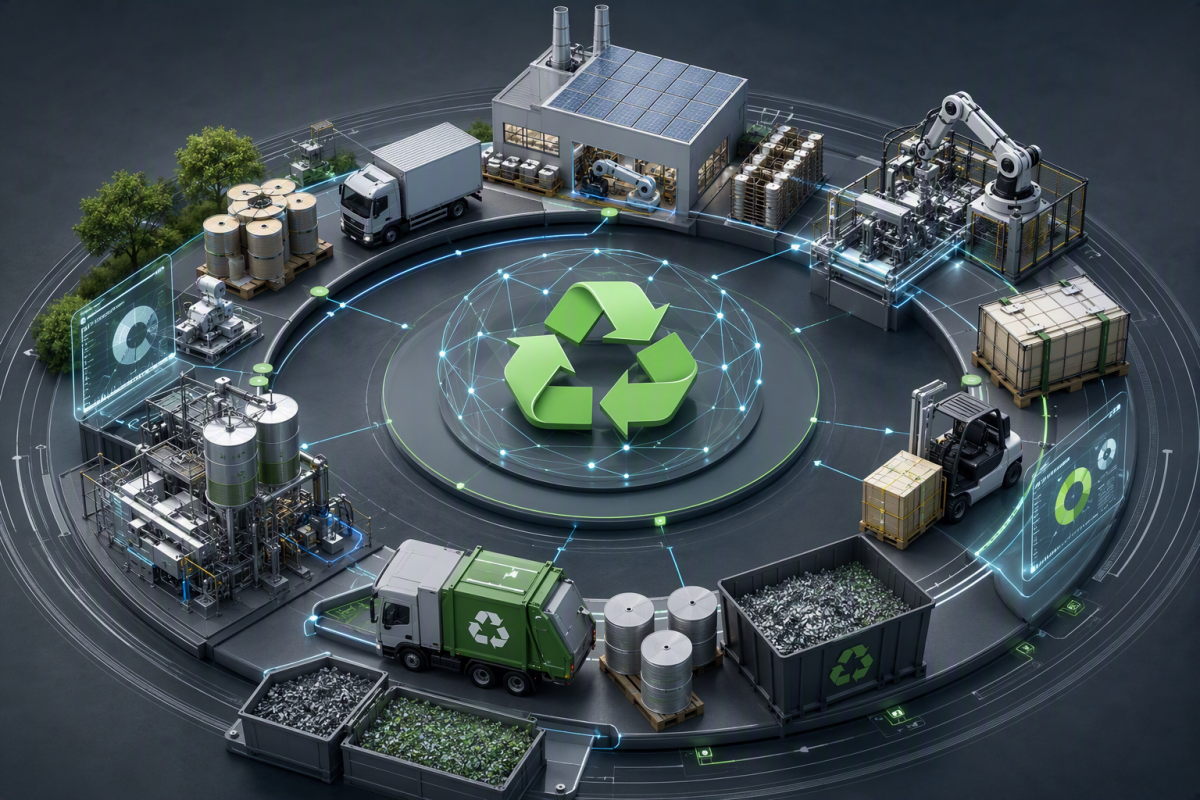
The PPWR also strengthens Extended Producer Responsibility (EPR) across Europe. Manufacturers are to be held more accountable for the collection, sorting, and recycling of their packaging.
Of particular significance here is the planned eco-based tiered fee structure. Packaging with good recyclability could offer economic advantages in the future, while problematic materials will incur higher costs. Sustainable packaging design is thus increasingly evolving from a compliance task into an economic competitive factor.
Act Now Instead of Reacting Later
Although key requirements will not take effect until 2030 or later, companies should begin preparations today. Packaging changes often require long lead times. Materials must be tested, supply chains adjusted, machinery inspected, and employees trained.
For industrial companies, it is advisable to first conduct a systematic inventory of all packaging used. Subsequently, material alternatives, recyclability, labeling requirements, and potential impacts on existing production and logistics processes should be evaluated.
The PPWR is more than just a new environmental regulation. It will serve as a driving force for innovation in packaging technologies, production systems, and automated logistics processes. Companies that act early can reduce regulatory risks while simultaneously unlocking new opportunities for efficiency and competitiveness.