Toptica increases capacity for growing workforce
North America subsidiary Toptica Photonics Inc. near Rochester, NY, has moved from its Ontario County location in Farmington to Pittsford on September 9.


North America subsidiary Toptica Photonics Inc. near Rochester, NY, has moved from its Ontario County location in Farmington to Pittsford on September 9.
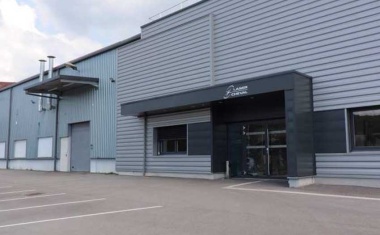
Continuing on its growth trajectory, Lasea consolidates its strong position in Switzerland and France and extends its offer in welding and marking applications.
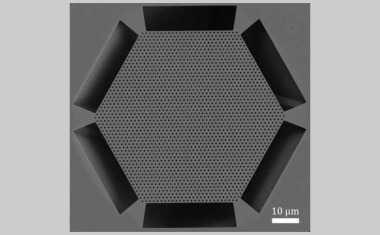
New approach to increase both size and power of a single-mode laser.
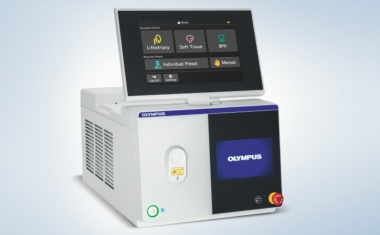
Improved treatment results in pediatric patients with urinary stones.

Approach could lead to new materials for sensing, computing, light sources and displays.
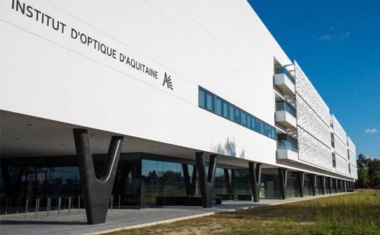
Founded in September 2021, following the Alienor collaborative project, the nascent and promising start-up Bloom Lasers innovates in the design of industrial lasers.

Laser manufacturer Luxinar has officially opened its USA office near Detroit. The team of John Podwojski, regional general manager and Dan McArthur, technical support manager welcomed guests to the regional office in Shelby Township on 22 June.

Chinese researchers studied the laser-induced damage characteristics with a self-developed KrF excimer laser.
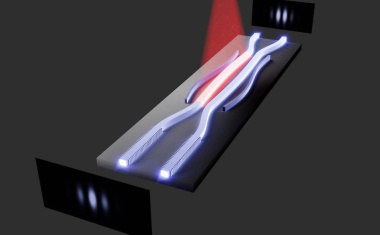
Topological concepts could potentially be used to build particularly robust, strong lasers in which you can amplify light over a long path.
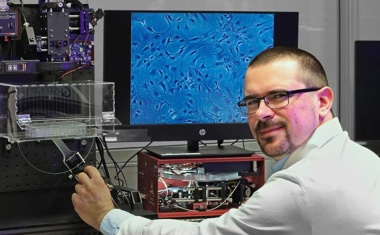
A new high-performance white-light laser is expected to speed up quality control in the semiconductor industry and provide closer monitoring of toxicity tests in microbiology. In one step, this laser enables the two-sided characterization of surfaces and can be integrated into production chains. The technology has been developed at the Fraunhofer Application Center for Optical Metrology and Surface Technologies (AZOM) and Westsächsische Hochschule Zwickau (WHZ) as part of a PhD thesis.
Active Fiber Systems and Trumpf target synergy effects in research and to further expand their companies' market shares. Trumpf plans to retain and expand the location in Jena, Germany, and the independence of the research-oriented company even after the takeover as majority stakeholder.
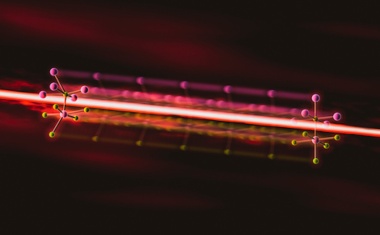
X-ray laser experiments show that intense light distorts the structure of the thermoelectric material tin selenide in a unique way.
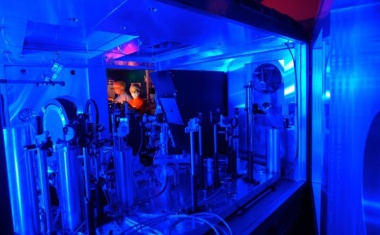
Researchers from the University Jena shed light on the best way to generate high-energy proton radiation using laser-plasma interaction.
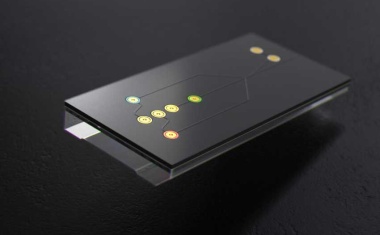
At Photonics West, Lionix International presented an integrated RGB laser light engine for retinal projection augmented reality (AR) headsets. The millimeter-scale light engine excels not only in the brightness and quality of the images projected but also in terms of compactness.
The combination of solitons increases the color range of the emitted light from the microresonators.
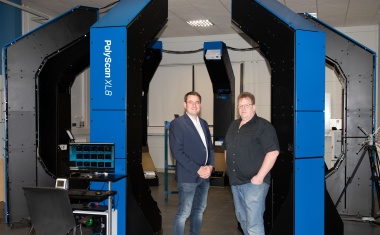
A&B KMG Service, a specialist in coordinate measuring technology, has taken over the distribution of Polyscan Surround 3D scanners from the Canadian manufacturer Polyrix for Germany and other European countries with immediate effect. The company has also opened a demo center in Ergolding near Landshut in Germany.
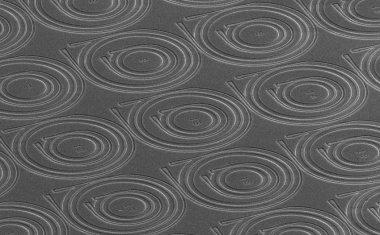
Microcombs have the potential to enhance GPS systems, telecommunications, autonomous vehicles, greenhouse gas tracking, spacecraft autonomy and ultra-precise timekeeping.
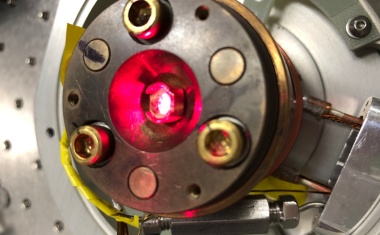
New process uses lasers to dramatically sculpt the properties of materials without the production of any excess damaging heat.
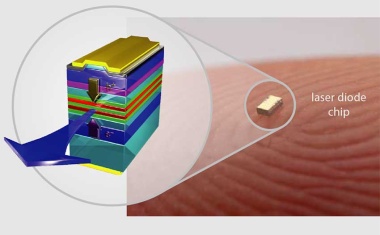
The Leibniz Association will fund the joint project UV Lasers – From Modeling and Simulation to Technology (UVSimTech) for three years with nearly 1 million euros within the Leibniz Competition. It is coordinated by the Weierstrass Institute for Applied Analysis and Stochastics, Berlin.

The first demonstration of direct femtosecond-pulse emission from a quantum cascade laser in the mid-infrared region paves the path towards novel applications of ultrashort laser pulses.

The idea of using light as a tool was still in its infancy when the Schramberg engineers used laser systems to spot-weld watch springs.
The new material allows small and high-quality lasers that are expected to have applications for example in imaging, flow detection and wireless optical communication.
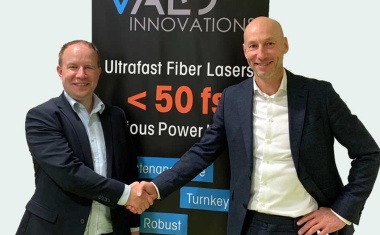
The German-Swedish manufacturer of high performance lasers for advanced imaging, detection and analysis, expands its technology portfolio to include short-pulse femtosecond fiber lasers, with the recent acquisition of Valo Innovations, Hannover, Germany.
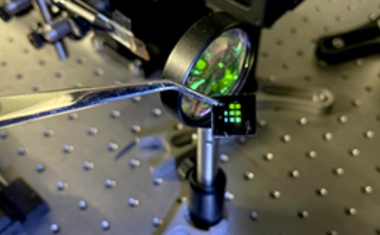
A solution-processed laser comprising PbS colloidal quantum dots integrated on a distributed feedback cavity, with tunable lasing wavelength from 1.55 μm to 1.65 μm.

Israeli and German researchers have developed a way to force an array of vertical cavity lasers to act together as a single laser – a highly effective laser network the size of a grain of sand.
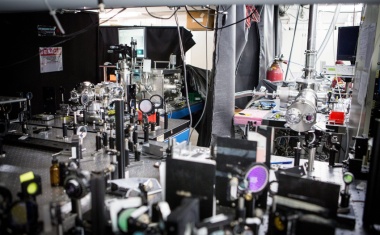
A new method to produce a promising light source, usually available only in giant facilities, at a lab-scale tabletop.
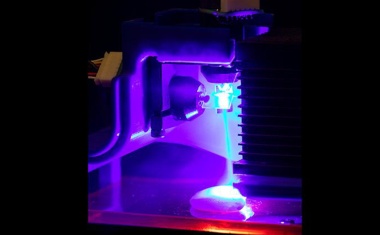
Laser based method retains more moisture, and creates an entirely new way to cook a tasty meal allowing individuals to more precisely customize their meals.
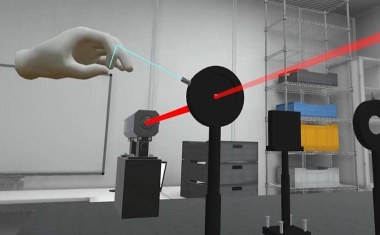
Lasers are ubiquitous. Scientists from Würzburg have now developed the virtual-reality laser laboratory “femtoPro”, which simulates optical setups in real time and enables eye-safe training in the handling of short-pulse lasers.
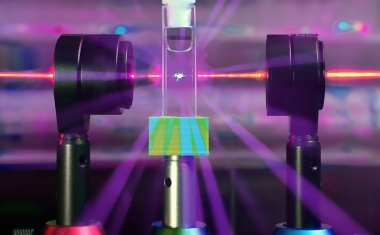
Physics researchers at the University of Bath discover a new physical effect relating to the interactions between light and twisted materials – an effect that is likely to have implications for emerging new nanotechnologies in communications, nanorobotics and ultrathin optical components.
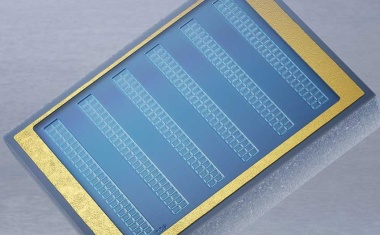
Trumpf Photonic Components, a provider of VCSEL (vertical cavity surface emitting lasers) and photodiode solutions for the consumer electronics, data communications, industrial sensing and heating markets, has revealed the new product platform ViBO (VCSEL with integrated backside optics).
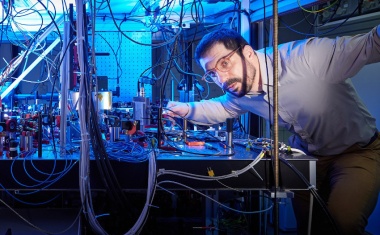
A beam of light can only be seen when it hits matter particles and is scattered or reflected by them. In a vacuum, however, it is invisible. Physicists at the University of Bonn have now developed a method that allows laser beams to be visualized even under these conditions. The method makes it easier to perform the ultra-precise laser alignment required to manipulate individual atoms.
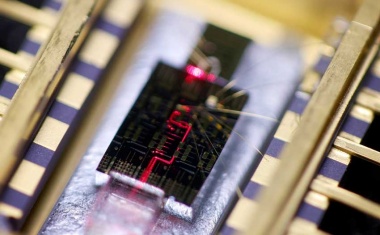
Anyone with demanding laser requirements for their product has an opportunity to attend Chilas’ new product launch and be among the first to discover the possibilities it can offer. The launch will be held online with the support of European Photonics Industry Consortium (EPIC).
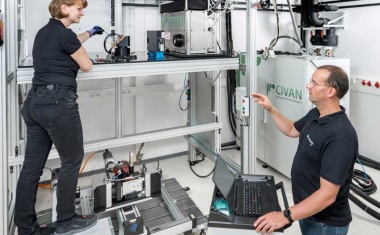
Coherent beam combining can generate different energy distribution patterns particularly quickly during operation.

Instead of printing the barcode on the packaging, it can also be lasered directly onto the skin of fruit or vegetables. This saves on packaging costs and protects the environment. But to ensure that the peel is not damaged in the process, the focus of the laser must be precise, despite the fact that the individual fruits are always different sizes. A 3D sensor from a company in northern Germany helps with this.