

50th laser anniversary for Trumpf
The idea of using light as a tool was still in its infancy when the Schramberg engineers used laser systems to spot-weld watch springs.
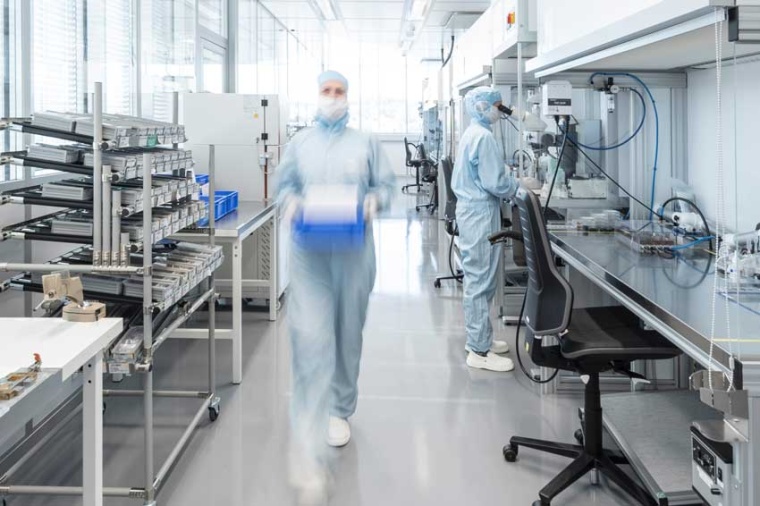
The facility in the Black Forest – the second-largest Trumpf location in Germany – now employs over 1,400 people including physicists, engineers and software architects. Together, they develop, manufacture and maintain laser systems that are used in numerous industries all over the world. “Schramberg is the hub of German industrial solid-state laser technology,” says the site’s managing director, Hagen Zimer. “We now supply state-of-the-art laser technology for global applications including e-mobility, display manufacturing, smartphones, and tablets.”
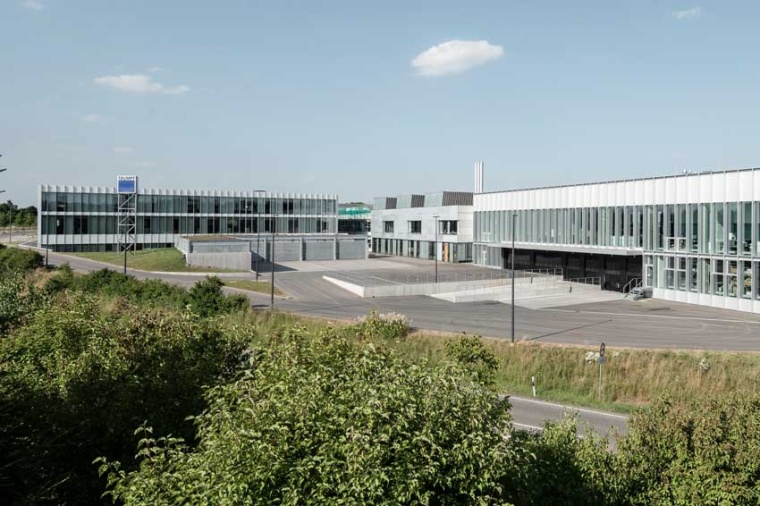
From its humble origins in the Black Forest, when the Schramberg engineers came up with the idea of building laser systems to spot-weld watch springs, the introduction of laser-based processes for cathode ray tube manufacturing and pacemakers swiftly followed, culminating in the company’s breakthrough use of solid-state laser technology in automotive production.
“Over the years, we have demonstrated time and again that we are an industry trendsetter that knows how to respond to change and meet its customers’ needs,” says Zimer. Development engineers in Schramberg played a key role in developing ultrashort-pulsed laser technology and ramping it up for industrial use. These systems are an efficient choice for processing hard materials such as glass and sapphire, as well as solar cells. In 2013, Trumpf received the prestigious German Future Prize together with representatives of Bosch and Friedrich Schiller University Jena.
At the heart of Schramberg's success is its expertise in disk lasers. Offering outstanding performance and reliable operation, this type of laser is the ideal choice for multiple applications, especially in automotive production. Soaring demand for e-mobility solutions helped swell Trumpf’s order books and fueled the need for greater production capacity in Schramberg. “We are determined to keep up with this growing demand for the laser technology that this site specializes in. That’s why we invested eighty million euros in new development facilities, clean rooms and production facilities at the site over the past five years,” says Zimer.
He believes Schramberg is perfectly positioned to tackle the challenges that lie ahead: “We’ve spent decades accumulating expertise and always been open to adopting new technologies. That’s given us the agility we need to adapt to new requirements and respond quickly to our customers’ needs. And our flexibility is enhanced still further by our truly exceptional research and development capabilities.”
Further reading: Strategic partnership to address display industry, WileyIndustryNews.com, 24 November 2021
Company
TRUMPF SE + Co. KGJohann-Maus-Straße 2
71254 Ditzingen
Germany

most read

ZVEI Calls for Swift Protection of Critical Power Infrastructure
The association has issued a statement in response to the recent attempted attacks on substations in Brandenburg and North Rhine-Westphalia and warns of the consequences for Germany's energy security.

ABB Machine Automation (B&R) Appoints Christian Strahberger as New Division President
He succeeds Florian Schneeberger, who died in a tragic accident in April.
Siemens Consolidates Its Automation Business into a New Unit Called Automation
Rainer Brehm, who previously served as COO of the automation business and CTO of Digital Industries, was appointed president of the new unit.
Laser 2000 and Büchner Lichtsysteme cooperate
Through this cooperation, Laser 2000 is expanding its portfolio in the areas of machine vision, metrology and smart sensor technologies.
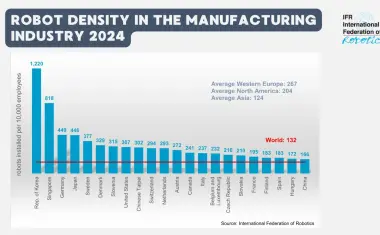
Global robot density: Western Europe leads ahead of North America and Asia
In the EU-27, the robot density is 231, which is above the global average of 132.