

Zeiss AG names future Chairman of the Supervisory Board
The Annual General Meeting of Carl Zeiss AG appointed Dr. Michael Bolle as a new member of the Supervisory Board. He is to be elected Chairman of the the Board in January 2022.


Michael Bolle (60) succeeds Dr. Dieter Kurz (73), whose term as Chairman of the Supervisory Board of Carl Zeiss AG will end after almost ten years on December 31, 2021. Bolle will also take over from Dr. Kurz as Chairman of the Board of Trustees of the Carl Zeiss Foundation on January 1, 2022, and will thus represent all shareholder interests of the Foundation in the future. The foundation is also the sole shareholder of Carl Zeiss AG.
Bolle holds a doctorate in engineering and has held management positions at Bosch since 1992 - with an interruption as the founder of a high-tech startup from 1999 to 2002. Most recently, he was a managing director as well as chief technology officer (CTO) and chief digital officer (CDO) at Bosch. During this time, he drove the creation of the Bosch Center for Artificial Intelligence and the connection of the Internet of Things with artificial intelligence (AIoT), among other things.
Also of interest: Zeiss reaches new all-time high in fiscal 2021
Company
Carl Zeiss AGCarl-Zeiss-Str. 22
73447 Oberkochen
Germany



most read

ZVEI Calls for Swift Protection of Critical Power Infrastructure
The association has issued a statement in response to the recent attempted attacks on substations in Brandenburg and North Rhine-Westphalia and warns of the consequences for Germany's energy security.
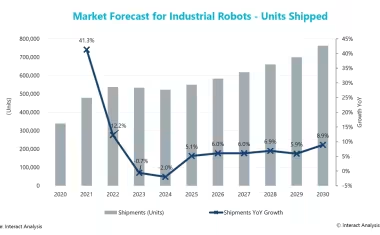
Forecast: Significant Growth in Industrial Robotics by 2030; Cobots Are Growing the Fastest
According to a recent analysis by Interact Analysis, global sales of industrial robots are expected to rise from about 550,000 units in 2025 to just over 760,000 units in 2030.

Siemens Consolidates Its Automation Business into a New Unit Called Automation
Rainer Brehm, who previously served as COO of the automation business and CTO of Digital Industries, was appointed president of the new unit.
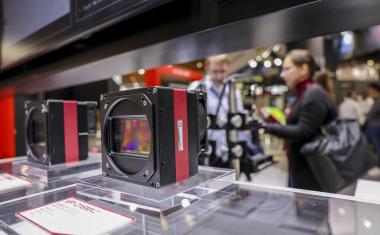
Vision 2026 Breaks Exhibitor Record
About 500 exhibiting companies—about two-thirds of which are from abroad and about 30 percent of which are first-time exhibitors—are showcasing their products at the trade show.

IMTS 2026: America's Manufacturing Sector Focuses on Growth and Technology
The largest manufacturing trade show in the Western Hemisphere is bringing together 1,788 exhibitors this year, including about 400 companies participating for the first time.