

Silicon photodiodes expand the usable range in measurement technologies
Project “Messi” develops silicon-based photodetectors for the near-infrared range.
Image sensors and their core component, the photodiode, are indispensable in numerous applications, whether in process, measurement, automotive or safety technology. In the near-infrared range, which is particularly important for many analytical applications, silicon-based photodiodes do not yet offer sufficient sensitivity. Therefore, other materials are used, but they are expensive and sometimes harmful to the environment. In a new project at the Fraunhofer Institute for Photonic Microsystems IPMS, sensitive silicon-based photodiodes, which are more cost-efficient in production, are now being developed for the first time. The Federal Ministry of Education and Research in Germany (BMBF) funds the “Messi” project with 566,000 euros for a period of three years.


Photodiodes can be found everywhere - as image sensors in cameras inspecting surfaces in process technology or in spectroscopy systems in metrology. In the visible range almost all photodiodes today are made of silicon, as this material is used by default in the semiconductor industry and can therefore be produced more cost-efficiently. However, in the near-infrared range, not visible to the human eye, silicon-based photodiodes have not been used to date, due to their low sensitivity. For this reason, materials such as indium gallium arsenide (InGaAs) are used in this range. This material requires its own manufacturing processes however, which are not compatible with silicon semiconductor technology and therefore result in high costs. In addition, heavy metals such as arsenic are used in the manufacturing process. This stands in contradiction to efforts to make the production of microelectronics more environmentally friendly.
For the first time, Fraunhofer IPMS is now pursuing a new research approach to help low-cost silicon photodiodes achieve sufficient sensitivity in the near-infrared. “The innovation is based on the implementation of a new structure in our photodiode,” explains project coordinator Michael Müller from Fraunhofer IPMS. "Instead of the usual planar device topography, we use novel pyramidal and ring structures that function like a light collecting basin. With a very thin metal layer in the Schottky barrier, we increase the internal quantum efficiency – meaning the number of charge carriers generated by light in the semiconductor. We think that these two innovations will significantly increase sensitivity and enable near-infrared applications with silicon photodiodes for the first time.”
The new approach not only offers economic advantages by using established silicon semiconductor technologies, but has also ecological advantages, as the use of heavy metals can be avoided. This makes it a crucial contribution to sustainability in the semiconductor industry.
In the future, silicon photodiodes can enable a range of new applications in the near-infrared range, particularly in price-sensitive but high-volume markets. One example is autonomous driving, which requires new lidar sensors and fog cameras for effective environmental monitoring. This is particularly important when visibility is obstructed by smoke or fog, which causes optical cameras in the visible range to fail. Security technology would also benefit from this, with applications ranging from the protection of critical infrastructure to the private sector. There are also numerous applications in chemical and medical imaging as well as spectroscopy. Hyperspectral imaging in the near-infrared is particularly used in process measurement technology in the pharmaceutical and chemical industries to detect and analyze organic materials and material mixtures.
Company
Fraunhofer Institut für Photonische Mikrosysteme IPMSMaria-Reiche-Str. 2
01109 Dresden
Germany


most read
Vision 2026 Breaks Exhibitor Record
About 500 exhibiting companies—about two-thirds of which are from abroad and about 30 percent of which are first-time exhibitors—are showcasing their products at the trade show.
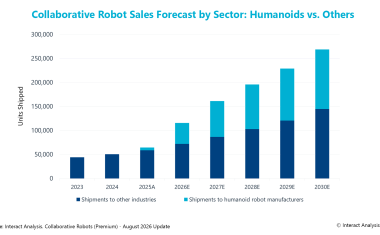
Humanoid robotics is driving demand for cobot arms and actuators
According to recent analyses, global production of humanoid robots exceeded the 20,000-unit mark in 2025 and is expected to more than triple in 2026.

Schaeffler bundles Defense and New Space activities under new CEO
Celia Pelaz takes over the position of CEO Defence & New Space at Schaeffler on October 1, 2026 and becomes Chairwoman of the Management Board of Stech Defence GmbH.

ZVEI Calls for Swift Protection of Critical Power Infrastructure
The association has issued a statement in response to the recent attempted attacks on substations in Brandenburg and North Rhine-Westphalia and warns of the consequences for Germany's energy security.

Solid-State Transformers for AI Data Centers
As part of a strategic partnership, Siemens and Reinhausen are developing a solid-state transformer for AI data centers with an 800-volt DC system.