Michael Sedlmair to Become Director of the Fraunhofer IGD
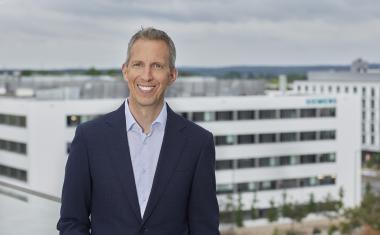
Since October 1, Sedlmair has been managing the Darmstadt and Rostock locations together with Matthias Unbescheiden. His focus is on visual computing and human-centered AI.
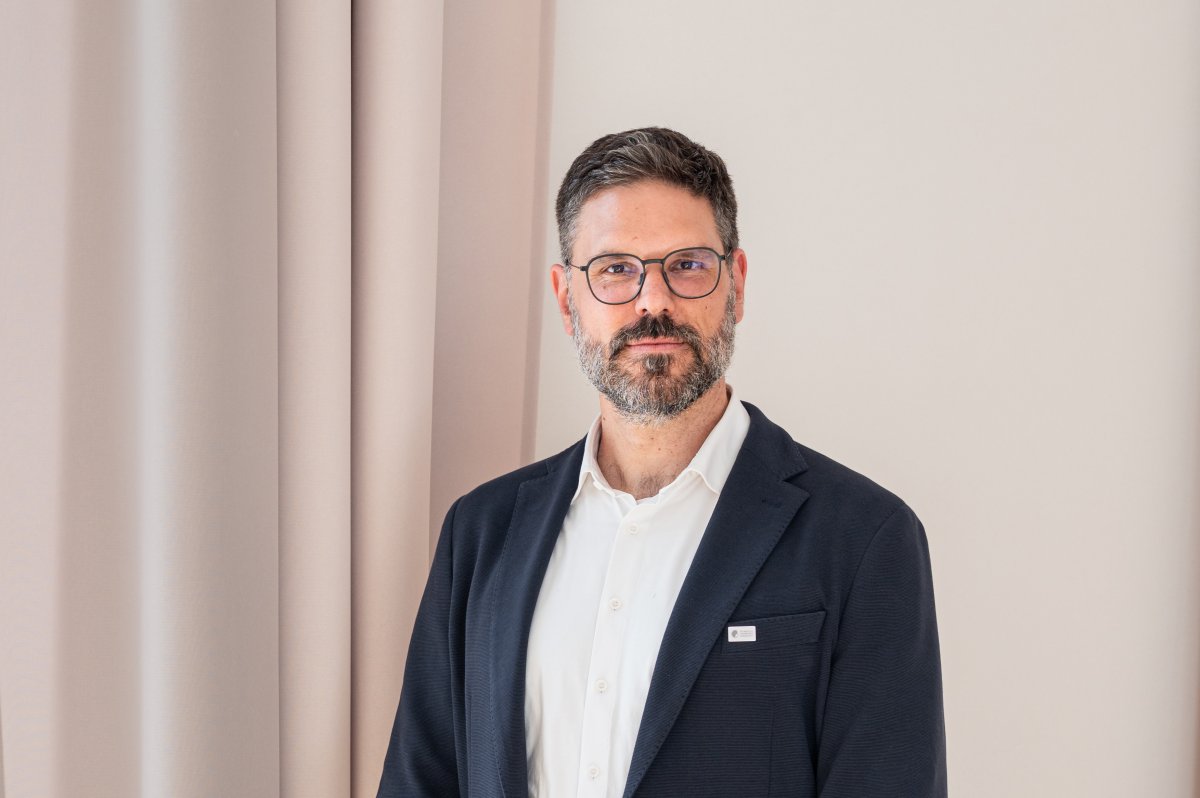
Michael Sedlmair joined the leadership team of the Fraunhofer Institute for Computer Graphics Research (IGD) on October 1, 2026. Together with Matthias Unbescheiden, he will be responsible for the institute’s scientific and strategic development at its Darmstadt and Rostock locations.
At the same time, Sedlmair is assuming a professorship at the Technical University of Darmstadt. There, he will continue to lead the former Chair of Graphical-Interactive Systems under the name Visual Computing. His research focuses in particular on human-centered artificial intelligence and the question of how visual computing technologies can support people in complex cognitive and physical tasks.
Sedlmair is moving from the University of Stuttgart to Darmstadt. There, he has been working since 2018, initially as a tenure-track professor and, since 2021, as a W3 professor. He also led the Augmented and Virtual Reality research group. In 2024, he assumed the role of Executive Director of the Institute for Visualization and Interactive Systems.
His research areas include visualization, augmented and virtual reality, and human-computer interaction. Other areas of focus include working with complex data and AI systems, as well as the integration of visualization and machine learning. According to the Fraunhofer IGD, Sedlmair has also been involved in several research projects with companies in the automotive industry.
At Fraunhofer IGD, Sedlmair is expected to strengthen research at the intersection of visual computing and artificial intelligence. Visual computing encompasses, among other things, computer graphics, visualization, image processing, and simulation. The institute sees potential applications in areas such as development and production, medicine and healthcare, planning and infrastructure, as well as in safety-critical sectors.
His concurrent roles at Fraunhofer IGD and TU Darmstadt are also intended to forge stronger links between university research and application-oriented development projects. Research findings can be translated into prototypes and software tools, while questions arising from industry projects can be incorporated into research and teaching.