

Pioneering device can take 3D images to detect eye diseases
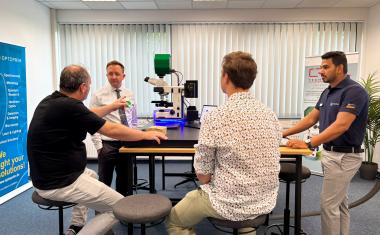
The device, developed by researchers from the University of Strathclyde, captures 3D images of the retina, the back of the eye and cornea, and can be added at low cost to a slit lamp, a device commonly used by optometrists.
Patients with conditions such as glaucoma, the third most common cause of visual impairment worldwide, with an estimated 7.7 million people affected, are often diagnosed by highly-trained specialists, who look at photos and give a subjective opinion on the 3D structure of the back of the eye.
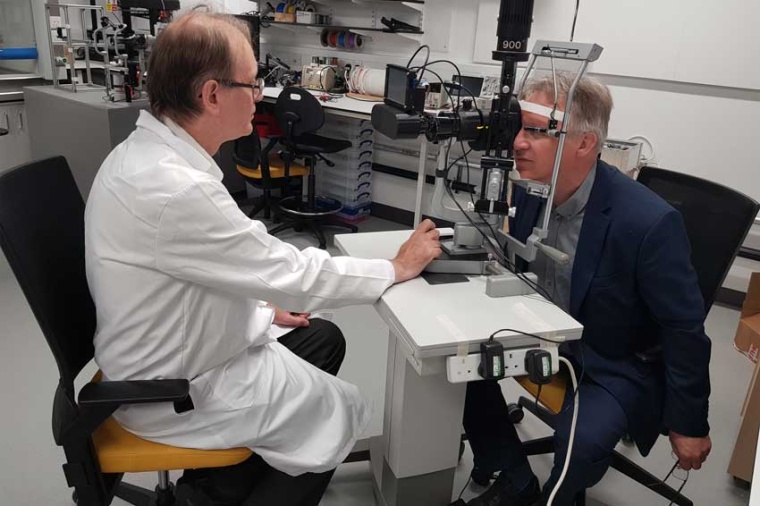
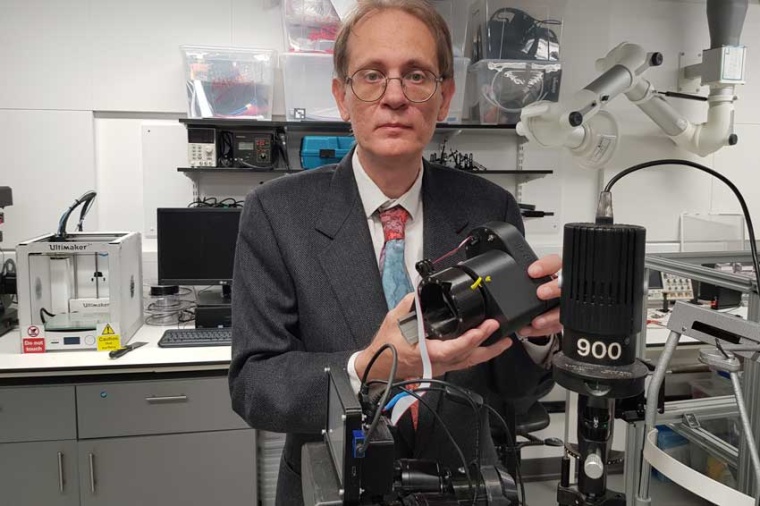
Although there are existing instruments for 3D imaging, including optical coherence tomography technology – the machines can cost up to 100,000 pound, often making them too expensive for large-scale population use, especially in low-income countries.
However, optometrists all over the world have access to slit lamps. The new technology is a simple and inexpensive add-on to a standard lamp, and can extend 3D eye imaging to all settings where optometrists are present.
It is so simple that a modified version of the technology brings potential of 3D retinal ‘selfies’ without an operator, meaning it could also be deployed in unassisted settings, like pharmacies. The technology can also be used to image the front of the eye, which is important for cornea transplant patients as many machines can’t measure the edge of the cornea.
The device has been developed by Dr Mario Giardini, Dr Ian Coghill, and Kirsty Jordan, at the department of biomedical engineering of the University of Strathclyde.
Dr Giardini said: “Patients can be imaged easily and inexpensively, without the need for a specialist to be present. Our device reliably takes 3D images, and it is comfortable and fast, at less than a second. The technology has the potential to revolutionise the screening and follow-up within the community of conditions such as glaucoma, as any optometrist, anywhere in the world, could afford it. This work makes eye diagnostics more accessible, reducing inequalities.”
Dr Iain Livingstone, consultant ophthalmologist at NHS Forth Valley, who has collaborated with Dr Giardini on previous ophthalmology projects, said: “So much of what we do as eye doctors depends on seeing things in 3D. While photographs can be helpful, this innovation uses visible light to re-create a high fidelity 3D representation of eye structures, allowing precise measurements to be taken in a completely new way, piggybacking on the method of examination we already do routinely.
“It’s a crucial addition to the way we interpret information, harnessing digital to glean so much more from a slit lamp exam, with potential reach far beyond the hospital toward community optometry, bringing nuanced measuring tools closer to home for patients.”
The researchers also hope it can eventually be used to detect eye cancer and Dr Livingstone added: “This addition turns a slit lamp into a ‘3D eye scanner’ with potential to supplant ocular ultrasound for measuring solid tumors of the eye.”
CEO of IDCP group, Jan Boers, said: “Working with the University of Strathclyde to develop new technology for eye screening has been very productive, and this development will be a significant step for enabling more accurate, accessible, and cost-effective solutions to eye diagnostics globally. This is a great addition to our activities in the field of eye screening with RetinaScope and IDCP Scotland.”
Jamie Thomson, managing director of IDCP Scotland, who received support from Scotland’s national economic development agency Scottish Enterprise, with a SMART grant of £85,000, said: “As a University of Strathclyde alumnus, it gives me great pride to be working closely with the team helping to develop this technology, which has the potential to improve the quality of patient care and fits within IDCP Scotland’s key objective to revolutionize patient care within ophthalmology.”
Further reading: Big deal for improving ophthalmological diagnoses, wileyindustrynews.com, 13 July 2022


most read

Omron Plans to Acquire Industrial PC Manufacturer Onlogic
The acquisition is expected to be completed in early 2027. Onlogic will remain an independent company following the acquisition, and its headquarters, brand, and management are expected to remain in place.

Cognex Acquires RealSense
With this acquisition, Cognex is expanding its portfolio to include 3D depth sensing technology for robotics and physical AI. The market is expected to grow significantly by 2030.

Siemens Consolidates Its Automation Business into a New Unit Called Automation
Rainer Brehm, who previously served as COO of the automation business and CTO of Digital Industries, was appointed president of the new unit.

Michael Sedlmair to Become Director of the Fraunhofer IGD
Since October 1, Sedlmair has been managing the Darmstadt and Rostock locations together with Matthias Unbescheiden. His focus is on visual computing and human-centered AI.
Lapp Surpasses the Two-Billion-Euro Mark for the First Time
According to preliminary estimates, the global market leader in integrated solutions for cable and connection technology generated revenue of more than 2.3 billion euros in fiscal year 2026 (October 1, 2025 – September 30, 2026).