

Basler and I2S Cooperate via a Joint Venture
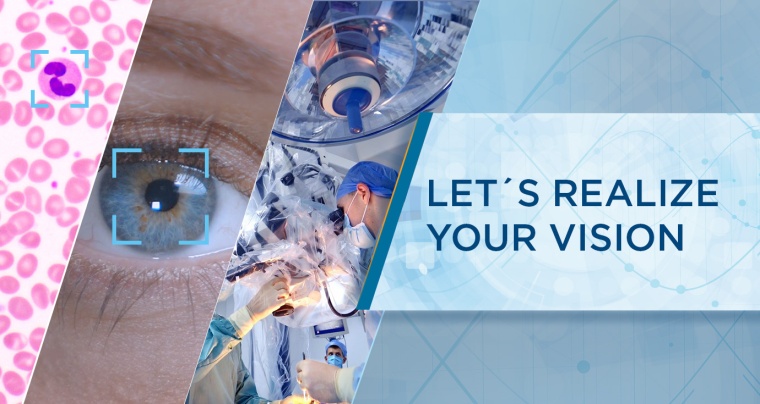
The computer vision expert Basler wants to participate in the distribution business of its long-time partner I2S. In addition, Basler now offers its solutions specifically for applications in the medical and life sciences.
Both companies are discussing a Basler stake of 25.1 percent in the I2S distribution business. Basler wants to expand its direct business in Europe with this. The planned transaction is to take effect on 1 July 2022. The name of the joint venture is intended to be Basler France.
In the further course, it is intended that Basler will take over the remaining 74.9 percent of the shares as of 1 July 2024. Xavier Datin, CEO of I2S, will accompany the transfer phase as Président of Basler France.
Basler focuses on customers in medicine and life sciences
From cameras to processing hardware to software, the camera manufacturer wants to offer individual solutions for medicine and life sciences.
The company develops a concept for the user and then compiles a solution offer consisting of components (cameras, lenses, processing hardware) and software. Customers benefit from Basler's knowledge gained from projects already implemented, for example in automated microscopy, ophthalmology and medical imaging.
Company
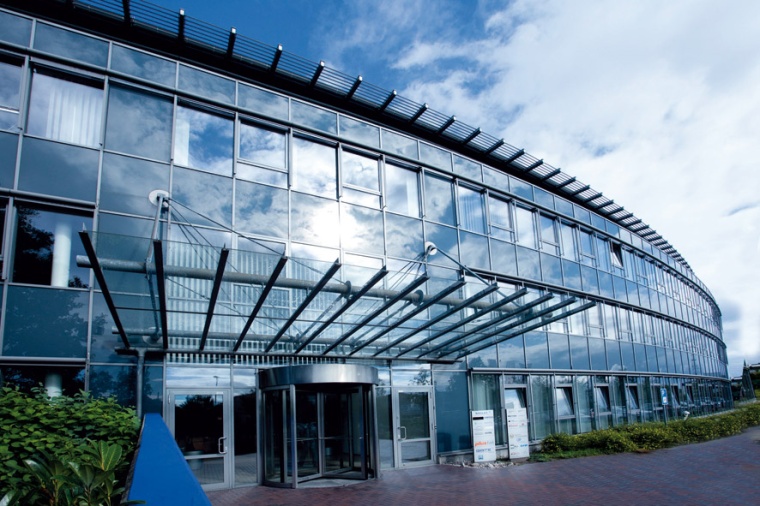
Basler AGAn der Strusbek 60-62
22926 Ahrensburg
Germany


most read

Schaeffler bundles Defense and New Space activities under new CEO
Celia Pelaz takes over the position of CEO Defence & New Space at Schaeffler on October 1, 2026 and becomes Chairwoman of the Management Board of Stech Defence GmbH.
Forecast: Significant Growth in Industrial Robotics by 2030; Cobots Are Growing the Fastest
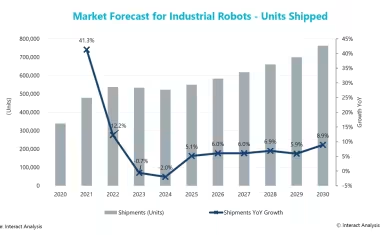
According to a recent analysis by Interact Analysis, global sales of industrial robots are expected to rise from about 550,000 units in 2025 to just over 760,000 units in 2030.
Vision 2026 Breaks Exhibitor Record
About 500 exhibiting companies—about two-thirds of which are from abroad and about 30 percent of which are first-time exhibitors—are showcasing their products at the trade show.
Solid-State Transformers for AI Data Centers
As part of a strategic partnership, Siemens and Reinhausen are developing a solid-state transformer for AI data centers with an 800-volt DC system.
European machine vision expects slight recovery and growth in 2026
According to the VDMA Machine Vision department, sales are expected to increase by around 3%, following a decline of 2% in 2025.