

Acquiring 3D images at over 1,000 frames per second
BitFlow CoaXPress frame grabber used in groundbreaking new 3D imaging system.
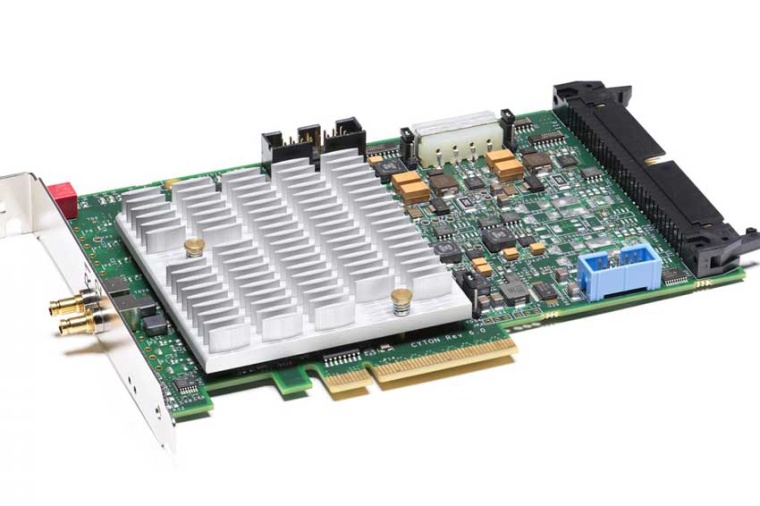
Researchers with the Energy Materials Telecommunications Center, National Institute for Scientific Research in Quebec, Canada, have developed a groundbreaking technique to acquire 3D images at over one thousand frames per second with resolution as high as 1180 × 860 – far beyond the capabilities of available systems today – by eliminating information redundancy in data acquisition. Certain to open new opportunities for 3D applications, the dual-view band-limited illumination profilometry (BLIP) with temporally interlaced acquisition (TIA) system or simply BLIP-TIA, relies upon the BitFlow Cyton-CXP CoaXPress frame grabber to transmit images from two CMOS cameras to a computer for processing at rates surpassing 12.5 Gb/s.
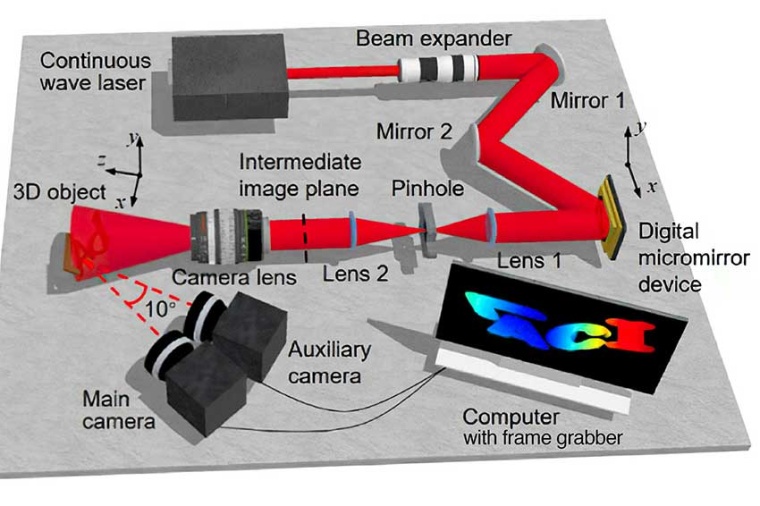
Existing 3D systems based on the widely used technique of fringe projection profilometry (FPP) have two main limitations. First, each camera captures the full sequence of fringe patterns, therefore imposing redundancy in data acquisition that ultimately clamps the systems’ imaging speeds. Second, the cameras are placed on different sides of a projector. This arrangement often induces a large intensity difference from the directional scattering light and the shadow effect from the occlusion by local surface features, both of which reduce the reconstruction accuracy.
To overcome these limitations, the scientists developed BLIP-TIA with a new algorithm for coordinate-based 3D point matching from different views. Implemented with two cameras from Optronis placed side-by-side and the BitFlow Cyton-CXP frame grabber, it allows each camera to capture half of the sequence of the phase-shifted patterns, reducing the individual camera's data transfer load by fifty percent, and freeing up capacity to transfer data from more pixels on each camera’s sensor or to support higher frame rates.
Besides its high-speed data transfer, the Cyton-CXP two-channel frame grabber incorporates the Gen 2.0 x8 PCI Express bus interface on its back-end for high speed access to host memory in multicamera systems such as the BLIP-TIA. It also allows control commands, triggers and power to be sent to and from cameras over the same coaxial cable to simplify overall design.
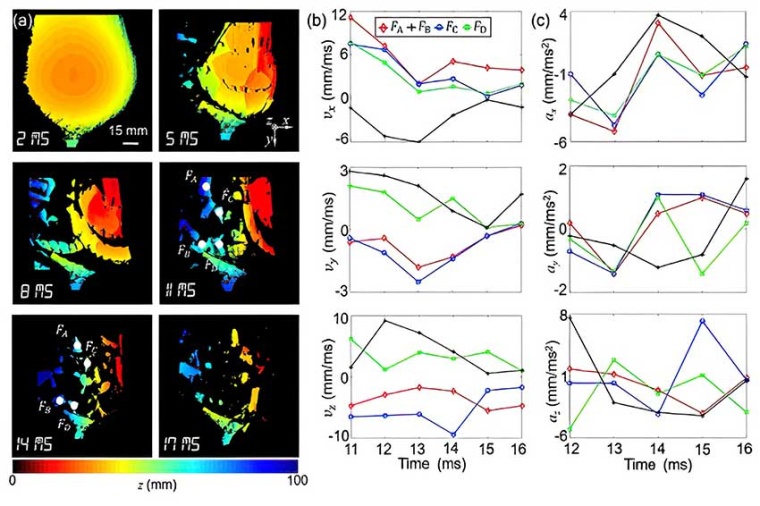
To verify high-speed 3D surface profilometry, the researchers used BLIP-TIA in a number of tests including recording non-repeatable 3D dynamics by imaging the process of glass breaking while being struck by a hammer. The growth of cracks and the burst of fragments with different shapes and sizes were clearly shown in the reconstructed 3D images.
Besides technical improvements, researchers are now exploring new applications for BLIP-TIA. For example, it could be integrated into structure illumination microscopy, frequency-resolved multidimensional imaging, dynamic characterization of glass in its interaction with the external forces, recognizing hand gestures for human–computer interaction, in robotics for object tracking and reaction guidance, vibration monitoring in rotating machinery, and for behavior quantification in biological science.


most read
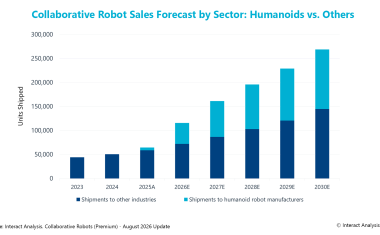
Humanoid robotics is driving demand for cobot arms and actuators
According to recent analyses, global production of humanoid robots exceeded the 20,000-unit mark in 2025 and is expected to more than triple in 2026.

ZVEI Calls for Swift Protection of Critical Power Infrastructure
The association has issued a statement in response to the recent attempted attacks on substations in Brandenburg and North Rhine-Westphalia and warns of the consequences for Germany's energy security.

IMTS 2026: America's Manufacturing Sector Focuses on Growth and Technology
The largest manufacturing trade show in the Western Hemisphere is bringing together 1,788 exhibitors this year, including about 400 companies participating for the first time.
Vision 2026 Breaks Exhibitor Record
About 500 exhibiting companies—about two-thirds of which are from abroad and about 30 percent of which are first-time exhibitors—are showcasing their products at the trade show.

Siemens Consolidates Its Automation Business into a New Unit Called Automation
Rainer Brehm, who previously served as COO of the automation business and CTO of Digital Industries, was appointed president of the new unit.