Series with integrated Profinet interface
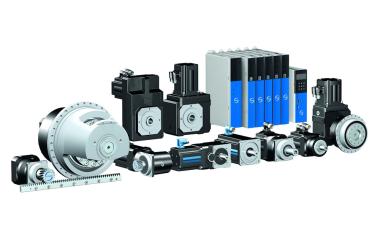
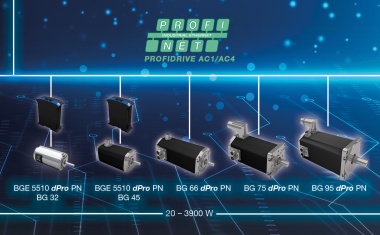
Dunkermotoren can now integrate Profinet functionality including the Profidrive profile with application classes 1 and 4 as standard in motors.


Dunkermotoren can now integrate Profinet functionality including the Profidrive profile with application classes 1 and 4 as standard in motors.
Megatron adapts its precision potentiometers to the needs of the application. Together with the customer, the optimal product is determined as part of the consultation. The services include optimizing the mechanical and electrical properties of the potentiometers, adding components and assembling cables and connectors.
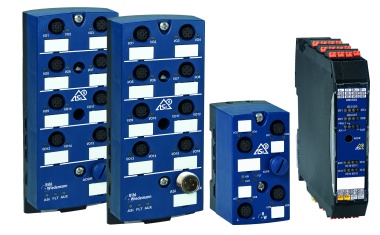
The two new ASi-5 modules BWU4230 and BWU4231 from Bihl and Wiedemann are designed in protection class IP67 and each have 16 I / O. Depending on the application, up to 16 digital inputs or outputs are possible, for example in the form of a connection of 12 distance sensors and four valves in a packaging machine.
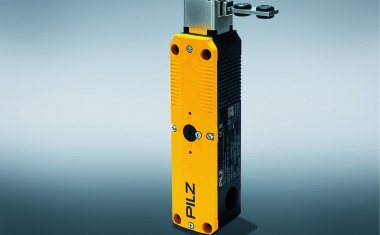
The Psenmech safety door system with guard locking is now available from Pilz. With this system, Pilz offers an economical basic solution for the safe monitoring of movable safety guards.
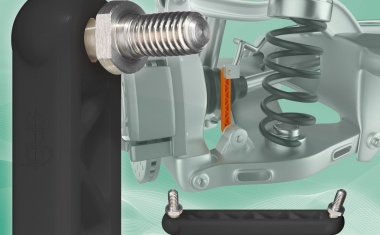
With the igubal GPZM coupling rod, igus is now introducing a double spherical plain bearing that is not only lubrication and maintenance-free, but also 20 percent more flexible than the conventional solution thanks to a new housing material. This tightly encloses the ball stud, prevents the ingress of dirt and increases the reliability of the moving application.
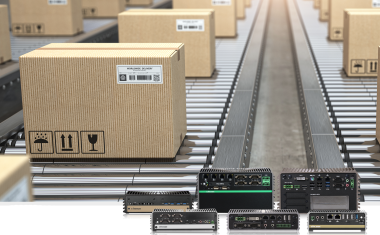
The new Embedded PC series DA-1100, DC-1100, DI-1000, DX-1100 and DS-1200 from Compmall cover all areas of application. They have a CPU bandwidth from Intel Celeron (Apollo Lake) to Intel Xeon (Coffee Lake) as well as a fanless design and a wide temperature range.
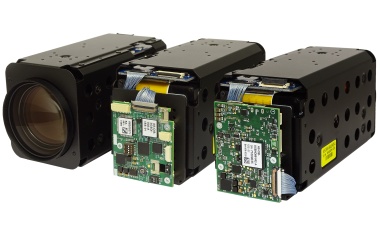
Active Silicon has introduced new autofocus zoom cameras. This includes the Harrier 36x AF-Zoom, in which the manufacturer has combined a powerful 36x optical zoom lens, a Sony CMOS sensor with global shutter and a large selection of video outputs. These 1080p / 60 block cameras are suitable for a wide variety of industrial and commercial applications.
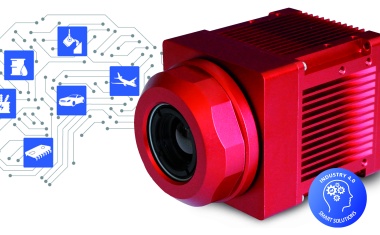
With its smart infrared camera series IRSX, AT-Automation Technology offers a solution for intelligent temperature image processing. Developed as an all-in-one solution, the Smart-IRSX is an autonomous imaging sensor and a real all-rounder for temperature monitoring in every industrial environment.
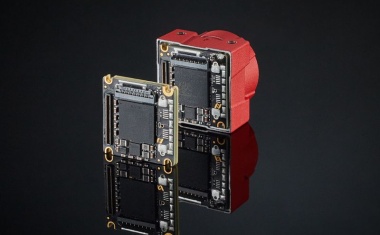
Allied Vision is expanding its Alvium 1800 CSI-2 camera series with 3 camera models. The new models are equipped with CMOS sensors from Sony, which are valued in the image processing industry for their high image quality and high frame rates.
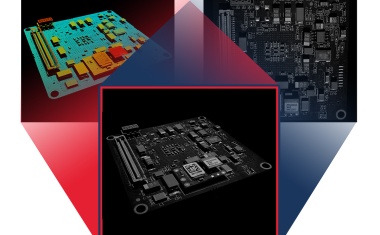
To improve the inspection process in the electronics industry, AT - Automation Technology has added a function called Multipart to its 3D sensors. This allows up to ten features to be output simultaneously, regardless of pixel format or algorithm.
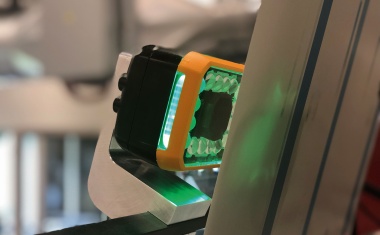
Large batches are increasingly being replaced by short runs – and this also applies to labels. To keep changeover times and waste low, the Danish press manufacturer Nilpeter relies on a vision system that is fully integrated into the line.
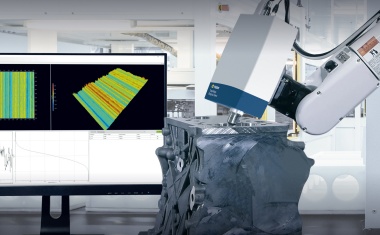
With Topmap, Polytec has established a series of optical 3D surface measurement technology that is suitable for rapid and reliable quality control with regard to surface quality and geometric parameters. It measures and documents every workpiece.
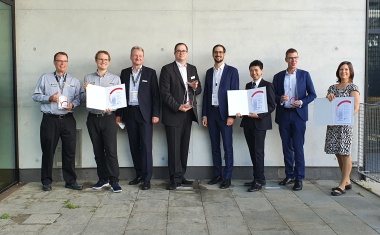
The presentation of the inspect award 2022 took place at the Vision trade fair - on a smaller scale than usual, but still with overwhelming glamour compared to the Lockdown 2020. Awards were presented for the best innovations in industrial machine vision and optical metrology. Thus, the journey to Stuttgart was worthwhile for the attendees not only because of the Vision.
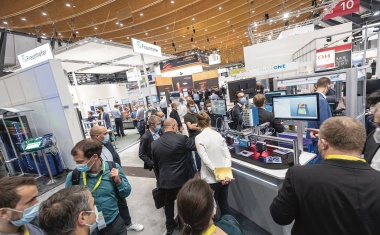
For the first time in three years, the machine vision industry made its pilgrimage back to Stuttgart for Vision. It all took place on a smaller scale - fewer exhibitors and visitors than in 2018 - but the joy in view of the reunion outshone everything.
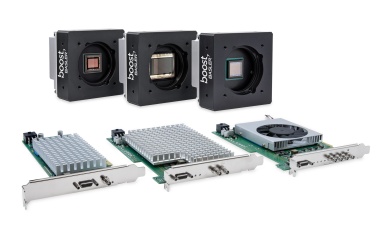
Basler is expanding its CoaXPress 2.0 product portfolio with additional CXP-12 camera models from the Boost series. In addition, there are two multi-channel CXP-12 interface cards and corresponding components.
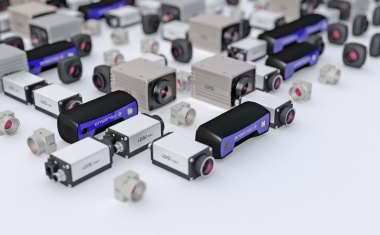
Camera manufacturer IDS will show four vision systems at Vision 2021, three of which are new: the UEye XCP, Ueye XLE and Ueye Warp10 cameras and the Ensenso S 3D sensor.

UPDATE: Due to organizational reasons, the forum is unfortunately cancelled this year.
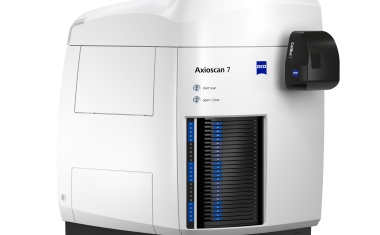
With Axioscan 7, Zeiss presents the next generation of its slide scanner for the automatic digitization of microscope samples.
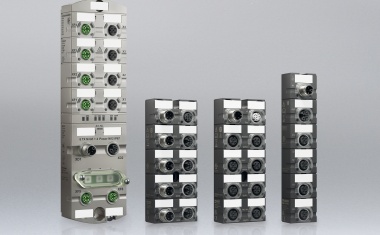
With its vision installation solutions, the specialist for decentralized automation technology offers customized solutions for industrial image processing.

Optical metrology supplier Mu:v will be presenting modules for optical quality detection, among other things, at Vision 2021.
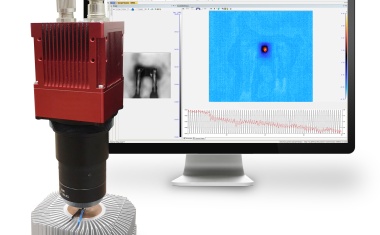
Specially developed for use in non-destructive testing, the infrared camera with microscope optics from AT - Automation Technology offers advantages when it comes to inspecting the smallest components, such as electronic components.
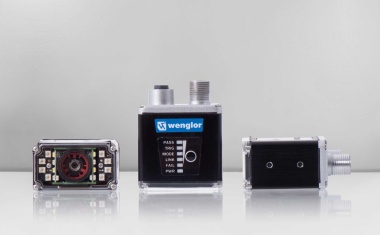
Wenglor Sensoric releases 19 new models of the C5PC 1D/2D code scanner series. In particular, the simple installation via Plug & Play, but also the intuitive, browser-based user interface Weblink or the uniform interface concept across all scanners open up many application options for users.
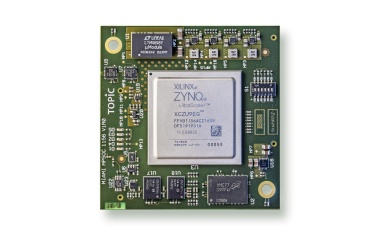
Aries Embedded presents the compact and highly integrated System-on-Module (SoM) "Miami MPSoC" from Topic Embedded Systems in Central Europe. The Miami MPSoC combines MPU, CPU, GPU, VCU and FPGA on one SoM and is ideal for all applications that use the combination of application processor and FPGA.
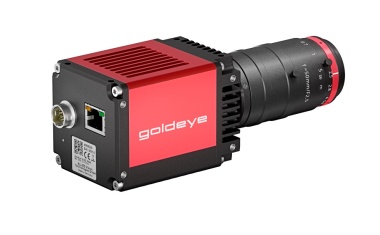
Allied Vision has integrated the SenSWIR InGaAs sensors from Sony into its Goldeye camera series. This means that the cameras are sensitive both in the visible and in the short-wave infrared range (SWIR).
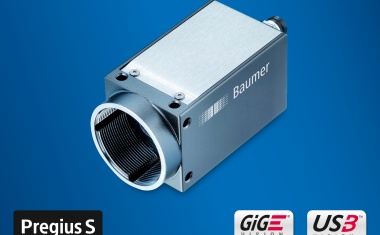
Baumer is expanding the CX series with the 4th Sony CMOS sensor generation Pregius S up to 24 megapixel resolution. Thanks to a pixel size of only 2.74 µm and backside illumination pixel architecture, very high resolutions with recorded image quality and improved sensitivity for stable image evaluations are available in a compact 29 × 29 mm design.
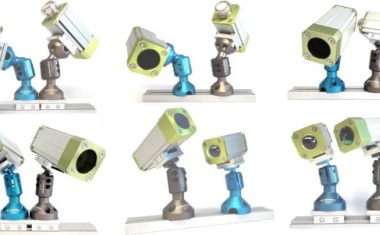
Autovimation has improved its Swivellink Mounting Kits: They are now also available in a metric version.

MVTec has presented the new version 21.05 of the machine vision standard software Halcon. It integrates new features in the area of deep learning and matching, as well as further developments of the subpixel barcode reader, deep OCR and the integrated development environment HDevelop. With Halcon 21.05 Progress, users benefit from even more robust machine vision processes and improved usability.

The perfect preparation for a visit to Vision 2021 includes a comprehensive preview report with all the essential information on the machine vision trade show, as well as the product highlights and trade show news. The links within the text lead to the respective sections, which are regularly updated and thus always have something new to offer. And don't forget: Free trade show tickes are available with the code "inspect-is-visionary".
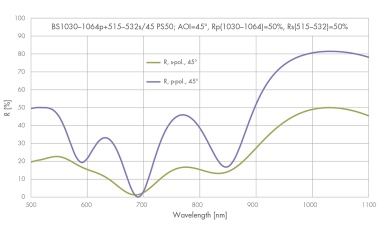
Laser Components has developed a beam splitter in which the combined beam of a frequency-doubled laser is split in such a way that 50% of the two wavelengths are split off even with different polarizations.
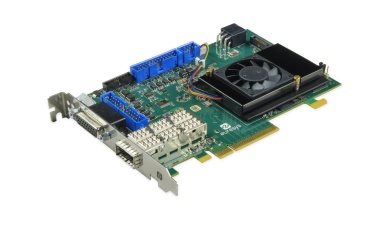
Euresys is promoting the CoaXPress-over-Fiber Bridge protocol. It is also designed to enable the benefits of CoaXPress for applications where traditional copper coaxial cables are reaching their upper limits in terms of speed, total bandwidth, weight and distance.
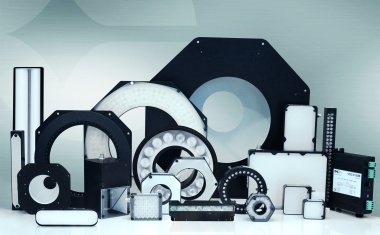
With immediate effect, Polytec is the exclusive distribution and service partner of the Spanish LED lighting manufacturer DCM. The portfolio of the engineering-driven company includes over 30 lighting series and nine light colors.
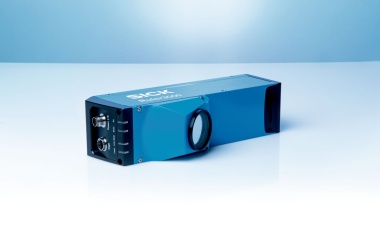
With the Ruler 3020, Sick has presented the first 3D streaming camera of the new generation. The highlights of the camera are its high speed and measurement accuracy - the ideal prerequisites for high-speed applications.
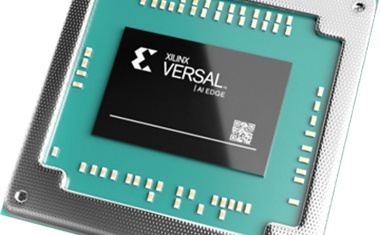
Xilinx has introduced the new Versal AI Edge series. It enables rapid AI innovations from the edge to the endpoint. With 4 times the AI performance per watt compared to GPUs and 10 times the computing density compared to adaptive SoCs of the previous generation, the Versal AI Edge series offers a scalable and flexible portfolio for distributed intelligent systems.
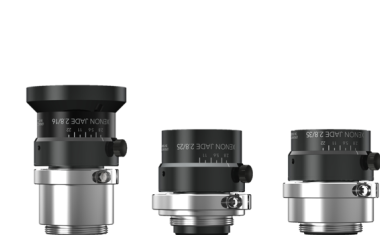
Schneider-Kreuznach presents the new, robust Xenon-Jade lens family for 1.2-inch sensors. The five lenses with a luminous intensity of 2.8 and focal lengths of 12/16/25/35/50 mm are suitable for pixel sizes up to 2.4 µm and can therefore be used particularly well in combination with the Sony sensors IMX253, 420/425 and 530/540.
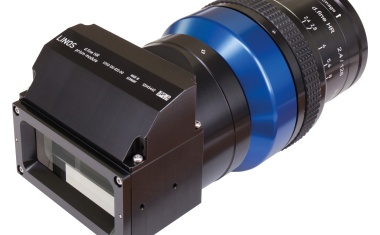
Excelitas Technologies and Qioptiq will present their latest products and system solutions in the fields of inspection lenses and industrial microscopy at Vision 2021 at booth 10-G44.