

That Robot Suits You Well!
On the Phenomenon of Wearable Social Robots
Prof. Dr. Oliver Bendel
1. Introduction
Social robots are sensorimotor machines that were created to interact with humans or animals (Hegel et al. 2009; Bendel 2021b). They can be defined by five dimensions, namely interaction with living beings, communication with living beings, proximity to living beings, representation of (aspects of) living beings, and – at the center – benefit for living beings (Bendel 2021b). Social robots are often designed to be humanoid (human-like) or animaloid (animal-like) – this is the representation dimension. They are used, for example, in care and therapy, in education, and for entertainment.
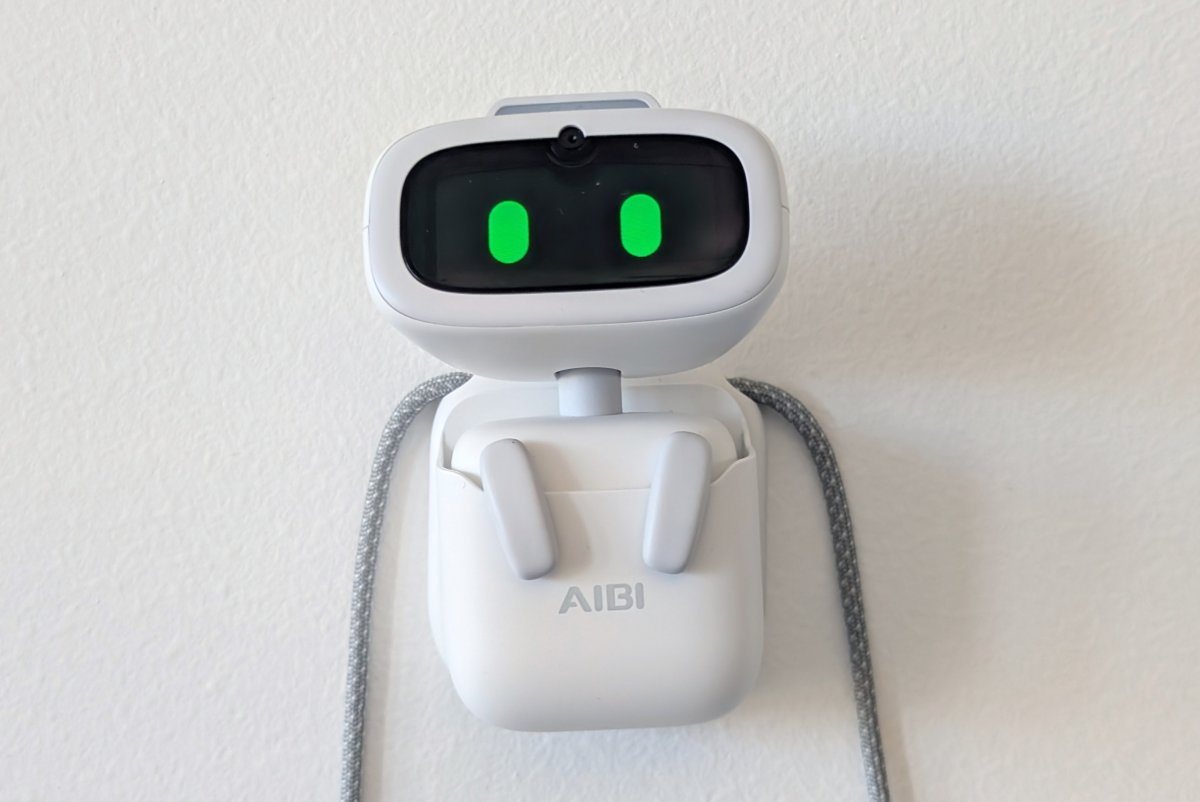
Since the 2010s, several social robots have come onto the market that are very small but very powerful (Bendel 2021b, 2025c). One can carry them around – at home, but also at school, university, and work, or simply when going for a walk. This is made easier by the models of the 2020s, which do not necessarily have to be connected to the internet and can be worn on a necklace or attached to clothing. One can speak of the new phenomenon of wearable social robots and classify them as special wearable robots or as special social robots (Bendel 2025c).
Continue with login
No account yet?
Register now for free and get full access to all exclusive articles from wileyindustrynews.com.
With our newsletter we regularly send you top news from Automation, image processing and light and laser technology in industrial environments, as well as the latest e-issue.



most read
Powerful in operation, intelligent in collaboration
How Faulhaber Drive Systems Are Bringing Humanoid Robotics Closer to Everyday Use
From Gamescom to the Factory
How the Gaming Industry Is Driving Automation
3D laser scanning for 100 percent inspection
Modern production requires precise, fast, and fully automated inspection processes. The robot-assisted inline measurement system Flexscan meets this requirement with two 3D compact sensors
Microspectrophotometer in Practice
During a three-day Open House in Unterschleißheim near Munich, Optoprim Germany and Craic Technologies demonstrated integrated UV–visible–NIR and Raman microspectroscopy under real research conditions.
It Does Not Always Have to Be a Humanoid Robot
Mythomorphic design adds a distinct perspective to social robotics. Inspired by myths and fantasy rather than humans or animals, the article classifies examples and examines related opportunities and risks.