

Can blue LEDs improve hygiene in clinics and public buildings?
Disinfection processes are of particular interest due to growing concerns over illnesses caused by microorganisms and the persistent problem of healthcare acquired infections. Additionally, because of the rise of antibiotic resistant bacteria, the investigation of novel non-antibiotic approaches for the prevention of infectious diseases has become highly topical. Blue light disinfection is such an approach and light-emitting diodes (LEDs) with an emission maximum in the range of 405-nm wavelength represent an attractive light source for this.
The high wall-plug efficiency and low costs of the diodes, their additive-free antimicrobial effect and the good tolerability of the blue light enable affordable and safe disinfection systems. With a dose of 500 J cm-2 at 405 nm almost all types of bacteria except spores are reduced by three to four log10 levels. Moreover, blue light is effective at inactivating both planktonic cells and biofilms of important nosocomial pathogens whereat the development of resistances is very unlikely to occur.
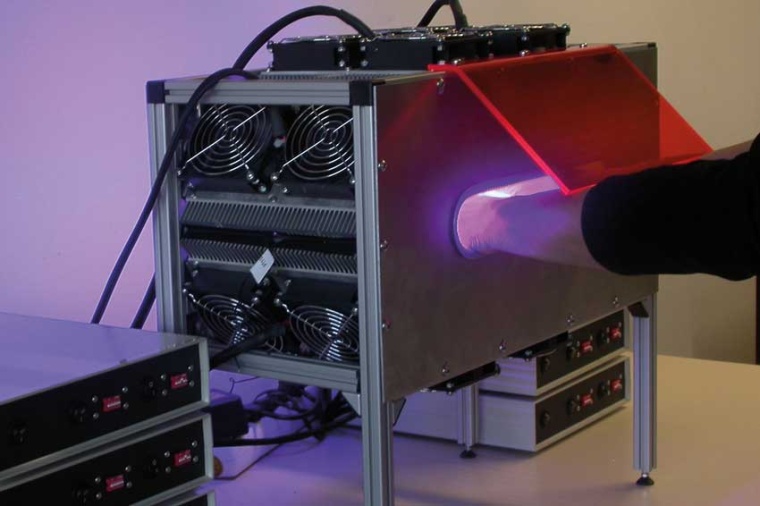
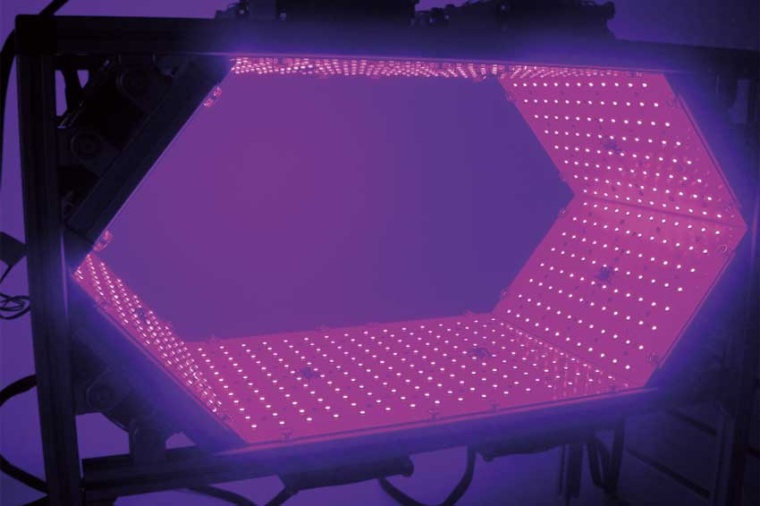
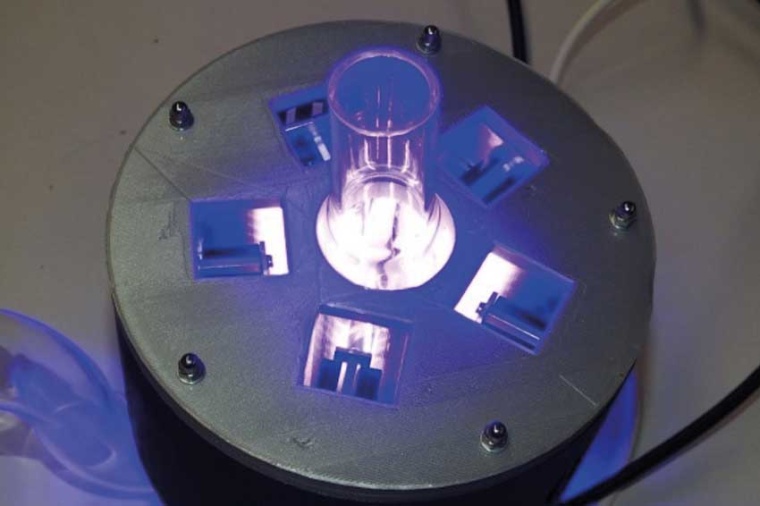
Siphons of washbasins in hospitals are relevant sources of pathogens and infections. They contain 106 to 1010 CFU of bacteria per milliliter. Nutrients in the sealing water and temperatures between 20 °C and 40 °C provide ideal conditions for the multiplication of the bacteria. Even worse, during drainage of water, siphons emit microbes into the ambient air in form of aerosols. By using blue LEDs, a significant reduction in the bacterial load of the siphon can be achieved with low operating costs.
Handrails in clinics, medical facilities, public buildings etc. are frequently touched surfaces that also require special attention from a hygienic point of view. Antimicrobial handrails using blue light allow a permanent disinfection without the need for cleaning staff to act. This method prevents human errors such as the use of wrong disinfectants or the skipping of disinfection intervals. The self-disinfecting handrails make use of the small size of the LEDs to enables a lighting concept called LED edge lighting. In this technology, the radiation is fed into an acrylic glass structure via the edges. Diffusing particles incorporated into the glass result in an illumination of the whole structure and a light output across the entire surface. This competitive solution can improves the hygienic safety of surfaces in a cost effective manner.
Since Ignaz Semmelweis’s pioneering studies during the mid-1800s in Vienna it is known that hospital-acquired diseases are transmitted via the hands of healthcare workers and doctors. To examine the potential for blue light to improve hand hygiene an irradiation device has been designed. The system is at best capable of achieving a 0.5-log10 reduction of germs within one minute. Alcoholic rub-in products are much more effective and achieve a 4-log10 reduction of bacteria within sixty seconds. In order to achieve the same 4-log10 reduction of microbes on hands by blue light, an exposure time of at least twenty minutes would be necessary. This limited disinfection speed is a major drawback of the blue light. Thus, it is not suitable as the sole disinfection action in applications that require fast 4-log10 disinfection within a few minutes. Bernd Seme
Links: PURION GmbH (C. Wipprich, M. Wipprich), Zella-Mehlis, Germany • Jena Section, Gesellschaft zur Förderung von Medizin-, Bio- und Umwelttechnologien GMBU e.V., Halle / Jena / Dresden, Germany
Company
Gesellschaft zur Förderung von Medizin-, Bio- und Umwelttechnologien GMBU e.V.Felsbachstraße 7
07745 Jena
Germany


most read

From Gamescom to the Factory
How the Gaming Industry Is Driving Automation
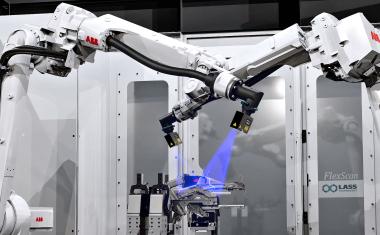
3D laser scanning for 100 percent inspection
Modern production requires precise, fast, and fully automated inspection processes. The robot-assisted inline measurement system Flexscan meets this requirement with two 3D compact sensors
Packaging Is Becoming a Strategic Task in Production
The new EU Packaging Regulation affects more than just packaging manufacturers. Production, logistics, and automation experts must also reassess their processes, materials, and equipment.
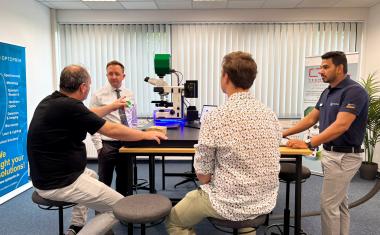
Microspectrophotometer in Practice
During a three-day Open House in Unterschleißheim near Munich, Optoprim Germany and Craic Technologies demonstrated integrated UV–visible–NIR and Raman microspectroscopy under real research conditions.
It Does Not Always Have to Be a Humanoid Robot
Mythomorphic design adds a distinct perspective to social robotics. Inspired by myths and fantasy rather than humans or animals, the article classifies examples and examines related opportunities and risks.