Water enables a supercontinuum white laser
Covering an impressive spectral range with water as nonlinear medium.
Covering a wide spectrum from ultraviolet to far infrared, ultrabroadband white lasers find applications in diverse fields such as large-scale imaging, femto-chemistry, telecommunications, laser spectroscopy, sensing, and ultrafast sciences.
But their development faces challenges, particularly in the selection of appropriate nonlinear mediums. Traditional solid materials, while efficient, are prone to optical damage under high peak power conditions. Gas mediums, though damage-resistant, commonly suffer from low efficiency and technical complications.
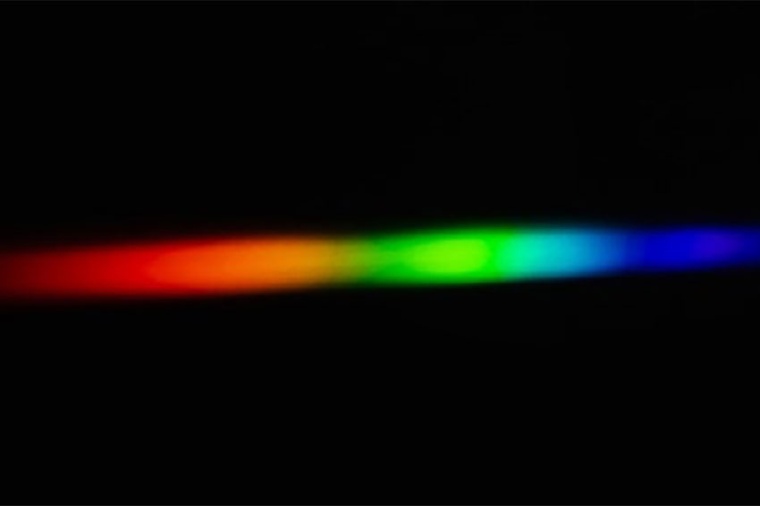
In an unconventional move, researchers from South China University of Technology recently turned to water as a nonlinear medium. Abundant and inexpensive, water proves immune to optical damage, even under the influence of high-power lasers. Water-induced spectral broadening involves enhanced self-phase modulation and stimulated Raman scattering, resulting in a supercontinuum white laser with a 435 nm 10 dB bandwidth covering an impressive 478 – 913 nm range.
Taking innovation further, researchers combined water with a chirped periodic-poled lithium niobate (CPPLN) crystal, known for its robust second-order nonlinear power. This partnership not only expanded the supercontinuum white laser’s frequency range but also flattened its output spectrum. According to the Prof Zhi-Yuan Li, “The cascaded water-CPPLN module provides a long-lived, high-stability, and low-cost technical route for realizing a ‘three-high’ white laser with intense pulse energy, high spectral flatness, and ultrabroad bandwidth.”
The output from this water-CPPLN collaboration is promising. With a pulse energy of 0.6 mJ and a 10 dB bandwidth spanning more than an octave (413 – 907 nm), this ultrabroadband supercontinuum source has potential in ultrafast spectroscopy and hyperspectral imaging.
Li observes, “It offers high resolution across physical, chemical, and biological processes over extreme spectral bandwidths with a high signal-to-noise ratio. It opens an efficient route to creating a long-lived, high-stability, and inexpensive white laser with intense pulse energy, high spectral flatness, and ultrabroad bandwidth, paving a way for new possibilities in scientific research and applications.” (Source: SPIE)
Reference: L. Hong et al.: Intense white laser of high spectral flatness via optical-damage-free water-lithium niobate module, Adv. Photon. Nexus 3(1) 016008 (2024): DOI: 10.1117/1.apn.3.1.016008