Humanoid robotics is driving demand for cobot arms and actuators
According to recent analyses, global production of humanoid robots exceeded 20,000 units in 2025 and is expected to more than triple in 2026
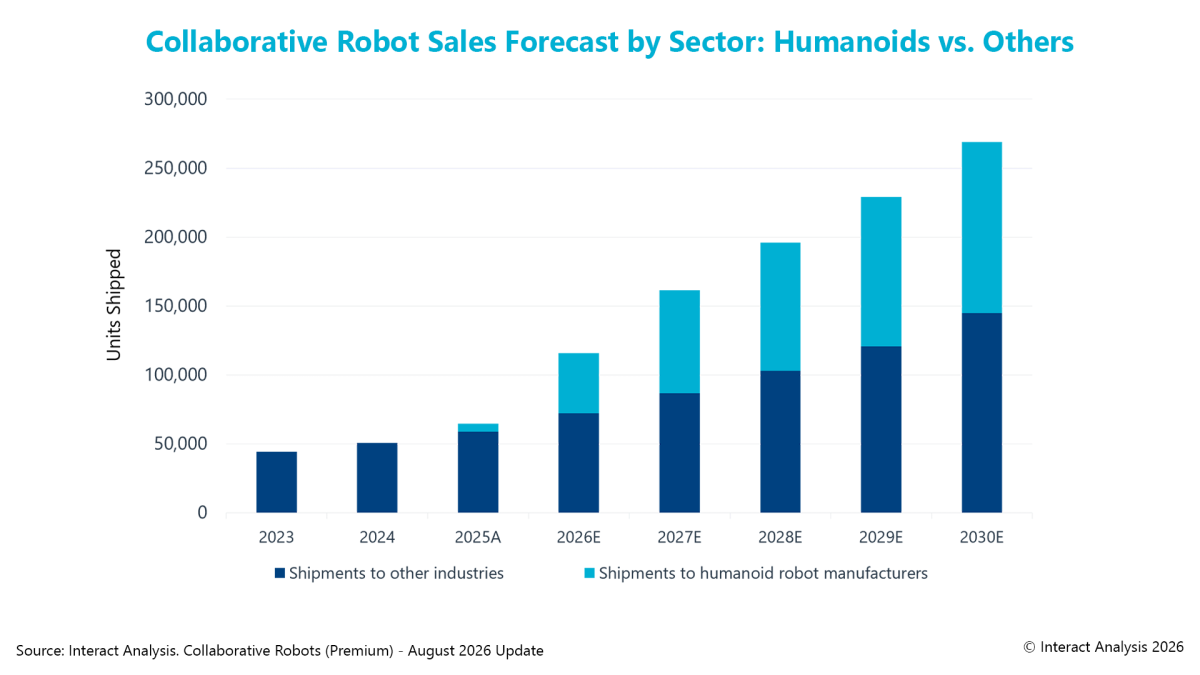
The growing production of humanoid robots is driving up demand throughout the cobot supply chain. According to recent analyses, global production of humanoid robots exceeded 20,000 units in 2025 and is expected to more than triple in 2026. Many manufacturers are focusing on software, AI training, and application development, while sourcing hardware from established suppliers. This benefits providers of collaborative robots and actuators.
Cobot arms can be integrated into humanoid torsos with limited modifications—such as weight reduction, additional degrees of freedom, and suitable controllers. OEMs are pursuing different hardware strategies: ranging from extensive in-house development (e.g., Unitree, 1x Technologies) to the purchase of actuators to the use of complete cobot arms (including Agibot and Jack).
The share of humanoid applications in global cobot shipments is estimated at 37 percent for 2026. Specialized humanoid arms are characterized by seven axes, compact wrists, integrated torque sensors, and high payload-to-weight ratios. Vendors such as Tianji (Gento Robotics), Rokae, Fairino, and Huayan Robotics are actively expanding their presence in this sector.