AMA Survey Q2/2026: The Sensing and Measurement Technology Industry Continues to Grow
The sensor and measurement technology industry continues to grow. At the same time, many companies are more concerned about the administrative requirements of the Cyber Resilience Act than its technical ones.
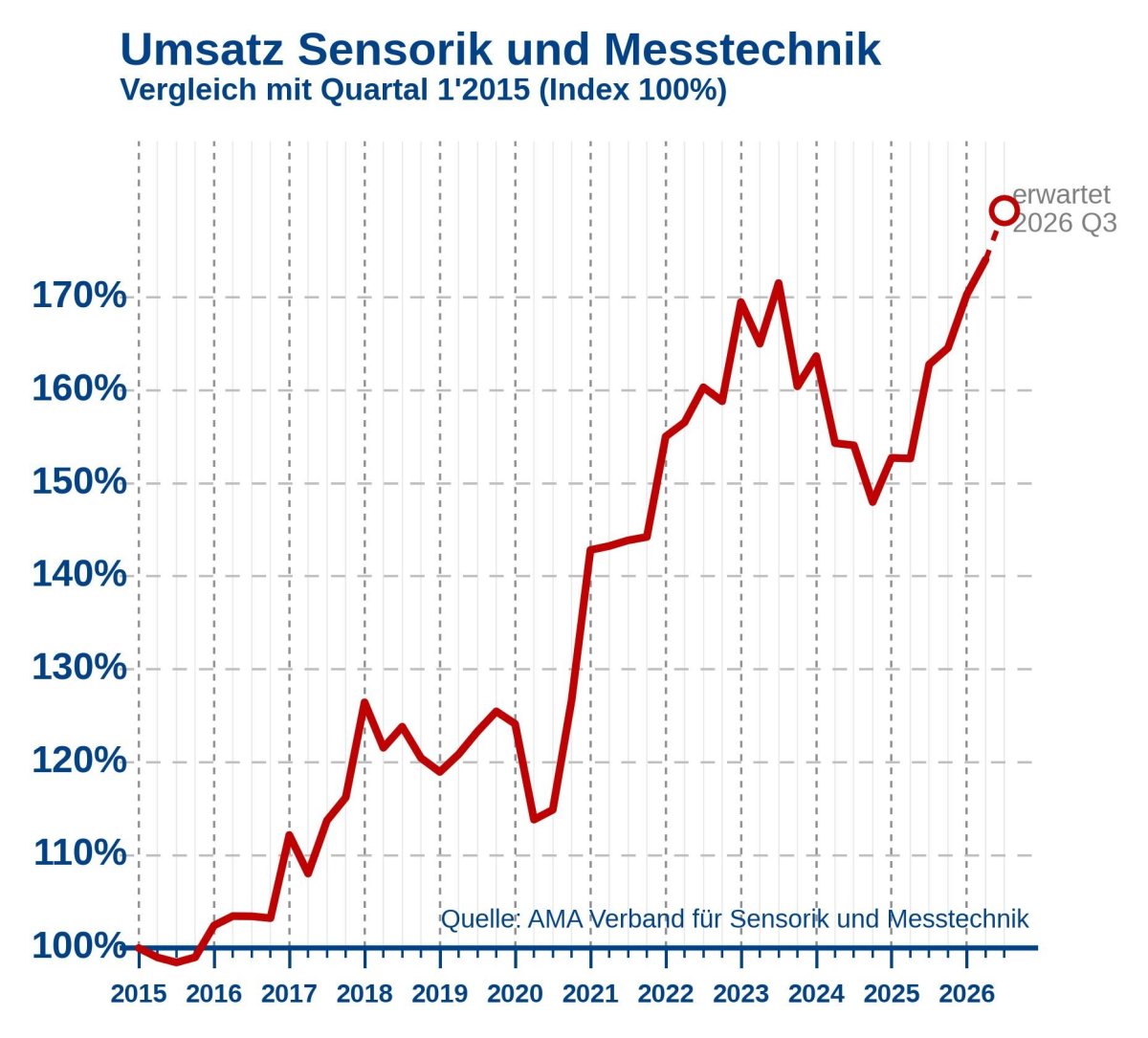
The German sensor and measurement technology industry continues on its growth trajectory, although the momentum in new orders is slowing. This is shown by the latest quarterly survey conducted by the AMA Association for Sensor and Measurement Technology among its member companies. According to the survey, revenue in the second quarter of 2026 was two percent higher than in the previous quarter and 14 percent higher than in the same quarter of the previous year. The industry thus continues to post its highest revenue levels since the survey began in 2015.
While the order situation is normalizing after an exceptionally strong start to the year, overall sentiment remains positive. New orders were down four percent from the previous quarter, but the book-to-bill ratio of 0.98 indicates a largely balanced relationship between new orders and revenue. For the third quarter, the surveyed companies again anticipate a three percent increase in revenue.
Export business also remains stable. About 40 percent of companies reported rising international revenue compared to the previous quarter, while half expect revenue to remain unchanged in the current quarter. At the same time, the employment situation remains robust. Short-time work played virtually no role, affecting only 0.4 percent of the jobs represented.
Another key topic of the survey was the Cyber Resilience Act (CRA). The biggest challenge is surprising: it is not the technical implementation of the requirements that is causing companies headaches, but rather documentation and compliance obligations. Nearly half of the respondents cited the administrative burden as the biggest obstacle, followed by assessing the impact on their own products and a lack of human resources. The results make it clear that while the industry is well-positioned technologically, it sees a need for additional support when it comes to regulatory requirements.