

Achieving precise phase control in optical applications with digital phase-locked loops
Webinar on Thursday, October 24, 2024, 4 - 5pm CEST
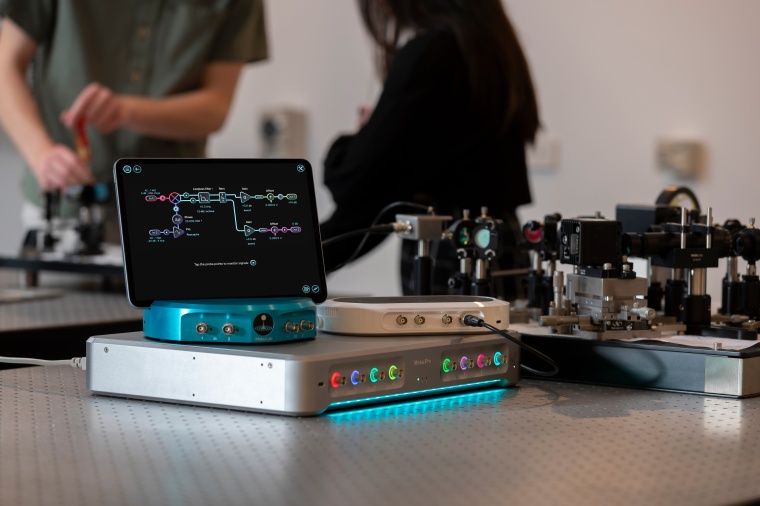

In sensitive optical applications, obtaining the most precise measurements often involves stabilizing the laser with an external reference. One way to synchronize the phase of a signal is by using a phase-locked loop (PLL).
During this presentation, we introduce the concept of phase locking and demonstrate how to construct an optical PLL with FPGA-based instrumentation, using a fully digital lock-in amplifier, waveform generator, and phasemeter. You’ll see how to increase measurement precision, reduce experimental complexity, and minimize costs with a reconfigurable suite of instruments. You’ll also find out how to leverage Python for PLL control and feedback.
Your Key Learnings:
Watch the webinar to learn:
- The fundamental components of a phase-locked loop.
- How a single FPGA-based system can help fast-track optical phase locking.
- How to use Python to implement digital PLLs.
Further ressources:
Complete the survey at the end of the webinar for a chance to win a fully loaded Moku:Go.
Register here


most read

European machine vision expects slight recovery and growth in 2026
According to the VDMA Machine Vision department, sales are expected to increase by around 3%, following a decline of 2% in 2025.

IMTS 2026: America's Manufacturing Sector Focuses on Growth and Technology
The largest manufacturing trade show in the Western Hemisphere is bringing together 1,788 exhibitors this year, including about 400 companies participating for the first time.

Schaeffler bundles Defense and New Space activities under new CEO
Celia Pelaz takes over the position of CEO Defence & New Space at Schaeffler on October 1, 2026 and becomes Chairwoman of the Management Board of Stech Defence GmbH.

ZVEI Calls for Swift Protection of Critical Power Infrastructure
The association has issued a statement in response to the recent attempted attacks on substations in Brandenburg and North Rhine-Westphalia and warns of the consequences for Germany's energy security.
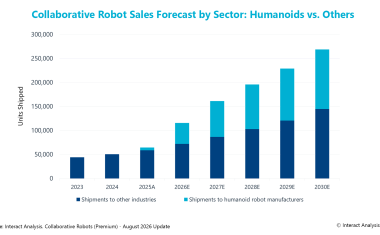
Humanoid robotics is driving demand for cobot arms and actuators
According to recent analyses, global production of humanoid robots exceeded the 20,000-unit mark in 2025 and is expected to more than triple in 2026.