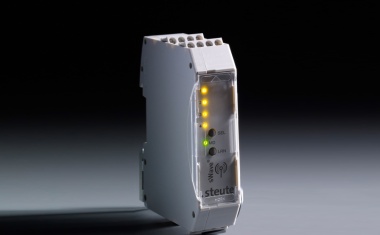
New radio receiver for controlling AGV fleets
Steute presents a new RF Rx SW868-NET-4S-A 48V radio receiver for the nexy radio network, which was developed with a view to applications in automated guided vehicle systems (AGV).


Steute presents a new RF Rx SW868-NET-4S-A 48V radio receiver for the nexy radio network, which was developed with a view to applications in automated guided vehicle systems (AGV).
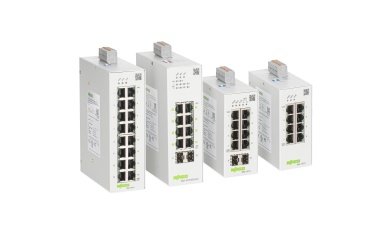
Wago is now offering new lean managed switches. The switches are available with 8 or 16 copper ports, with transfer rates of up to 1000 Mbit / s. Devices with two additional SFP slots (100/1000 Mbit / s) are optionally available, which can be used to connect fiber optic cables, for example.
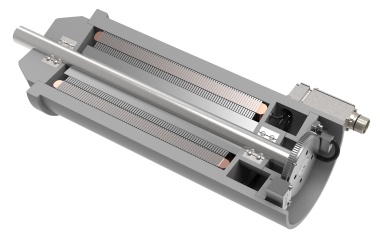
Lenord + Bauer presented the easy-to-assemble i³SAAC-Precision-System. It consists of two standard minicoders, the i³SAAC-Precision-Box and the target wheels manufactured using the hobbing process.
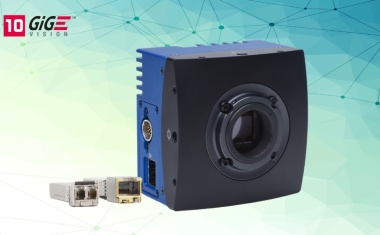
Megatron adapts its precision potentiometers to the needs of the application. Together with the customer, the optimal product is determined as part of the consultation. The services include optimizing the mechanical and electrical properties of the potentiometers, adding components and assembling cables and connectors.
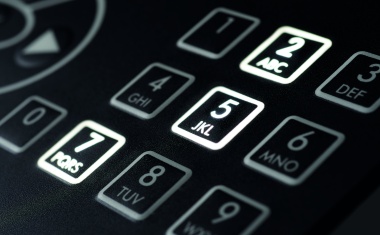
For particularly demanding applications, Kundisch has developed a backlit Profiline keyboard that can be used in many areas, from vehicle technology and payment systems to medical technology.
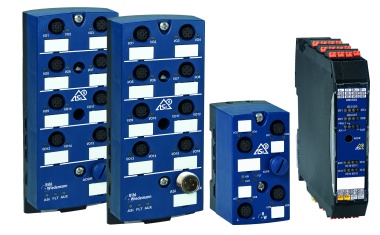
The two new ASi-5 modules BWU4230 and BWU4231 from Bihl and Wiedemann are designed in protection class IP67 and each have 16 I / O. Depending on the application, up to 16 digital inputs or outputs are possible, for example in the form of a connection of 12 distance sensors and four valves in a packaging machine.
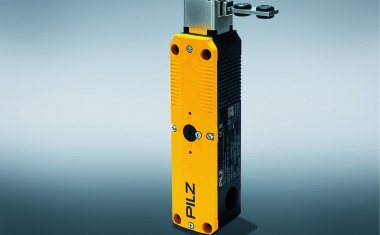
The Psenmech safety door system with guard locking is now available from Pilz. With this system, Pilz offers an economical basic solution for the safe monitoring of movable safety guards.
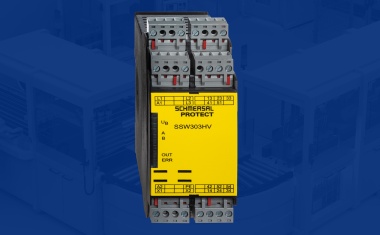
With the SSW303HV, the Schmersal Group is now introducing a new sensorless standstill monitor. The SSW303HV only takes up 45 mm width in the control cabinet. The plug-in and coded connection terminals create the prerequisites for quick and error-free installation. An additional signal contact provides information about the error status of the block.
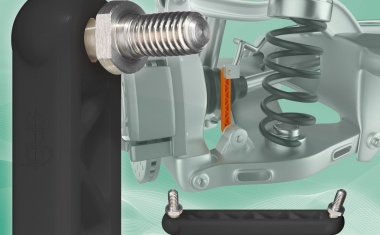
With the igubal GPZM coupling rod, igus is now introducing a double spherical plain bearing that is not only lubrication and maintenance-free, but also 20 percent more flexible than the conventional solution thanks to a new housing material. This tightly encloses the ball stud, prevents the ingress of dirt and increases the reliability of the moving application.
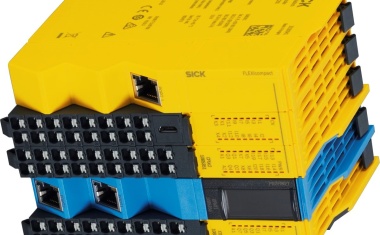
With the Flexi Compact, Sick presents a new modular safety controller that is characterized by an improved user experience in handling and safety engineering. At the same time, users can operate automated machines more productively thanks to the scalable scope of services and intelligent diagnostic functions of the safety controller.
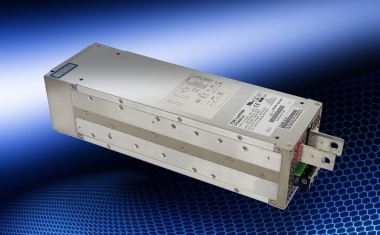
TDK-Lambda has expanded the TPS series with a power supply unit with 48V, 83.3A and 4kW output power. The TPS4000-48 works with an industrial three-phase input. It works automatically with nominal 400, 440, or 480Vac Delta or WYE input without changing wiring or large, expensive step-down transformers.
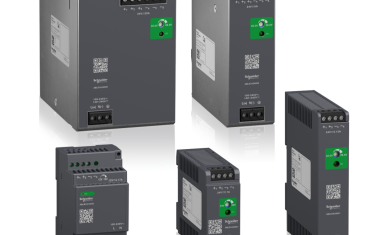
Schneider Electric presents three new power supply series for the power supply of automation systems: "Modular ABLM", "Optimum ABLS" and "Panel Mount ABLP". The robust and compact power supplies of the three series are available with different housing dimensions and are each characterized by a different nominal output.
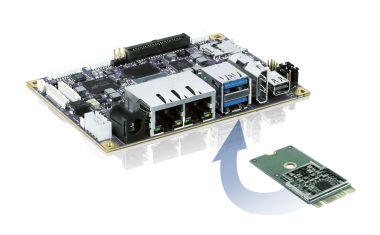
Kontron is now supporting companies with a compact platform for artificial intelligence, machine learning and deep learning. It integrates all Google TensorFlow-Lite applications and enables rapid development of your own AI applications.
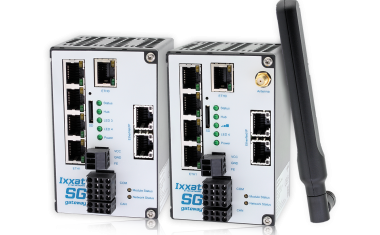
HMS is expanding its range of gateways for networking energy components with new Ixxat SG-gateway variants with 4G / LTE radio modem. In addition, other device variants with a 4-port Ethernet switch are offered. B. networks in substations and power stations can be expanded more safely and easily.
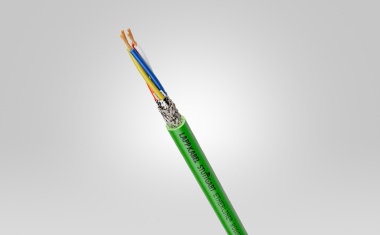
Lapp presented the Etherline Robot PN Cat.5e. It corresponds to the new type R standard for Profinet cables on robots. It is suitable for industrial data cabling within or on the robot - in hose packages or freely laid.
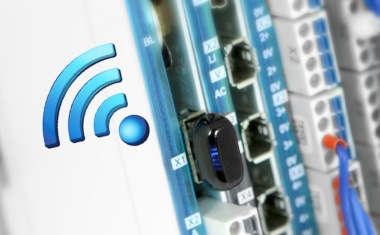
The compact WLAN adapters WiFi-C and WiFi-Pro from Sigmatek enable efficient and wireless CPU communication. The adapters work in the 2.4 GHz frequency band and can therefore be used without restrictions worldwide. The plug & play device WiFi-C, which acts as a client, is already available. The WiFi-Pro is planned for further expansion, in which the adapter can be configured as a client or access point.
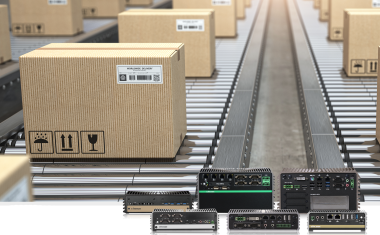
The new Embedded PC series DA-1100, DC-1100, DI-1000, DX-1100 and DS-1200 from Compmall cover all areas of application. They have a CPU bandwidth from Intel Celeron (Apollo Lake) to Intel Xeon (Coffee Lake) as well as a fanless design and a wide temperature range.
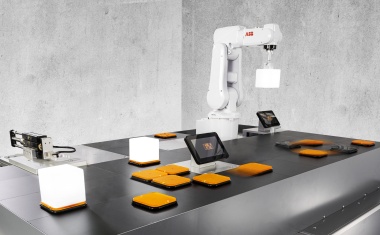
B&R has presented the Acopos 6D. The system is based on the principle of magnetic levitation technology: shuttles with integrated permanent magnets move without contact on a surface made up of motor segments. The electromagnetic motor segments are 240 x 240 mm in size and can be assembled into any shape.
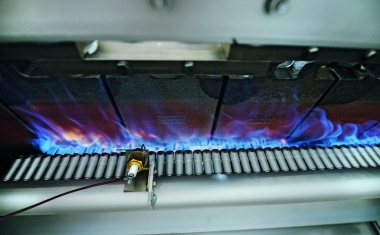
An industrial wafer baking machine is complex in terms of control technology. The ignition process of the gas-fired long-tube burner alone comprises 20 individual steps. Numerous other process steps are added as the baking process continues. The wafer machine specialist Franz Haas-Waffelmaschine therefore decided in favor of a flexibly configurable, safe miniature control system that can be used to monitor and control not only the functional safety but also the burner control and thus the entire safety technology of the baking machines.
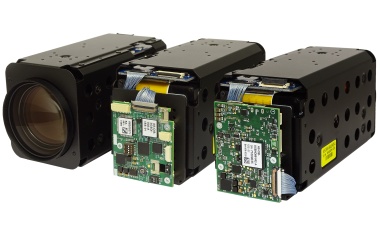
Active Silicon has introduced new autofocus zoom cameras. This includes the Harrier 36x AF-Zoom, in which the manufacturer has combined a powerful 36x optical zoom lens, a Sony CMOS sensor with global shutter and a large selection of video outputs. These 1080p / 60 block cameras are suitable for a wide variety of industrial and commercial applications.
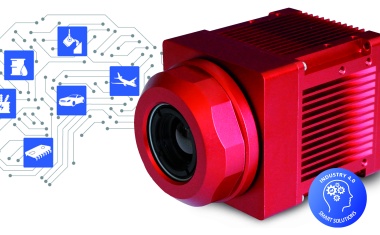
With its smart infrared camera series IRSX, AT-Automation Technology offers a solution for intelligent temperature image processing. Developed as an all-in-one solution, the Smart-IRSX is an autonomous imaging sensor and a real all-rounder for temperature monitoring in every industrial environment.
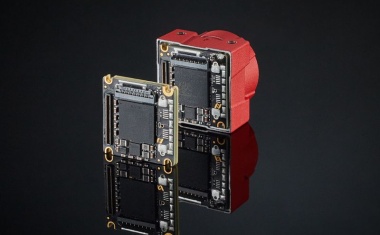
Allied Vision is expanding its Alvium 1800 CSI-2 camera series with 3 camera models. The new models are equipped with CMOS sensors from Sony, which are valued in the image processing industry for their high image quality and high frame rates.
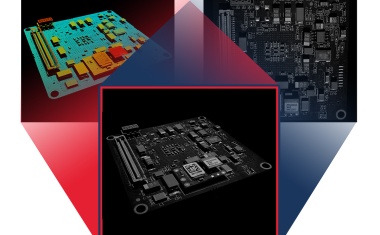
To improve the inspection process in the electronics industry, AT - Automation Technology has added a function called Multipart to its 3D sensors. This allows up to ten features to be output simultaneously, regardless of pixel format or algorithm.
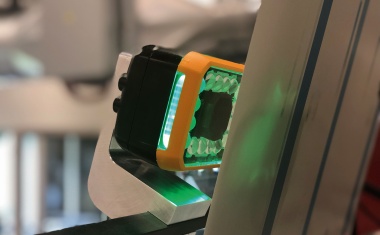
Large batches are increasingly being replaced by short runs – and this also applies to labels. To keep changeover times and waste low, the Danish press manufacturer Nilpeter relies on a vision system that is fully integrated into the line.
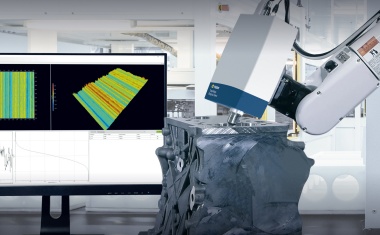
With Topmap, Polytec has established a series of optical 3D surface measurement technology that is suitable for rapid and reliable quality control with regard to surface quality and geometric parameters. It measures and documents every workpiece.
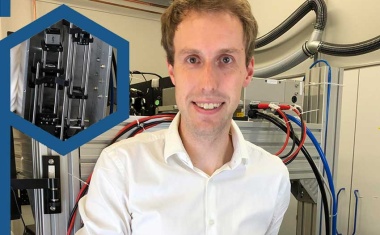
The system allows monitoring of the process stability involved in laser structuring for the design of a new range of functionalized surfaces such as easy to clean finishes for ovens, fridges, and other home appliances.
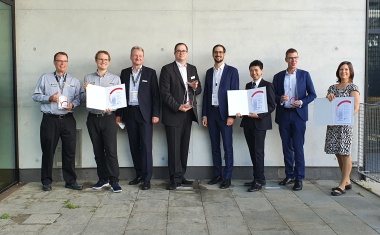
The presentation of the inspect award 2022 took place at the Vision trade fair - on a smaller scale than usual, but still with overwhelming glamour compared to the Lockdown 2020. Awards were presented for the best innovations in industrial machine vision and optical metrology. Thus, the journey to Stuttgart was worthwhile for the attendees not only because of the Vision.
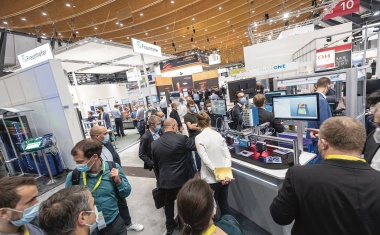
For the first time in three years, the machine vision industry made its pilgrimage back to Stuttgart for Vision. It all took place on a smaller scale - fewer exhibitors and visitors than in 2018 - but the joy in view of the reunion outshone everything.
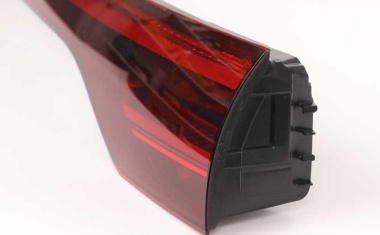
Technical article by Lea Sauerwein, Christian Ebenhöh, and René Geiger in the current issue 5/2021 of PhotonicsViews: a new approach to the joining of polymers combines two different processing wavelengths with the method of quasi-simultaneous welding in order to achieve a significant reduction of welding time and enhanced weld seam quality.
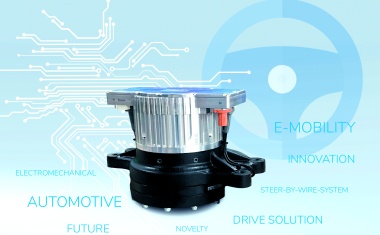
Nabtesco is expanding its activities in the automotive sector. Together with the company adcos, a company of the Nabtesco Group, the transmission specialist has developed a purely electromechanical steering and drive solution for commercial vehicles, thus targeting the next step towards autonomous driving.

With the auto-tuning function, Lenze has now automated and significantly simplified the setting of the control parameters for its i-series servo inverters. Apart from the servo converter, no additional measuring components are required.
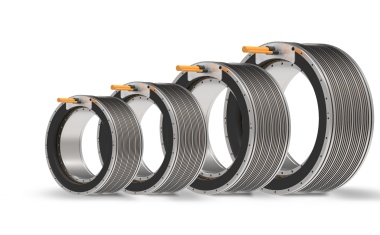
No motor housing, no bearings, but high power density and dynamics as well as a large number of configurable design variants - this is what distinguishes the housing-less servomotors of the Cyber Kit Line series from Wittenstein.
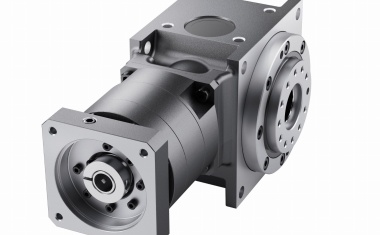
With the Dynagear HR, Nidec Graessner has developed a new two-stage angular gear that is space-saving and also runs extremely smoothly. It complements the single-stage DynaGear transmission series.
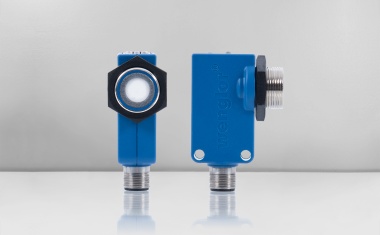
With the ultrasonic distance sensors of the new U1RT series, IO-Link 1.1 and an NFC interface are combined in one housing. In barrier mode it works reliably up to 2,000 mm, in reflex mode up to 1,200 mm.
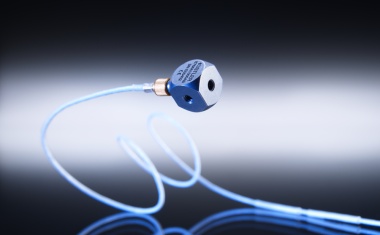
Kistler has improved its triaxial accelerometer 8763B050: Its measurement threshold has been reduced from 0.0004 to 0.00029 µg. This makes it particularly suitable for monitoring vibrations. It monitors the vibration in three mutually perpendicular axes.