The Rise of Photonic and Neuromorphic Computing: A New Era for AI Hardware
Computer Architectures for future data processing
Dr Ivan Nikitski, Photonics Technology Expert at Epic – European Photonics Industry Consortium
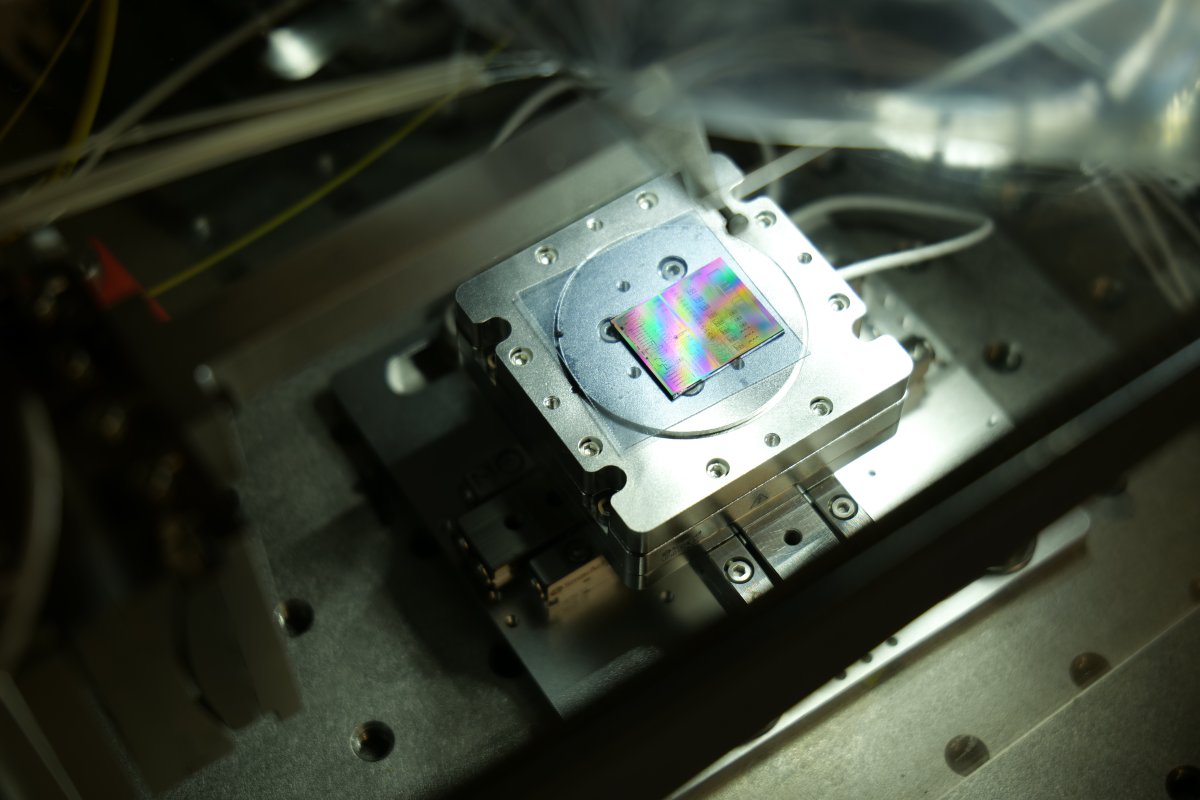
The rapid development of AI is pushing traditional electronics to its structural and energy limits. New hardware approaches such as photonic and neuromorphic computing promise fundamental advances in efficiency and performance and could have a decisive impact on the architecture of future AI systems.
The explosive growth of artificial intelligence has starkly exposed the limitations of traditional silicon-based electronics, creating an urgent need for more efficient computing paradigms. As neural networks grow larger, the energy costs have become unsustainable, primarily due to critical bottlenecks in data movement. This has spurred a hardware revolution, shifting research toward two revolutionary and complementary approaches: energy-efficient photonic computing and brain-inspired neuromorphic architectures. These technologies promise not just incremental gains, but orders-of-magnitude improvements in speed, efficiency, and latency, fundamentally redefining the future of AI infrastructure.
IBM Research illustrates the immense scale of this computational challenge, noting that training a modern AI model requires the equivalent of 10,000 days of the world's first petaflop supercomputer. With compute power having improved 60,000-fold over memory bandwidth's mere 100-fold gain, the solution lies in new architectures. IBM is pioneering analog in-memory computing using grids of programmable resistors like resistive RAM. Optical versions of this approach use beams of light manipulated by interferometers to achieve results at light speed, with systems achieving remarkable efficiency and nearing viability for the entire AI training process.
This hardware evolution is complemented by the neuromorphic computing research highlighted by Zurich University of Applied Sciences. Their work emphasizes that neuromorphic systems are defined by brain-inspired algorithmic principles, not just hardware. This approach embraces biological computation through parallel architecture with integrated memory and processing that operates asynchronously, consuming power only when responding to meaningful events. This makes it supremely efficient for real-time applications, extending beyond deep learning to optimization solvers and bio-inspired models for robotics.
Optical Computing without Conversion Inefficiency
The revolution extends beyond specific accelerators to reimagining entire computing architectures. Akhetonics company is challenging the assumption that optical computing is only suitable for matrix math by developing a general-purpose, high-performance optical processor. Their approach replaces both electronic transistors and memory with optical components, keeping data in the optical domain from input to output to eliminate conversion inefficiency. By simplifying designs to need thousands instead of billions of transistors, they achieve remarkable energy efficiency and low latency with a design built on European supply chains.
Simultaneously, the field of quantum computing is seeing photonic innovations that could make quantum processing more accessible. The startup Rotonium is pioneering a unique approach using a photon's orbital angular momentum to encode multiple qubits within a single photon. This creates "multidimensional qubits" that enable deterministic quantum gates without needing extra ancillary photons, significantly reducing error correction overhead and allowing for compact, room-temperature operation suitable for edge applications.
Photonics Industry Supports Advances in Computing
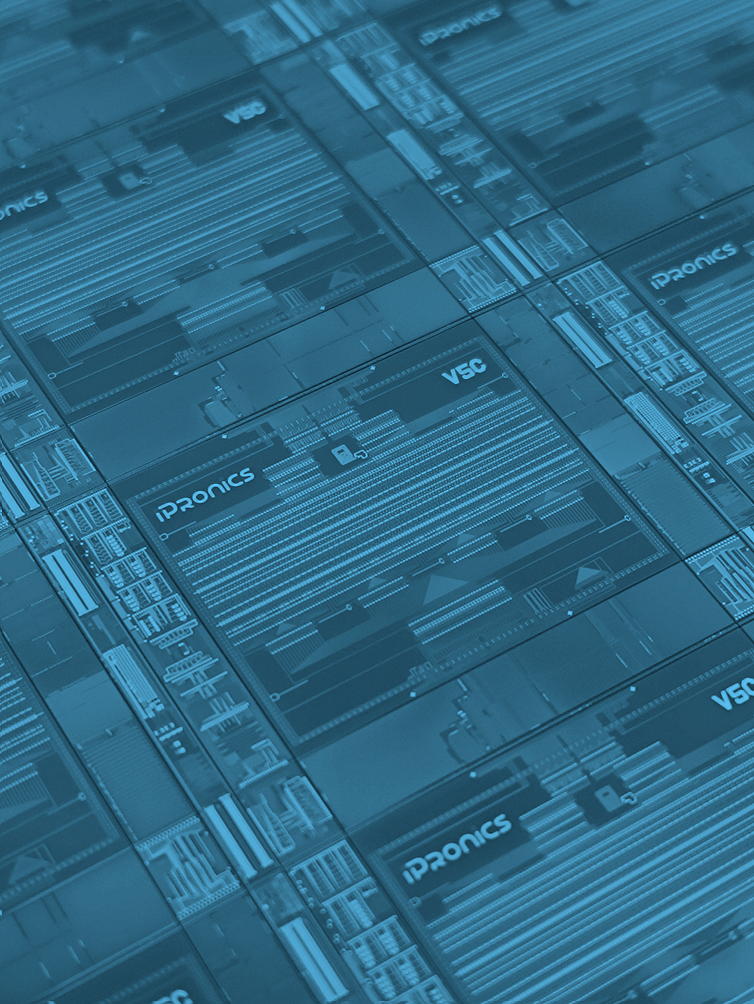
Supporting these advances in computing units are crucial innovations in photonic networking. The company Ipronics focuses on this critical area, developing high-speed, lossless optical circuit switches that create a reconfigurable photonic layer for AI data centers. Their technology can reroute connections within microseconds upon failure and dynamically reconfigure network topology to adapt to live traffic patterns, enhancing both resilience and training efficiency for clusters of GPUs or future photonic chips.
Finally, addressing the persistent challenge of coupling light efficiently between chips and fibers requires the precision micro-optics developed by Nanoscribe. Using advanced 3D micro-printing, they create custom micro-lenses that reshape light beams to perfectly match the different mode sizes of nanoscale waveguides and optical fibers. This technology drastically reduces coupling losses and relaxes alignment tolerances, making the packaging of photonic systems more robust and scalable—a vital step for practical integration from AI accelerators to quantum computers.
Conclusion
Together, the developments from these innovators represent a tectonic shift in computing architecture. The convergence of photonics, neuromorphic inspiration, and quantum principles is creating a new class of machines tailored for modern AI: faster, more energy-efficient, and adaptive. The race is no longer about transistor density but about unlocking new dimensions of computation. This foundational shift promises to finally decouple computational progress from unsustainable energy demands, enabling a future where AI can grow both smarter and greener. As these technologies mature and converge, they will redefine what is possible, pushing the boundaries of intelligence from the data center to the very edge of our world. This new era of intelligent, efficient computing has already begun.