

Small and Lightweight Lidar Sensor for Robotics and Drone Applications
Lidar Depth Sensor Provides Precision Measurement Accuracy, Distance Resolution and Measuring Range
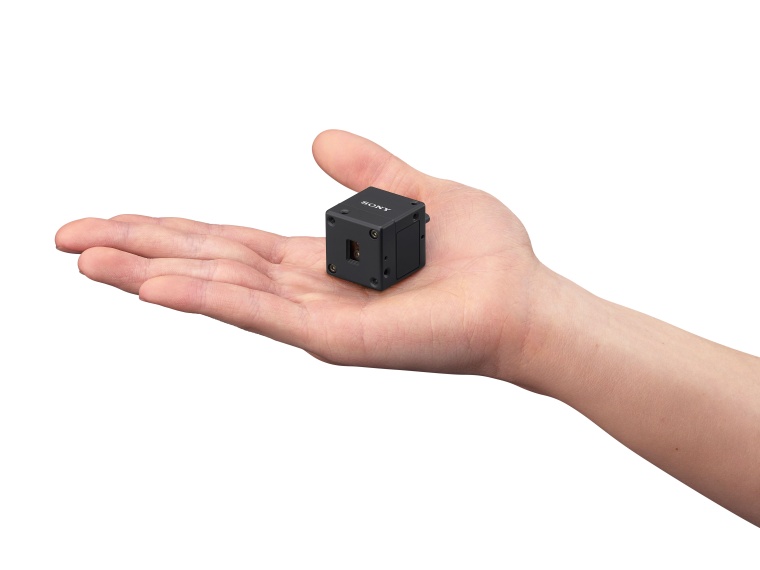

A compact Lidar depth sensor uses dToF technology to deliver accurate 3D measurements, even in challenging environments both indoors and outdoors. Its lightweight, robust design makes it ideal for drones, autonomous robots, and other space- or weight-constrained applications. Availability is planned for spring 2026.
Sony Image Sensing Solutions is announcing the commercialization of the AS-DT1 LiDAR depth sensor. This Lidar Depth Sensor structure measures 29 x 29 x 31 mm (approximately 1.14 inch width x 1.14 inch height x 1.22 inch depth), excluding protrusions, and weighs 50 g (approximately 1.76 ounces). The AS-DT1 leverages miniaturization and optical lens technologies from Sony’s machine vision industrial cameras, making it suitable for applications where space and weight constraints are paramount, including drones, robotics, and more.
The sensor utilizes 'Direct Time of Flight (dToF)' Lidar technology, which delivers fast and accurate measurement, distance resolution, and measuring range. The proprietary dToF ranging module equipped with a Single Photon Avalanche Diode (SPAD) sensor utilizes multiple ranging points for distance measurement and can accurately measure distances in three dimensions: length, width, and depth.
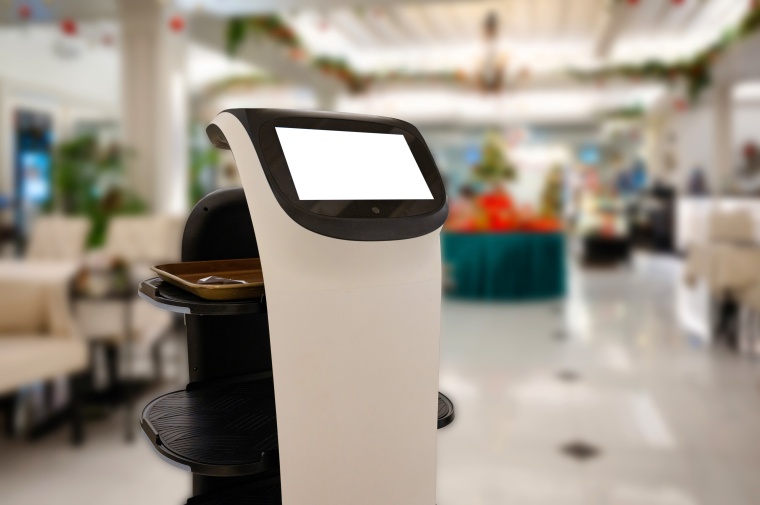
The AS-DT1 can even measure distances to low-contrast subjects and objects with low reflectivity, which are more difficult to detect with other ranging methods. This enables accurate measurement of distances even in environments such as retail stores, where various objects, including people and fixtures, are expected. In addition to its ability to accurately measure distances both indoors and outdoors, the sensor’s compact, lightweight design and rigid aluminum housing allow for integration into a wide range of devices, such as food service robots in restaurants, autonomous mobile robots in warehouses, and drones used for inspections and surveys.
High Measurement Accuracy and Distance Resolution
Sony’s proprietary dToF ranging module, equipped with a SPAD sensor, achieves accurate measurements and distance resolution. It can measure at various distances, for example, at 10 meters (approximately 32.8 feet) with a margin of ±5 cm (nearly 2 inches) both indoors and outdoors. Additionally, it is capable of measuring distances to various objects that are difficult to detect with other ranging methods. This includes low-contrast subjects, objects with low reflectivity, and floating objects, making it suitable for integration into robots used in environments such as stores and warehouses.
Measurement Range
The AS-DT1 is accurate also at distances of 40 meters (approximately 131.23 feet) indoors and 20 meters (approximately 65.6 feet) outdoors under bright summer conditions (assuming 100,000 lux), which can be challenging when inspecting infrastructure such as bridges, highways, and dams.
Compact, Lightweight, and Robust Housing
By utilizing an aluminum alloy for the structure, it balances lightweight design and robustness. The compact housing makes it easy to integrate into various devices, such as autonomous mobile robots with limited space for depth sensors and drones where weight can impact flight time and distance.
The AS-DT1 is expected to be available in Spring 2026.
Company
Sony Europe B.V., Zweigniederlassung DeutschlandKemperplatz 1
10785 Berlin
Germany


most read
Powerful in operation, intelligent in collaboration
How Faulhaber Drive Systems Are Bringing Humanoid Robotics Closer to Everyday Use

From Gamescom to the Factory
How the Gaming Industry Is Driving Automation

Packaging Is Becoming a Strategic Task in Production
The new EU Packaging Regulation affects more than just packaging manufacturers. Production, logistics, and automation experts must also reassess their processes, materials, and equipment.
Microspectrophotometer in Practice
During a three-day Open House in Unterschleißheim near Munich, Optoprim Germany and Craic Technologies demonstrated integrated UV–visible–NIR and Raman microspectroscopy under real research conditions.
It Does Not Always Have to Be a Humanoid Robot
Mythomorphic design adds a distinct perspective to social robotics. Inspired by myths and fantasy rather than humans or animals, the article classifies examples and examines related opportunities and risks.