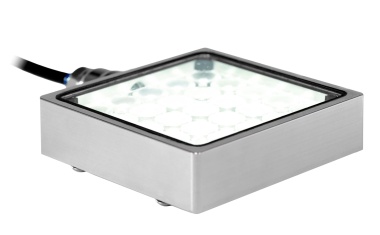
On the Spot
Built for extreme environments, IP69K certified lights are specifically engineered to withstand everything from prolonged liquid immersion to high-pressure steam cleaning and corrosive washdown solutions.


Built for extreme environments, IP69K certified lights are specifically engineered to withstand everything from prolonged liquid immersion to high-pressure steam cleaning and corrosive washdown solutions.
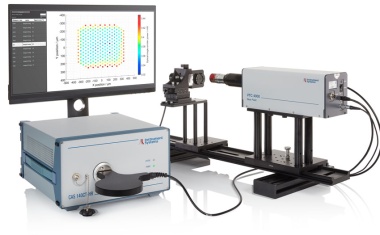
Instrument Systems’ Drs Frank Münchow and Karthik Iyer explain in an upcoming PhotonicsViews article how to minimize the error budget of a VCSEL test system and provide highly accurate measured values for the eye safety of the laser source.
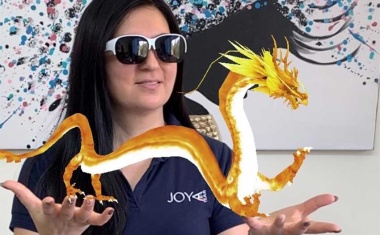
In a two-part tutorial in PhotonicsViews 1 and 2/2022, Joya Team share their experience of more than two decades with the professional community.
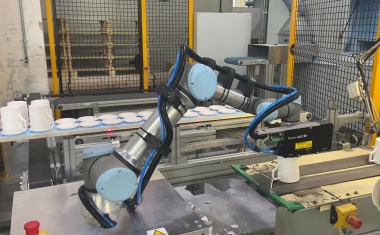
A cobot in combination with a 3D profile sensor and machine vision software has succeeded in saving 15 percent of production costs by automating the handling of luxury Italian porcelain teacups. This success is prompting the companies involved to consider further applications, for example in the food industry.

The 20th EMVA Business Conference kicks off in Brussels on May 12. At the top of the agenda is networking within the European machine vision industry.
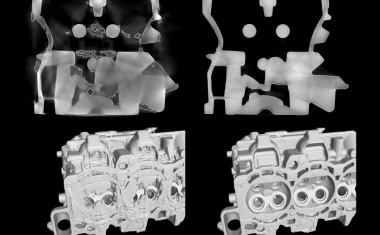
CT systems UX20 and UX50 combined both state-of-the-art technology and the results of their open ears for customer requirements. As a result, the system is not only highly functional but also exceptionally user-friendly.
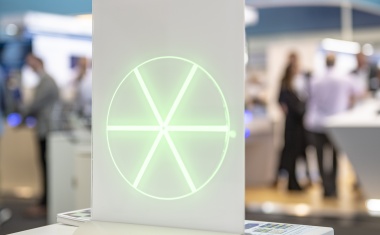
The Laser World of Photonics trade fair will take place from April 26 to 29 at the Munich exhibition center. For the first time, the future topic of quantum technology will have its own stage with the parallel event "World of Quantum".
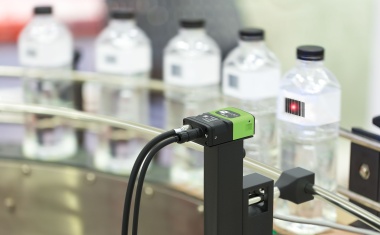
With a family of stationary barcode readers, logistics specialist Zebra Technologies offers users powerful options for effective material flow. They reduce manual effort and make a significant contribution to ensuring that track-and-trace processes run smoothly.
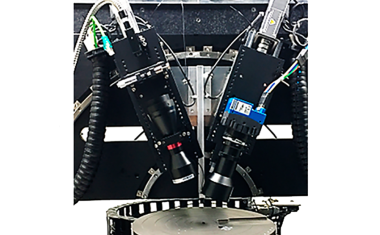
Based on a novel measurement algorithm and the Mikrotron EoSens 12CXP+ area scan camera, scientists in Taiwan developed a system to reconstruct a 3D model in a continuous scan mode instead of the conventional approach of taking three full-field fringe images sequentially in pause mode.
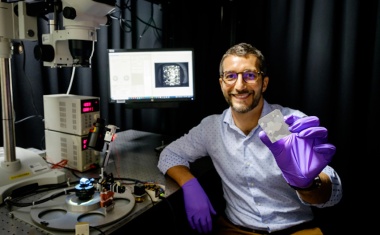
Scientists from NTU Singapore have developed a fast imaging system to analyze the inner structure of 3D-printed metal parts.
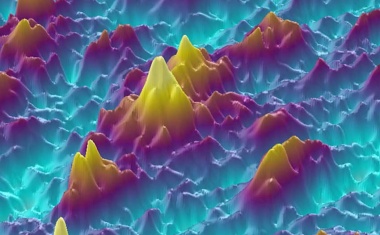
Zygo is constantly researching and refining interferometry-driven optical metrology tools and recognizes that digital holography is gaining significant momentum in the measurement of surface topography due to increases in the speed and data capacity of today’s computers.

CMOS is becoming increasingly popular, but CCD is far from obsolete. When does which image sensor technology make sense and where do both play out their advantages? So far, CCD sensors still impress with higher image quality and lower noise, whereas CMOS sensors score in terms of energy consumption and smear and blooming effects. With more choice of global shutter sensors, CMOS continues to catch up.
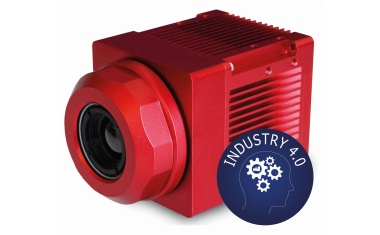
An intelligent infrared camera speaks for itself. It talks about its range of applications in thermal process monitoring in industry, as well as certain evaluation functions.
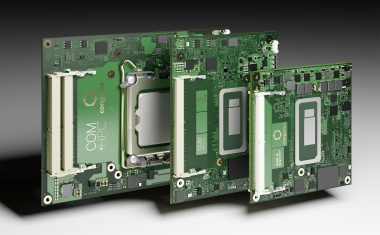
3D vision is increasingly used in conjunction with machine learning in many application areas. The latest COM-HPC modules not only offer these applications significantly higher computing power, but also help with hardware consolidation.

Corning has launched a dicing technology that will allow the company’s laser technologies business to enter the semiconductor application space to further focus on microfabrication processes.
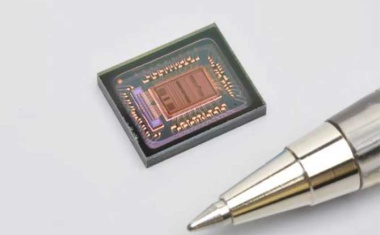
As a leading component manufacturer, Hamamatsu is well aware of the advantages and disadvantages offered by various systems, and the main differences will be explained in the new issue of PhotonicsViews, 1/2022.
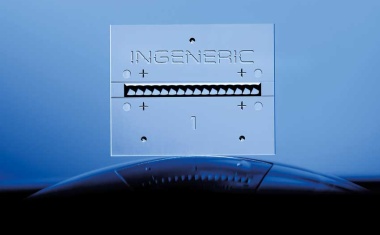
In order to give developers of microlens arrays (MLAs) the opportunity to sound-out the potential of this technology, Ingeneric presents an MLA demonstrator in a new technical article in PhotonicsViews issue 1/2022.
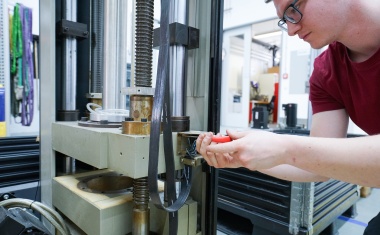
In October, Zwick invited Roell to the testXpo again - and held a press conference as part of the in-house exhibition. Among other things, the new testing machine generation Allround-Line was presented. This is a flexible system with two test rooms that can be used for testing tasks in quality control as well as in research projects.
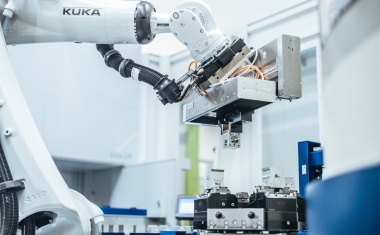
A new manufacturing cell that includes milling, loading, and unloading, plus clamping technology and sensors for improved reliability facilitates the production of worm gear screw jacks considerably.
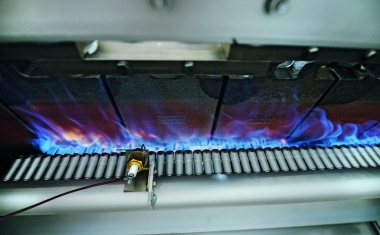
An industrial wafer baking machine is complex in terms of control technology. The ignition process of the gas-fired long-tube burner alone comprises 20 individual steps. Numerous other process steps are added as the baking process continues. The wafer machine specialist Franz Haas-Waffelmaschine therefore decided in favor of a flexibly configurable, safe miniature control system that can be used to monitor and control not only the functional safety but also the burner control and thus the entire safety technology of the baking machines.
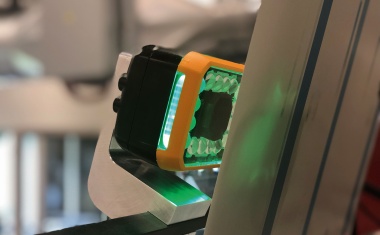
Large batches are increasingly being replaced by short runs – and this also applies to labels. To keep changeover times and waste low, the Danish press manufacturer Nilpeter relies on a vision system that is fully integrated into the line.
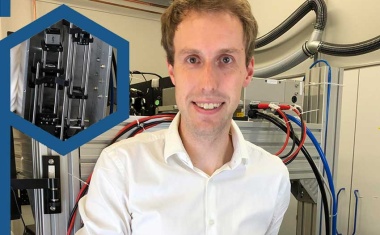
The system allows monitoring of the process stability involved in laser structuring for the design of a new range of functionalized surfaces such as easy to clean finishes for ovens, fridges, and other home appliances.
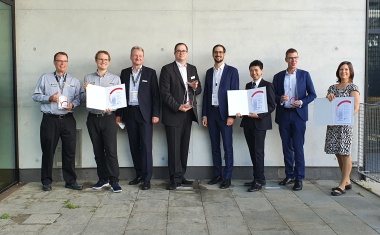
The presentation of the inspect award 2022 took place at the Vision trade fair - on a smaller scale than usual, but still with overwhelming glamour compared to the Lockdown 2020. Awards were presented for the best innovations in industrial machine vision and optical metrology. Thus, the journey to Stuttgart was worthwhile for the attendees not only because of the Vision.
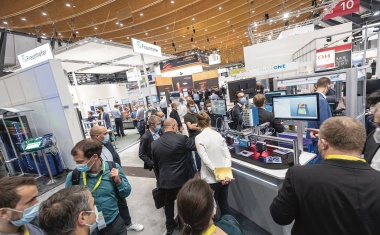
For the first time in three years, the machine vision industry made its pilgrimage back to Stuttgart for Vision. It all took place on a smaller scale - fewer exhibitors and visitors than in 2018 - but the joy in view of the reunion outshone everything.
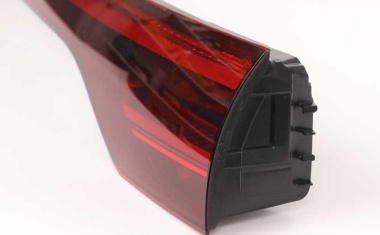
Technical article by Lea Sauerwein, Christian Ebenhöh, and René Geiger in the current issue 5/2021 of PhotonicsViews: a new approach to the joining of polymers combines two different processing wavelengths with the method of quasi-simultaneous welding in order to achieve a significant reduction of welding time and enhanced weld seam quality.
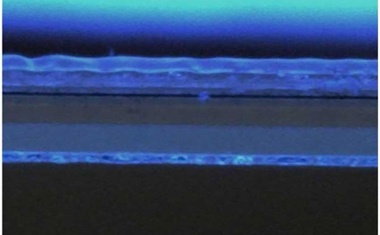
Technical article by Patrick Kim in the new issue 5/2021 of PhotonicsViews: new laser system component minimizes unwanted heat accumulation in the material being processed compared with traditional CO2 laser sources, which typically produce longer pulse rise/fall times of approximately 60 μs.

B&R has added the CANopen safety protocol to its safe X90 controllers. With CANopen Safety, data is transmitted in a safety-related manner in accordance with SIL2. The secure protocol thus makes a significant contribution to the compliance with guidelines with regard to machine safety.
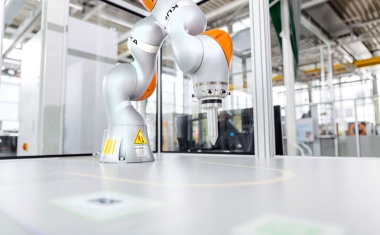
The safety of people interacting with robots has top priority, especially when humans and robots are working side by side instead of being separated from each other by safety fencing. The Fraunhofer Institute for Factory Operation and Automation IFF’s web-based design tool helps companies design their cobots. The Cobot Designer helps minimize the risk of accidents and increases employee safety. The tool is available as a free web application.
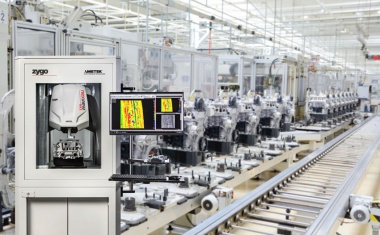
Peter J. de Groot and Michael Schmidt have provided a pivotal article, looking at the extremely important subject of the role of metrology in Industry 4.0.

By analyzing lens data during optics design, the optimal optical fabrication chain can be determined.
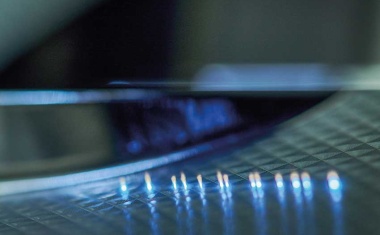
Distributed computing for the automated manufacturing of the future.

Instead of printing the barcode on the packaging, it can also be lasered directly onto the skin of fruit or vegetables. This saves on packaging costs and protects the environment. But to ensure that the peel is not damaged in the process, the focus of the laser must be precise, despite the fact that the individual fruits are always different sizes. A 3D sensor from a company in northern Germany helps with this.
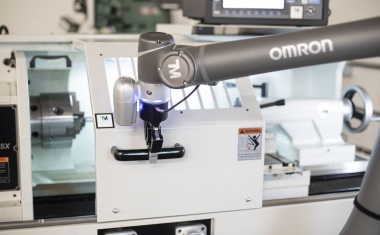
Collaborative robots (cobots) have a key role in current and future trends in industrial automation and production. Recent studies assume that the value of cobots in industrial automation will have reached US$ 7 billion by 2025. With the average retail price of a cobot being between US$ 15,000 and US$ 45,000, their use in this type of automation is also becoming increasingly feasible for industrial manufacturing applications in smaller production facilities and warehouses.
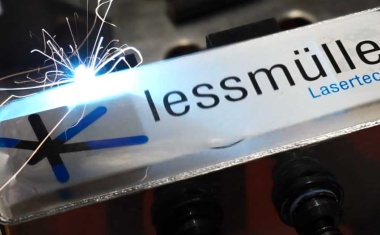
One of the key laser application areas in the e-automotive industry is the welding of the battery. Sensor systems from Lessmüller Lasertechnik ensure reliable high-precision joining, which is vital in the assembly of any battery. Installed to various remote and fixed welding optics, the OCT, WELDCHECK, and WELDEYE sensor systems demonstrate real-time monitoring capability with great accuracy and over a wide dynamic range, enabling faster, cost-effective e-automotive laser processes and streamlined production.
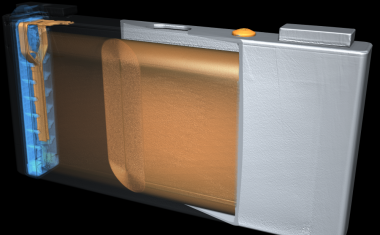
Because of their high-power density, rechargeable lithium-ion batteries are subject to strict quality monitoring. Industrial computed tomography is increasingly being used to detect any defects before delivery or during production.