

Thin film cutting with reduced heat affected zone
Technical article by Patrick Kim in the new issue 5/2021 of PhotonicsViews: new laser system component minimizes unwanted heat accumulation in the material being processed compared with traditional CO2 laser sources, which typically produce longer pulse rise/fall times of approximately 60 μs.
The recent growth in the organic light-emitting diode market has resulted in substantial investments in the display industry, particularly from South Korean companies, but also from Chinese players, and this trend is expected to continue for a further three to four years. This expansion of the display industry has resulted in a growth of ultrashort-pulse (USP) laser markets due to the requirement for higher power and more precise processing quality. This industry is prepared to pay for better laser-based solutions which has fuelled the demand for shorter pulsed CO2 lasers for film cutting applications. One of the key features required in the market is to minimize the heat effect on the material during the cutting process.
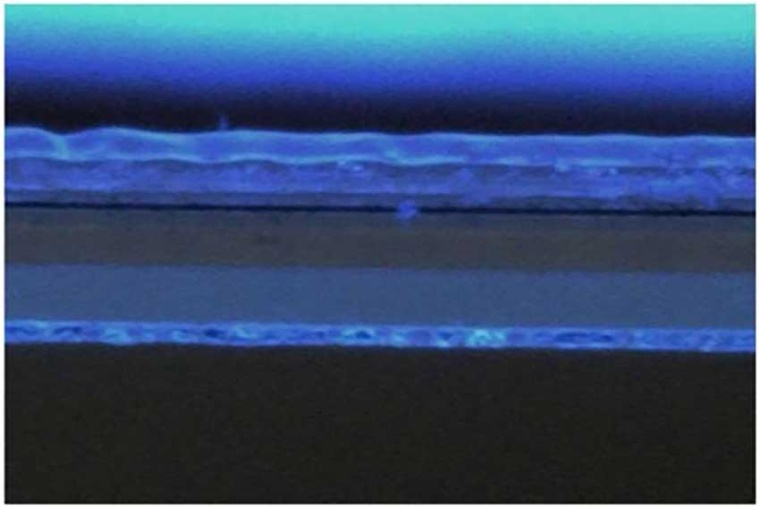
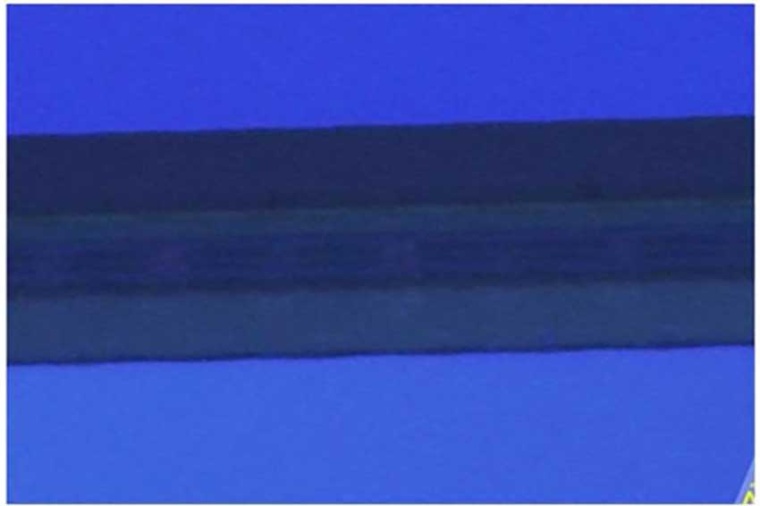
Luxinar’s SR AOM CO2 laser has a typical 2 µs demand pulse shape that exhibits a ~350 ns pulse rise time. This short optical pulse rise/fall time helps to minimize the heat-affected zone (HAZ) which is ideal for cutting thin films such as polarization, projected capacitive and PDLCD. Other applications in the automotive, electronics, lighting and flexible packaging industries can also benefit from the higher quality cutting edge which the SR AOM offers when compared to standard pulsed CO2 lasers.
Read the full article in the October/November 2021 issue of PhotonicsViews:
P. Kim (Luxinar): Material processing with fast rise and fall time CO2 laser pulses – New CO2 laser system using an integrated acousto-optic modulator, PhotonicsViews 18(5), 51 – 53; DOI: 10.1002/phvs.202100040
Company
Luxinar LtdMeadow Road
Kingston upon Hull, HU13 0DG
UK


most read

Packaging Is Becoming a Strategic Task in Production
The new EU Packaging Regulation affects more than just packaging manufacturers. Production, logistics, and automation experts must also reassess their processes, materials, and equipment.

From Gamescom to the Factory
How the Gaming Industry Is Driving Automation

It Does Not Always Have to Be a Humanoid Robot
Mythomorphic design adds a distinct perspective to social robotics. Inspired by myths and fantasy rather than humans or animals, the article classifies examples and examines related opportunities and risks.
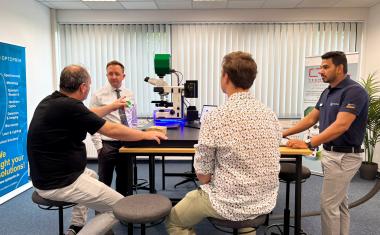
Microspectrophotometer in Practice
During a three-day Open House in Unterschleißheim near Munich, Optoprim Germany and Craic Technologies demonstrated integrated UV–visible–NIR and Raman microspectroscopy under real research conditions.
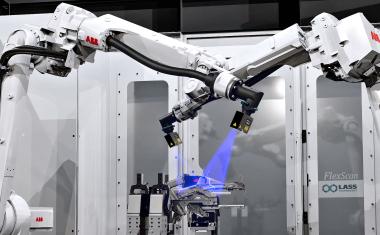
3D laser scanning for 100 percent inspection
Modern production requires precise, fast, and fully automated inspection processes. The robot-assisted inline measurement system Flexscan meets this requirement with two 3D compact sensors