

How laser material processing can benefit from OCT technology
A qualitative and quantitative analysis of ultrashort-pulse processing of glass in a technical article – now online and in PhotonicsViews issue 1/2025.
Ultrashort-pulse (USP) laser ablation enables the creation of freeform shapes that are challenging to produce with conventional optics manufacturing techniques. To maintain the industrial standards of many branches, it is crucial to not only consider material removal rates but also the surface quality and subsurface damage (SSD). This study investigates the SSD patterns generated in fused silica and quantifies key parameters such as the SSD depth by applying optical coherence tomography (OCT).
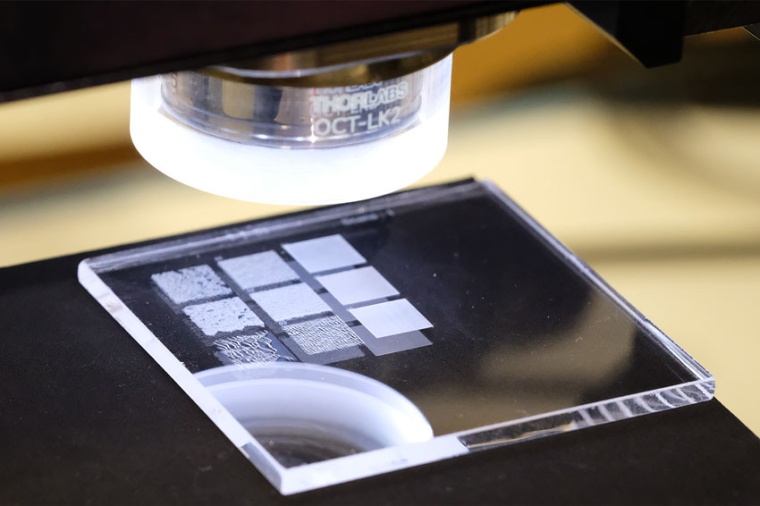
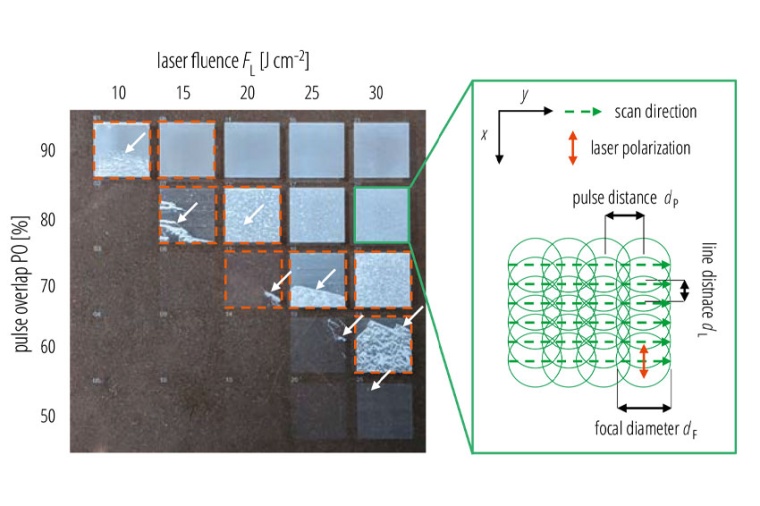
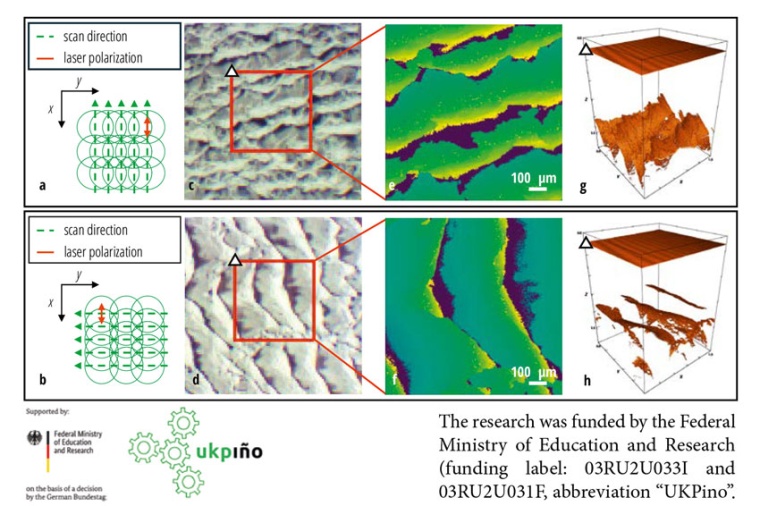
New work from Jena University of Applied Sciences researchers demonstrates the application of OCT technologies for the laser ablation of optically transparent materials. OCT is a powerful tool for 3D visualization as well as for analysis of the process. These insights deepen the understanding of defect formation and can accelerate process optimization. The observations can further help to find the causes of different morphologies. Future work can benefit from a stronger correlation of other monitoring methods as well as simulative approaches.
Read the full article now online and in the upcoming PhotonicsViews issue 1/2025, out January 14, 2025:
Reference: Michael Seiler, Samson Frank, Dennis Thelemann, Oliver Elies, Pouria Teymori, and Jens Bliedtner (all: Ernst Abbe University of Applied Sciences): How laser material processing can benefit from OCT technology – A qualitative and quantitative analysis of ultrashort-pulse processing of glass, PhotonicsViews 22(1), in preparation, first published online: 3 November 2024; DOI: 10.1002/phvs.202400037
Company
Wiley-VCH GmbHBoschstraße 12
69469 Weinheim
Germany

most read
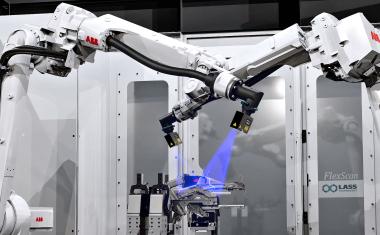
3D laser scanning for 100 percent inspection
Modern production requires precise, fast, and fully automated inspection processes. The robot-assisted inline measurement system Flexscan meets this requirement with two 3D compact sensors
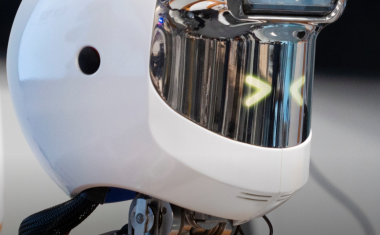
Powerful in operation, intelligent in collaboration
How Faulhaber Drive Systems Are Bringing Humanoid Robotics Closer to Everyday Use

It Does Not Always Have to Be a Humanoid Robot
Mythomorphic design adds a distinct perspective to social robotics. Inspired by myths and fantasy rather than humans or animals, the article classifies examples and examines related opportunities and risks.
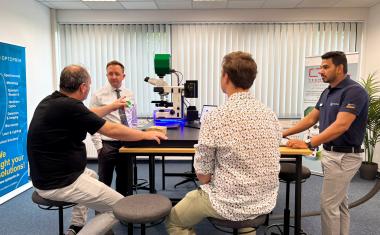
Microspectrophotometer in Practice
During a three-day Open House in Unterschleißheim near Munich, Optoprim Germany and Craic Technologies demonstrated integrated UV–visible–NIR and Raman microspectroscopy under real research conditions.

Packaging Is Becoming a Strategic Task in Production
The new EU Packaging Regulation affects more than just packaging manufacturers. Production, logistics, and automation experts must also reassess their processes, materials, and equipment.