

High-tech Analysis of Human Movement
The mission of a US institute isn’t just to capture high-speed movement – it’s to understand whether that movement actually maximizes performance while minimizing the risk of injury
Sophia Olsen, Marketing Manager at Baumer
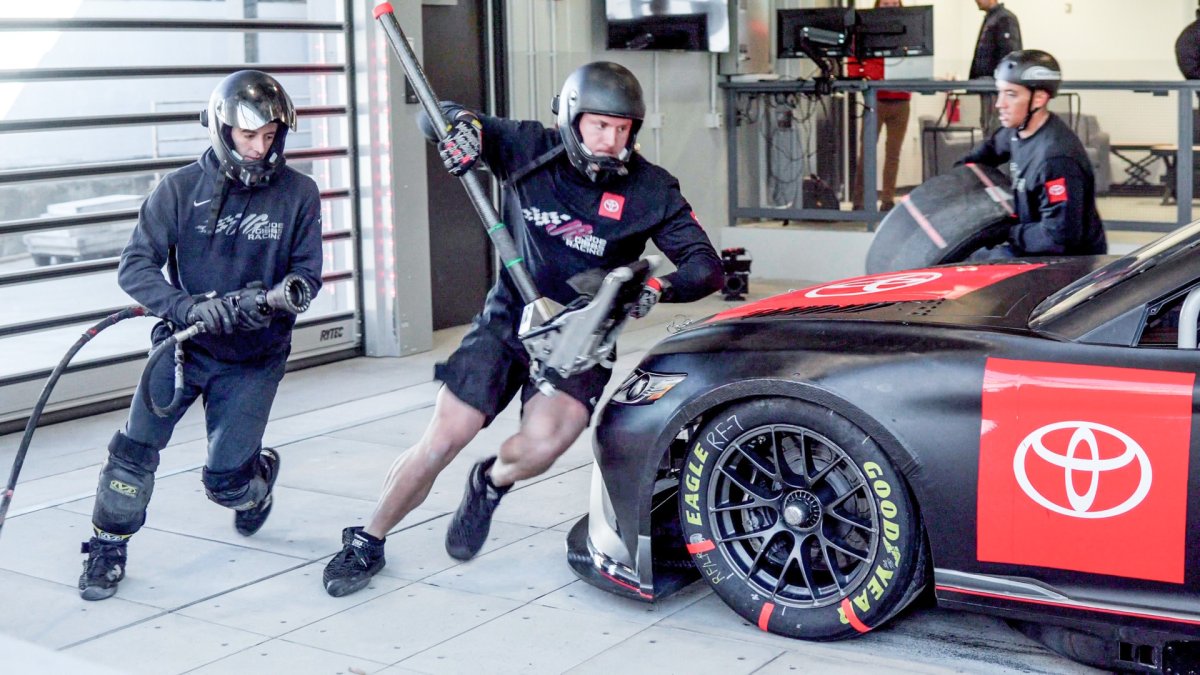
Is the athlete performing in a way that achieves the intended goal? To find out, the Joe Gibbs Human Performance Institute (JGHPI) relies on Baumer LXT industrial cameras – an imaging solution that balances high-resolution capture, real-time performance, and efficient data handling through onboard jpeg image compression. The high-tech facility in Charlotte, North Carolina, USA, utilizes nearly 50 cameras and an instrumented floor to track an athlete’s precise movements and how he or she transmits forces to the ground. The Baumer high-speed cameras allow for the quantification of movement, such as monitoring the location of each joint in an athlete’s body, by processing the resulting 2D video with leading-edge computer vision algorithms. Originally set up to optimize the performance of the pit crew of Nascar team Joe Gibbs Racing, analyzing pit stops remains a core interest of JGHPI. Each pit stop generates about 20 terabytes of video data every hour. JGHPI’s AI-driven physics engine & real-time sports science analytics pipeline then turns this raw data into dynamic models to better understand human movement and the mechanics behind it.
Measuring Purposeful Performance
Traditional motion capture systems focus on measuring things like an athlete’s speed and joint angles. But JGHPI goes further. Their proprietary analysis platform is designed to evaluate how well an athlete’s movement aligns with real-world objectives – like creating space on a basketball court, completing a pit stop sequence, or accelerating into a defensive position. This kind of contextual analysis demands more than tracking motion; it requires video data rich enough to uncover relationships between people, tools, timing, and the environment.
Cameras Speeding up Data Processing
JGHPI selected Baumer LXT cameras for their ability to capture precise, high-speed footage at 100 to 400 frames per second – and do it efficiently. In the lab, video is streamed from many cameras simultaneously, which requires massive bandwidth. The high-speed, high-resolution capture would typically be a huge network load, bordering on impossible to process. However, the flexibility of Baumer cameras’ onboard jpeg image compression allows JGHPI to:
- Record and transmit large volumes of data without overwhelming the network
- Store more footage for long-term trend analysis and comparison
- Provide real-time video feedback to athletes and coaches during training
- Deploy cameras quickly in new setups thanks to intuitive operation and GigE Vision compatibility.
The adjustable jpeg image compression capabilities of the Baumer cameras has allowed JGHPI to reduce the amount of data from the cameras drastically, going from 15 hours to only seconds of processing. “Baumer jpeg image compression has been key,” says JGHPI’s Executive Director and Chief Science Officer Matt Osborn.
Continue with login
No account yet?
Register now for free and get full access to all exclusive articles from wileyindustrynews.com.
With our newsletter we regularly send you top news from Automation, image processing and light and laser technology in industrial environments, as well as the latest e-issue.
Company
Baumer GmbHPfingstweide 28
61169 Friedberg
Germany


most read
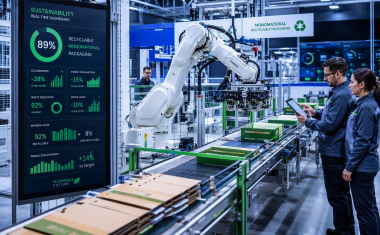
Packaging Is Becoming a Strategic Task in Production
The new EU Packaging Regulation affects more than just packaging manufacturers. Production, logistics, and automation experts must also reassess their processes, materials, and equipment.
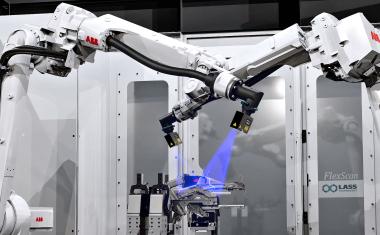
3D laser scanning for 100 percent inspection
Modern production requires precise, fast, and fully automated inspection processes. The robot-assisted inline measurement system Flexscan meets this requirement with two 3D compact sensors

From Gamescom to the Factory
How the Gaming Industry Is Driving Automation

It Does Not Always Have to Be a Humanoid Robot
Mythomorphic design adds a distinct perspective to social robotics. Inspired by myths and fantasy rather than humans or animals, the article classifies examples and examines related opportunities and risks.
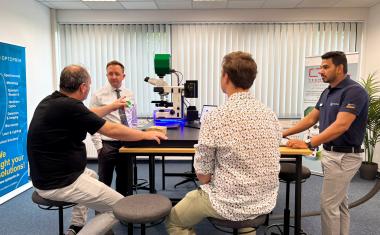
Microspectrophotometer in Practice
During a three-day Open House in Unterschleißheim near Munich, Optoprim Germany and Craic Technologies demonstrated integrated UV–visible–NIR and Raman microspectroscopy under real research conditions.