

Efficient Food Manufacturing Enabled by Prism Cameras
Powerful machine vision systems play a crucial role in optical quality control in the food industry. James Cameron, Sales Director EMEA at JAI, explains the requirements and solutions for the food industry

inspect: How has the food industry evolved with machine vision and what are the trends for the next years?
James Cameron: Over the past five years, machine vision in the food industry has evolved from a static inspection tool into a more intelligent system to secure quality-assurance and even predict data. In the fruit sector, deep learning and multispectral imaging are becoming more standard to detect outside surface defects together with internal defects, resulting in reliable grading, fewer false rejects, and the ability to estimate internal quality factors like sugar content or bruising non-destructively.
The shift to edge processing and embedded AI has allowed real-time decisions directly on the production line, improving consistency and reducing waste. Over the next years, the focus will shift increasingly toward predictive vision systems. Deep learning models will not only classify defects but forecast freshness, ripeness, and shelf life. We’ll also see growing use of 3D and laser-based imaging for precise localization and robotic handling for packaged goods.
Future growth will come from modular and customized vision platforms with optical lane sorters and free-fall sorters to adopt customer needs. These systems will connect inspection data across the entire value chain to packaging making machine vision one of the key enablers for efficient and waste-reduced food manufacturing. The optical sorter vision market is already large and growing double digits, signifying the critical role of vision adoption for the food industry.
Continue with login
No account yet?
Register now for free and get full access to all exclusive articles from wileyindustrynews.com.
With our newsletter we regularly send you top news from Automation, image processing and light and laser technology in industrial environments, as well as the latest e-issue.
Company
JAI A/SValby Torvegade 17, 1st floor
2500 Valby
Denmark


most read
Powerful in operation, intelligent in collaboration
How Faulhaber Drive Systems Are Bringing Humanoid Robotics Closer to Everyday Use
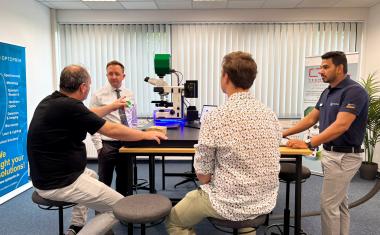
Microspectrophotometer in Practice
During a three-day Open House in Unterschleißheim near Munich, Optoprim Germany and Craic Technologies demonstrated integrated UV–visible–NIR and Raman microspectroscopy under real research conditions.

It Does Not Always Have to Be a Humanoid Robot
Mythomorphic design adds a distinct perspective to social robotics. Inspired by myths and fantasy rather than humans or animals, the article classifies examples and examines related opportunities and risks.

From Gamescom to the Factory
How the Gaming Industry Is Driving Automation
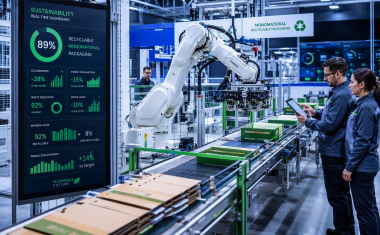
Packaging Is Becoming a Strategic Task in Production
The new EU Packaging Regulation affects more than just packaging manufacturers. Production, logistics, and automation experts must also reassess their processes, materials, and equipment.