

To space – with 3D printing
BLT enabled Land Space’s ZQ-3 to ace first-ever major vertical takeoff and landing recovery test for their reusable rocket.
The Chinese aerospace company has achieved a flawless debut of their ZQ-3 VTVL-1 reusable vertical takeoff and landing (VTVL) recovery test rocket in January. Integral to the success of this mission was the comprehensive support provided by BLT, contributing their expertise in metal additive manufacturing technology. The collaboration ensured the acquisition of crucial experimental data, solidifying Land Space’s position for reusable liquid oxygen-methane rockets.
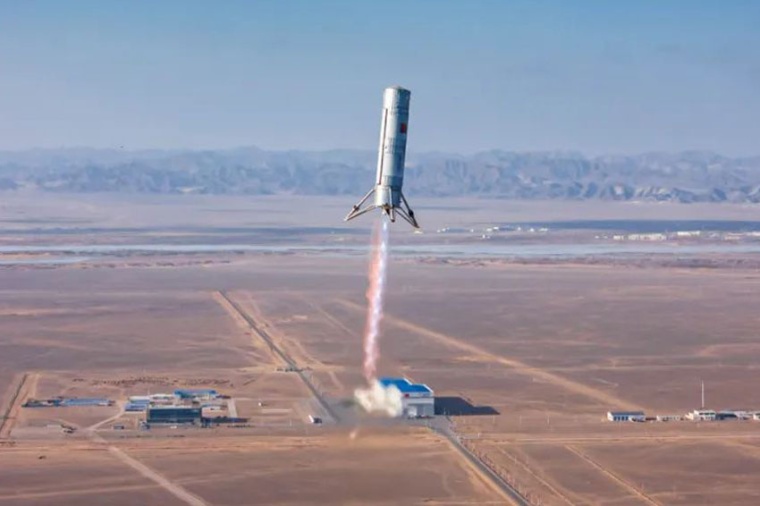
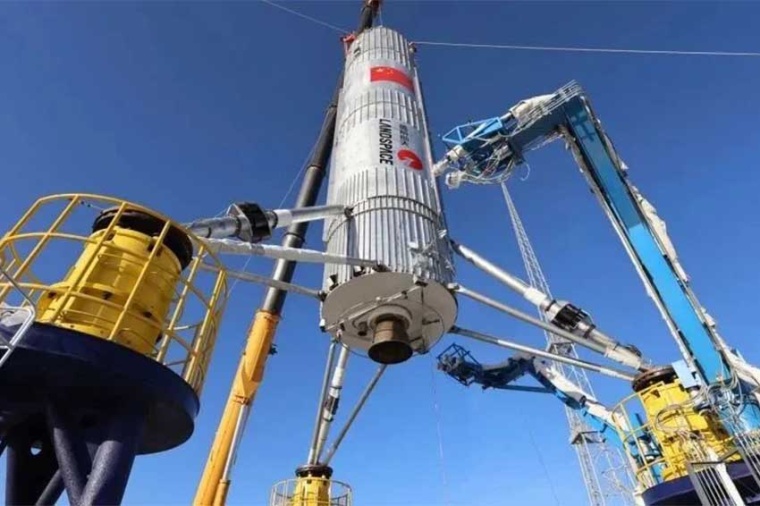
The successful recovery test affirmed the correctness of the wide-ranging variable-thrust liquid oxygen-methane propulsion system scheme, the compatibility of the rocket control system with engine thrust adjustment characteristics, the accuracy of the guidance and control scheme during the landing phase, and the reliable performance of the rocket's soft landing cushioning mechanism.
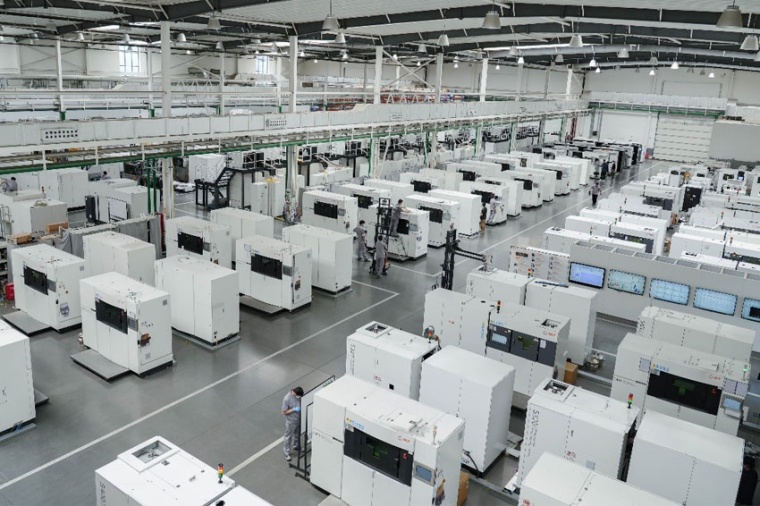
The collaboration traces its roots back to 2019 when Land Space foresaw the inherent advantages of metal 3D printing technology in the fabrication and production of liquid oxygen-methane rocket components. BLT proved instrumental in expediting component production, cutting production costs, hastening product iterations, and ultimately elevating the overall development efficiency for Land Space. This partnership has evolved, reflecting the deepening and broadening synergy between the two entities committed to pushing the boundaries of 3D printing in aerospace innovation.
The VTVL-1 recovery test arrow utilizes BLT’s metal 3D printing technology for intricate components within the engine, such as joint elements, igniter mounts, and the intricate free-body section, which features a complex internal cooling structure. These components posed challenges in traditional metal fabrication methods, including prolonged production cycles, difficulties in mold manufacturing, and escalated costs.
Leveraging metal 3D printing during the production of the free-body section allowed for the seamless integration of its cooling structure, ensuring superior component performance and effectively preventing erosion of the combustion chamber casing.
Land Space, founded in 2015, is the first private carrier rocket company in China to obtain all necessary qualifications and the only one to successfully reach orbit with self-developed liquid oxygen-methane rocket engines. It is dedicated to establishing a comprehensive industrial chain encompassing research and development, manufacturing, testing, and launching, with a focus on medium and large liquid oxygen-methane launch vehicles for the global market.
Company
Xi'an Bright Laser Technologies Co., ltd.No. 1000 Shanglinyuan 7th Road
Xi'an, Shaanxi Province, 710117
China

most read
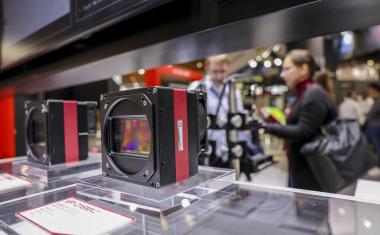
Vision 2026 Breaks Exhibitor Record
About 500 exhibiting companies—about two-thirds of which are from abroad and about 30 percent of which are first-time exhibitors—are showcasing their products at the trade show.

Solid-State Transformers for AI Data Centers
As part of a strategic partnership, Siemens and Reinhausen are developing a solid-state transformer for AI data centers with an 800-volt DC system.
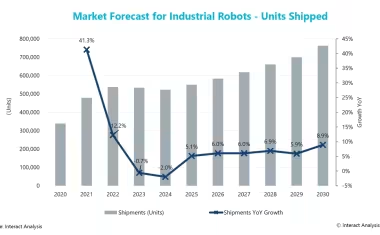
Forecast: Significant Growth in Industrial Robotics by 2030; Cobots Are Growing the Fastest
According to a recent analysis by Interact Analysis, global sales of industrial robots are expected to rise from about 550,000 units in 2025 to just over 760,000 units in 2030.
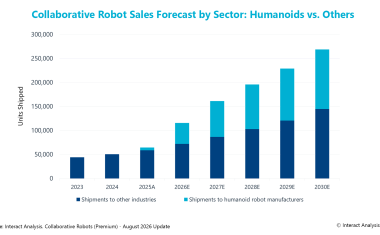
Humanoid robotics is driving demand for cobot arms and actuators
According to recent analyses, global production of humanoid robots exceeded the 20,000-unit mark in 2025 and is expected to more than triple in 2026.

Siemens Consolidates Its Automation Business into a New Unit Called Automation
Rainer Brehm, who previously served as COO of the automation business and CTO of Digital Industries, was appointed president of the new unit.