

Sustainable laser solutions for the food industry
On Earth Day, laser manufacturer Luxinar discusses sustainable solutions like an ink-free alternative to mark packaging or laser coding directly onto food.
To mark packaging the laser ablates the inked coating on paper and card packaging materials, leaving a clear, high-quality mark. Variable information such as best before dates, batch codes, barcodes and 2D Data Matrix codes can be applied on the production line, on the fly, with the information being updated continuously as required. The laser marking process is quick, clean, and reliable. Marks are indelible and tamper-proof, and consumable costs are effectively non-existent once the laser coder is installed. This makes laser coding an attractive alternative to traditional ink-based technologies.
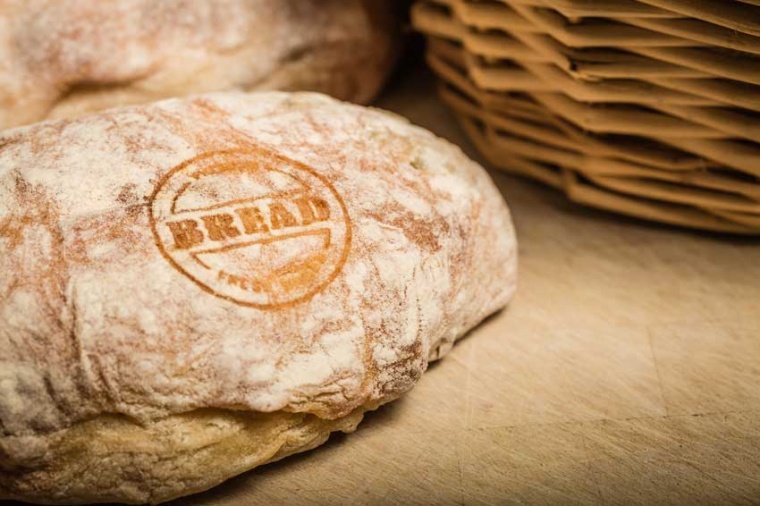
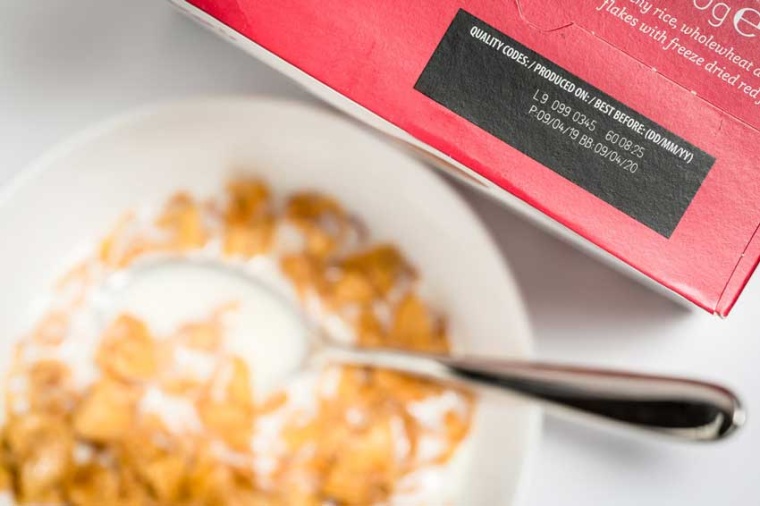
Luxinar’s CO2 lasers have found some surprising applications in the food industry. From grill marking of meat products to scribing eggshells and marking freshly baked bread rolls the laser sources are used in numerous imaginative ways. The process uses no potentially harmful inks or chemicals.
Laser coding can be used to apply product information such as dates, batch codes and place of origin, or may simply be used to apply logos and graphics for brand identification and advertising. This is useful when products must be presented without packaging; in fact, the laser process may actually eliminate the need for packaging in some cases, reducing both cost and environmental impact.
The above is just a snapshot of the numerous applications for CO2 lasers in the food industry that give high quality, quick and clean results. Lasers also offer a sustainable solution for marking packaging by eliminating ink, solvents, chemicals and cartridges and, by marking directly onto food, they reduce the need for packaging materials.
Company
Luxinar LtdMeadow Road
Kingston upon Hull, HU13 0DG
UK


most read
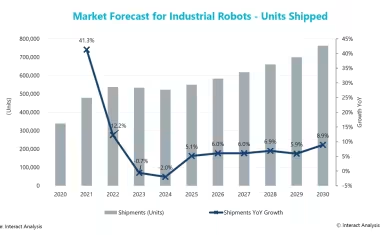
Forecast: Significant Growth in Industrial Robotics by 2030; Cobots Are Growing the Fastest
According to a recent analysis by Interact Analysis, global sales of industrial robots are expected to rise from about 550,000 units in 2025 to just over 760,000 units in 2030.

Siemens Consolidates Its Automation Business into a New Unit Called Automation
Rainer Brehm, who previously served as COO of the automation business and CTO of Digital Industries, was appointed president of the new unit.
Schaeffler bundles Defense and New Space activities under new CEO
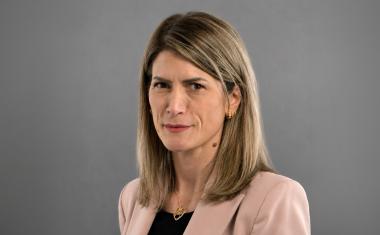
Celia Pelaz takes over the position of CEO Defence & New Space at Schaeffler on October 1, 2026 and becomes Chairwoman of the Management Board of Stech Defence GmbH.

ZVEI Calls for Swift Protection of Critical Power Infrastructure
The association has issued a statement in response to the recent attempted attacks on substations in Brandenburg and North Rhine-Westphalia and warns of the consequences for Germany's energy security.
Solid-State Transformers for AI Data Centers
As part of a strategic partnership, Siemens and Reinhausen are developing a solid-state transformer for AI data centers with an 800-volt DC system.