Nanocrystals for ecofriendly solar cells
Devices without lead and cadmium show an increased charge carrier diffusion length.
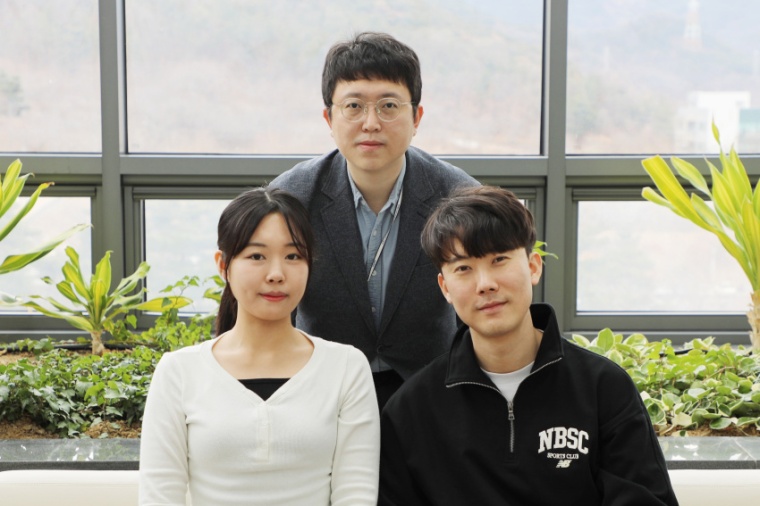
A research team led by Choi Jong-min from the Daegu Gyeongbuk Institute of Science and Technology has developed a technology that can significantly increase the efficiency of ecofriendly solar cells. The devices they developed showed increased power conversion efficiency of up to 8.26 %, compared with conventional solar cells. This finding is expected to accelerate the commercialization of next-generation eco-friendly solar cells.
Silver bismuth sulfide (AgBiS2) nanocrystals have recently attracted attention as an ecofriendly solar cell material. Existing high-efficiency solar cells contain harmful heavy metals such as lead and cadmium, causing environmental pollution, but silver bismuth sulfide has the advantage of being non-toxic and abundant in raw materials. However, its limitation is that when it exceeds a certain thickness, electricity does not flow well, causing a sharp drop in efficiency. To solve this problem, the research team developed a thin film with a special mixed structure to allow electricity to flow better.
The scientists mixed materials to create a layer that improves the flow of electricity. The team chemically treated silver bismuth sulfide nanocrystals to give different properties (donor and acceptor) to one layer, allowing electricity to move more efficiently inside. As a result, when they made a 65 nanometer light-absorbing layer, twice as thick as the conventional ones, its performance was maintained and the efficiency of the solar cell was improved by 8.26 %. This is equivalent to charging a smartphone four to five times or keeping an LED light bulb on for over two hours longer.
“This research has greatly increased the charge diffusion length by allowing the donor and acceptor to coexist in the same layer of the AgBiS2 solar cell, thus maintaining performance even in thicker layers,” said Choi Jong-min. “We expect this eco-friendly technology to be applied to various high-efficiency solar cells in the future.” (Source: DGIST)