

Assemble optical systems with maximum precision
Aachen scientists have developed and set up a new precision gripper arm made of metal powder for the first time: a novelty for the assembly of space components in clean rooms. The gripper arm is lighter than its predecessor and yet stable enough to mount and adjust heavier laser optics with ultraprecision.
Vibration tests and climate chambers – these are typical stations used to qualify a laser system for use in space. Despite undergoing the highest loads, the laser systems must remain adjusted with micrometer precision in order to work safely in space.
In recent years, the assembly technology for such laser systems has been developed and continuously improved at Fraunhofer ILT in Aachen. The experts at Fraunhofer ILT work together with partners such as DLR, Airbus Defence and Space, Tesat Spacecom and Esa to build the optical systems with state-of-the-art technologies. All essential alignment steps are performed with manually guided robots using the ‘pick & align' process. A central tool is the gripper arm; it sits on a hexapod and positions the components in the optical assembly with micrometer precision. There they are adjusted to within a few micro-radians and fixed in place by soldering. The design of the gripper arm is decisive for the precision of the assembly and also determines how heavy the optical components can be.
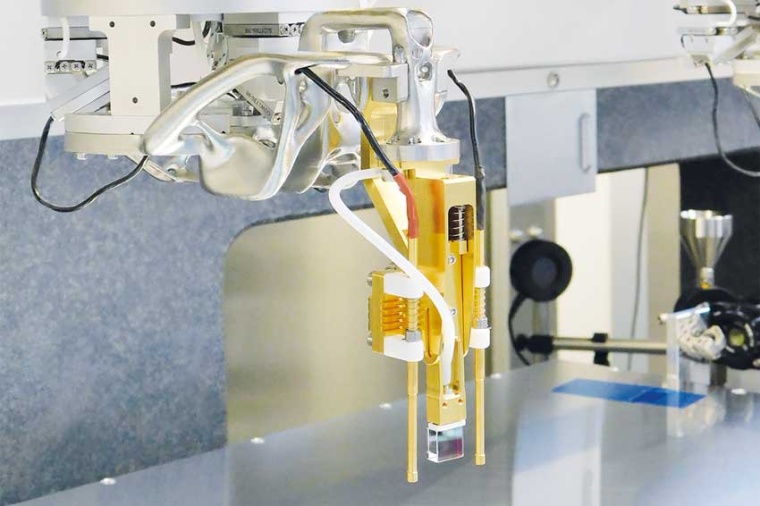
To further improve how well the setup technology performs, Fraunhofer ILT developed a completely new gripper arm. Based on its construction design, colleagues at the chair for digital additive production DAP at RWTH Aachen University also dimensioned the bionic structures in such a way that its payload could be increased while having lower dead weight. The topology-optimized gripper arm was finally manufactured via laser powder bed fusion, also at the DAP. Thanks to special post-processing, the gripper arm achieves clean room class ISO5.
This is an absolute novelty – until now, residual powder on the components prevented the use of additive methods for such precision tools in the clean room. The new gripper arm is divided into two parts with a static and a moving part. Supply lines for the required media are integrated into the gripper arm to minimize contamination.
For the missions of the future
This precision tool can move significantly heavier parts than the previously used tool, while at the same time enabling a more stable adjustment. “With this technology, we are breaking new ground. We don't first design the component and then check whether it has the desired properties; instead, we optimize the component geometry for the load scenarios,” says Michael Janßen, who has been designing assembly grippers for years, describing the procedure.
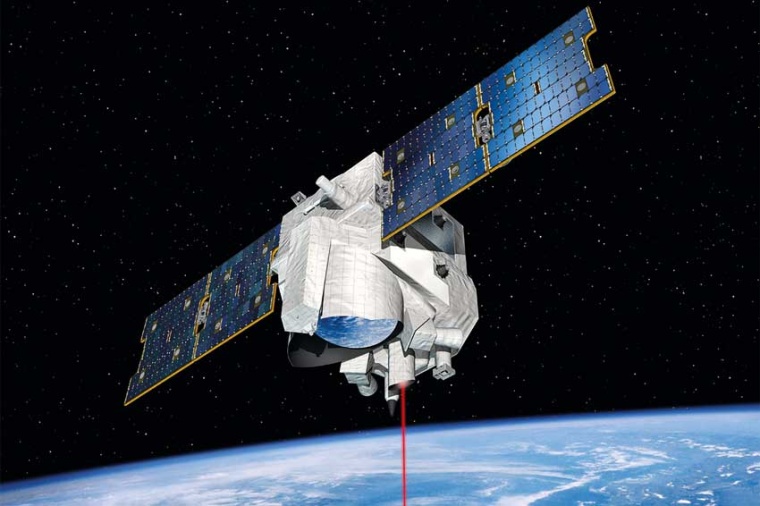
The new gripper will be used within the framework of FULAS – a universal technology platform developed by the Aachen researchers for building laser systems in aerospace projects. “We have incorporated the experience gained from the entire FULAS development into the production of the new gripper,” summarizes project manager Heinrich Faidel from Fraunhofer ILT. A system based on FULAS is currently being built for the German-French climate mission MERLIN (Methane Remote Sensing Lidar Mission). The small MERLIN satellite is to be launched into space from Kourou, French Guiana, to map the distribution of methane in the Earth’s atmosphere. The satellite’s core component is a lidar laser that sends light pulses into the atmosphere and determines the methane concentration from the backscattered light.
Company
Fraunhofer Institute for Laser Technology ILTSteinbachstr. 15
52074 Aachen
Germany


most read

Solid-State Transformers for AI Data Centers
As part of a strategic partnership, Siemens and Reinhausen are developing a solid-state transformer for AI data centers with an 800-volt DC system.
Forecast: Significant Growth in Industrial Robotics by 2030; Cobots Are Growing the Fastest
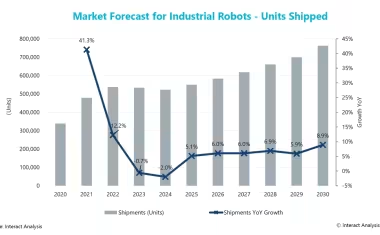
According to a recent analysis by Interact Analysis, global sales of industrial robots are expected to rise from about 550,000 units in 2025 to just over 760,000 units in 2030.

IMTS 2026: America's Manufacturing Sector Focuses on Growth and Technology
The largest manufacturing trade show in the Western Hemisphere is bringing together 1,788 exhibitors this year, including about 400 companies participating for the first time.
Vision 2026 Breaks Exhibitor Record
About 500 exhibiting companies—about two-thirds of which are from abroad and about 30 percent of which are first-time exhibitors—are showcasing their products at the trade show.

Schaeffler bundles Defense and New Space activities under new CEO
Celia Pelaz takes over the position of CEO Defence & New Space at Schaeffler on October 1, 2026 and becomes Chairwoman of the Management Board of Stech Defence GmbH.