Photo

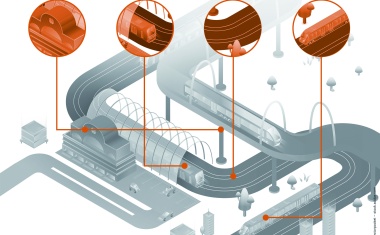
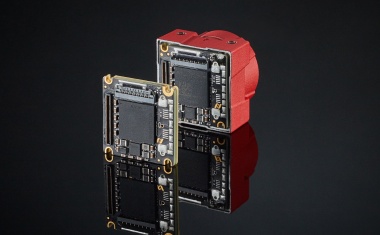
New ASi-5 / ASi-3 addressing device

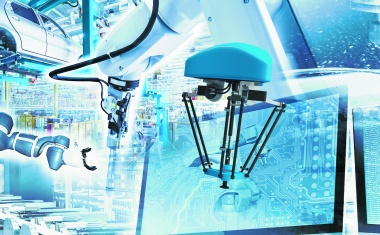
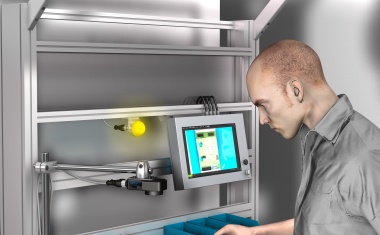
In order to easily integrate ASi participants of all generations in the field into ASi networks, Bihl + Wiedemann has developed a modern ASi-5 / ASi-3 manual addressing device. As with its ASi-5 / ASi-3 gateways, the company relies on full compatibility, which means that the addressing device can be used for all ASi-5 modules as well as for all modules of earlier ASi generations - and that with the same standard Workflow.

Photo

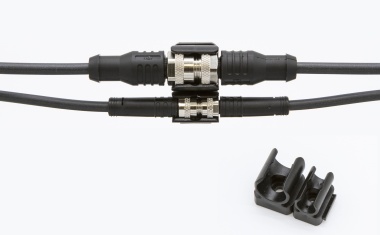
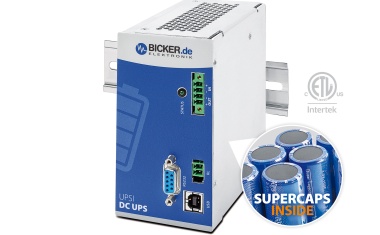
Smart power supplies for smart buildings

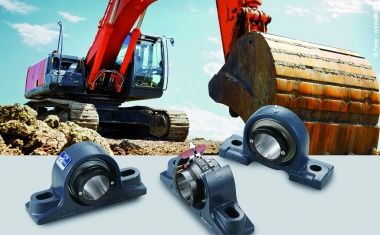
Buildings become intelligent. Sensors, controls and actuators for very different applications are now standard equipment for everything that has four walls and a roof. Of course, these systems also need power supplies for this - in the same variety as the applications themselves.

Photo

Scalable embedded PC

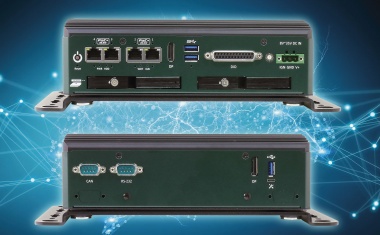
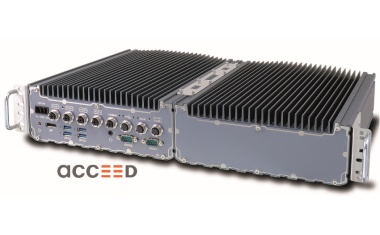
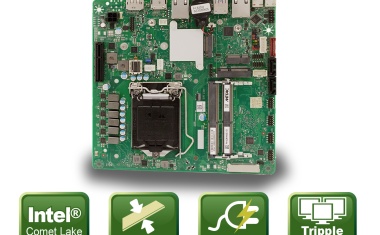
Compmall has presented its new embedded PC GP-3000. The GP-3000 can be used on the one hand as a scalable embedded PC and on the other hand, with attachable GPU expansion boxes, as a GPU computer for demanding AI applications. The GP-3000 can be equipped with up to two full-length graphics accelerator cards.

Photo

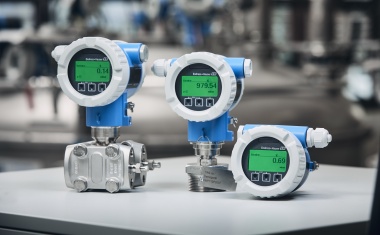
Configure IO-Link devices quickly and easily

With the new Balluff engineering tool, software is available for cross-manufacturer commissioning and configuration of IO-Link devices according to the IO-Link standard for sensors and actuators. The software provides an overview of the status of all IO-Link devices in the network and automatically sends notifications in the event of errors. The user can easily document the current status of the network and - without a programmable controller (PLC) - test inputs and outputs.

Photo

CANopen Safety for safe controls

B&R has added the CANopen safety protocol to its safe X90 controllers. With CANopen Safety, data is transmitted in a safety-related manner in accordance with SIL2. The secure protocol thus makes a significant contribution to the compliance with guidelines with regard to machine safety.

Photo

Web-based design tool for better job safety

The safety of people interacting with robots has top priority, especially when humans and robots are working side by side instead of being separated from each other by safety fencing. The Fraunhofer Institute for Factory Operation and Automation IFF’s web-based design tool helps companies design their cobots. The Cobot Designer helps minimize the risk of accidents and increases employee safety. The tool is available as a free web application.

Photo

Why pack when you can laser?

Instead of printing the barcode on the packaging, it can also be lasered directly onto the skin of fruit or vegetables. This saves on packaging costs and protects the environment. But to ensure that the peel is not damaged in the process, the focus of the laser must be precise, despite the fact that the individual fruits are always different sizes. A 3D sensor from a company in northern Germany helps with this.

Photo

The Future of Manufacturing with Cobots

Collaborative robots (cobots) have a key role in current and future trends in industrial automation and production. Recent studies assume that the value of cobots in industrial automation will have reached US$ 7 billion by 2025. With the average retail price of a cobot being between US$ 15,000 and US$ 45,000, their use in this type of automation is also becoming increasingly ­feasible for industrial manufacturing applications in smaller production facilities and warehouses.

Photo

Smart monitoring of battery welding processes

One of the key laser application areas in the e-automotive industry is the welding of the battery. Sensor systems from Lessmüller Lasertechnik ensure reliable high-precision joining, which is vital in the assembly of any battery. Installed to various remote and fixed welding optics, the OCT, WELDCHECK, and WELDEYE sensor systems demonstrate real-time monitoring capability with great accuracy and over a wide dynamic range, enabling faster, cost-effective e-automotive laser processes and streamlined production.

Photo

“First time right” freeform optics

Researchers at Brussels Photonics, Vrije Universiteit Brussel, have developed a “first time right” design method that eliminates the “step-and-repeat” and “trial-and-error” approach in optical system design. They demonstrated the systematic, deterministic, scalable, and holistic character of their disruptive technique with various freeform lens- and mirror-based high-end examples and invite optical designers to experience their new method hands-on via an open-access trial web application.

Photo

Release 4 of the EMVA Standard 1288 for Adequate Characterization of Modern Image Sensors and Cameras

The EMVA Standard 1288 for objective characterization of industrial cameras, which is successfully used worldwide, has a successor. The new Release 4.0 takes into account the rapid development of camera and image sensor technology. The release candidate was published on March 16, 2021 to come into effect three month later on June 16, 2021. A new module ‘Release 4.0 General’ has been added to characterize non-linear cameras or cameras with unknown pre-processing.

Photo

Augmented Reality in Industry - Status, Development, Possibilities

A few years ago it was still science fiction, today technology is science fact. What inspires children and adults alike as a gimmick on the mobile phone and the pad, but also has great advantages in production and logistics. In this lecture you will find out what these are, how they can be implemented and what is already being used in practice. The Webinar is in German language.

Photo

Micro glass welding with millimeter-long filaments

The welding of glass with ultrashort-pulsed lasers (USP) is usually conducted with microscope objectives. Their short working distance limits the thickness of the work piece, the usable laser power and the feed rate of the process. To increase the possible dimensions of the welding partners and the process speed to industrial levels, a research team from Jena presents USP welding with a galvoscanner and a common F-theta lens. In a new article, they discuss differences between the well-known breakdown regime and the filamentation regime, and show tensile measurements.

Photo

Easy 3D, non-contact surface profile measurements in air

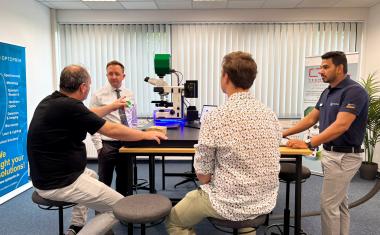
One of the factors that contributes to the recent considerable reduction in the size and high integration of electronics and other devices it is the miniaturization of the electronic components that they contain. In addition, new fine functional materials have been developed and widely used in industrial fields including the automobile, aviation, metal, and chemical industries. As a result, higher accuracy and resolving power are required for minute three-dimensional measurement of these components and materials. Although a variety of devices are available to satisfy these requirements, the confocal microscope is gathering attention as the device of choice for easy three-dimensional, non-contact surface profile measurements in air.

Photo

Can blue LEDs improve hygiene in clinics and public buildings?

Disinfection processes are of particular interest due to growing concerns over illnesses caused by microorganisms and the persistent problem of healthcare acquired infections. Additionally, because of the rise of antibiotic resistant bacteria, the investigation of novel non-antibiotic approaches for the prevention of infectious diseases has become highly topical. Blue light disinfection is such an approach and light-emitting diodes (LEDs) with an emission maximum in the range of 405-nm wavelength represent an attractive light source for this.

Photo

The Evolution of Time-of-Flight Sensors

Time-of-flight sensors have evolved significantly, and recent advances have both increased accuracy and reduced cost to the point where they are now suitable for widespread industrial use. Numerous recent innovations are also expanding the functionalities of these 3D sensors.

1249 more articles

inspect America

New issue of inspect America available now!

New issue of inspect America available now!

Whats new in the vision market in the UNited States? The new issue of inspect America gives the answer.