

Laser applications boost battery manufacturing efficiency
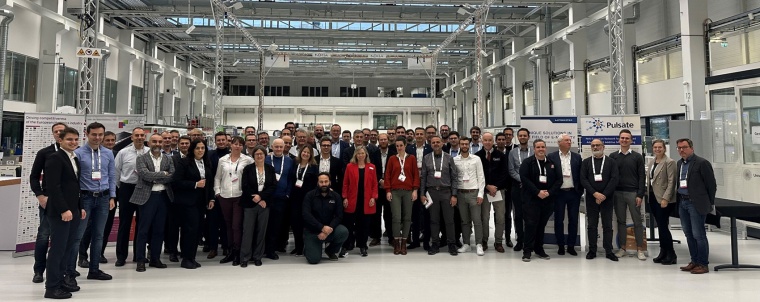
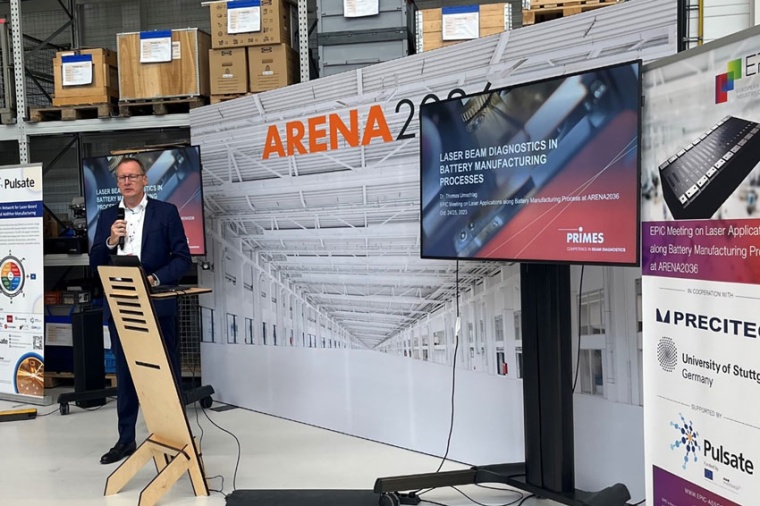
During a two-day meeting hosted by the University of Stuttgart at the cutting-edge research campus ARENA2036, a panel of experts discussed the latest developments, new applications, and market trends.
The growing demand for modern electric vehicles has necessitated the development of more efficient batteries with enhanced performance. Laser cutting and welding techniques are already integrated into battery production lines. Laser cutting finds applications in various battery components, including separators and electrodes. Laser welding has evolved to meet the requirements of minimal heat-affected zones, precise control of penetration depth, high processing speed, and the welding of dissimilar metals, thanks to the development of new laser sources with the right parameters.
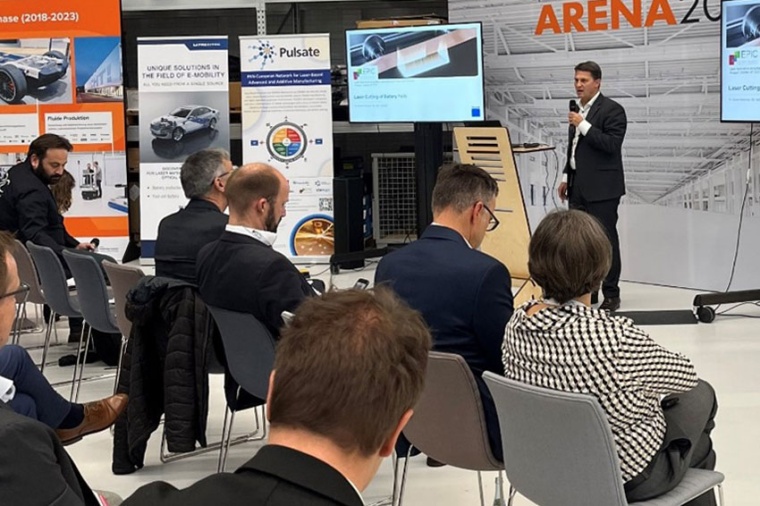
In the domain of cathode/anode manufacturing, Precitec’s sensors allow the inline and contactless measurement of critical quality criteria in cell production. Meanwhile, Trumpf highlighted the challenges of laser cutting of battery foils due to the complexity of foil materials and electrode designs.
In the context of battery cell manufacturing, Ennovasense introduced its single-sided sensor for measuring the thickness of various types and geometries of coatings on bipolar plates. The lightweight and thermally conductive nature of aluminum makes it advantageous for e-mobility applications, and Civan Lasers has developed dynamic laser beam welding for high-strength aluminum battery housings. An improved cycle time is essential for the electric vehicle business model. Which is why Scanlab developed on-the-fly welding for 1D linear stages to enhance battery manufacturing efficiency.
Photonics applications in battery module manufacturing not only reduce time and costs but also enhance productivity, as Primes mentioned during their presentation. While in the field of fuel cell manufacturing, the Institut für Strahlwerkzeuge has developed a high-speed x-ray imaging that detects the formation of pores during welding of copper pins.
The EPIC Meeting on Laser Applications along Battery Manufacturing Process at ARENA2036 has featured twenty speakers representing the entire supply chain, including automotive companies, battery manufacturers, process monitoring firms, and laser manufacturers. For the complete agenda, please click here.
Further reading: Antonio Castelo (EPIC): Laser processes are shaping e-mobility in Europe – Laser cutting, laser welding, and related technologies such as process monitoring are boosting battery manufacturing efficiency, PhotonicsViews 20(6), pp. 30-33; DOI: 10.1002/phvs.202300045
Company
European Photonics Industry Consortium EPIC17 Rue Hamelin
75016 Paris
France

most read
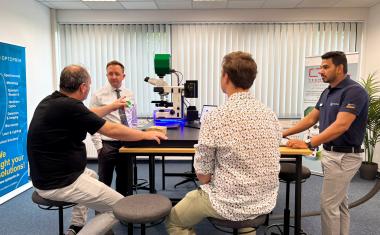
Microspectrophotometer in Practice
During a three-day Open House in Unterschleißheim near Munich, Optoprim Germany and Craic Technologies demonstrated integrated UV–visible–NIR and Raman microspectroscopy under real research conditions.

It Does Not Always Have to Be a Humanoid Robot
Mythomorphic design adds a distinct perspective to social robotics. Inspired by myths and fantasy rather than humans or animals, the article classifies examples and examines related opportunities and risks.
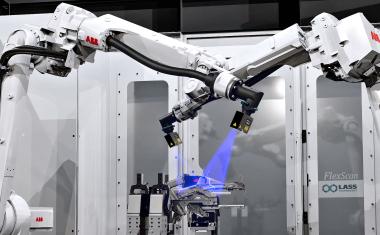
3D laser scanning for 100 percent inspection
Modern production requires precise, fast, and fully automated inspection processes. The robot-assisted inline measurement system Flexscan meets this requirement with two 3D compact sensors
Packaging Is Becoming a Strategic Task in Production
The new EU Packaging Regulation affects more than just packaging manufacturers. Production, logistics, and automation experts must also reassess their processes, materials, and equipment.

From Gamescom to the Factory
How the Gaming Industry Is Driving Automation