

Gas Phase Plasma Transfer in Analysis of Metal Microparticles
With the expansion of renewable energy sources, such as wind and solar, metal microparticles are gaining attention as potential chemical energy storage materials. Laser-induced breakdown spectroscopy (Libs) enables in-situ analysis of the thermochemical oxidation of iron particles by measuring the oxygen-to-iron ratio on the particle surface. A study investigates how laser pulse length affects the surrounding gas phase, which can partially transfer into the plasma and superimpose with the Libs signal emitted from the particle surface.
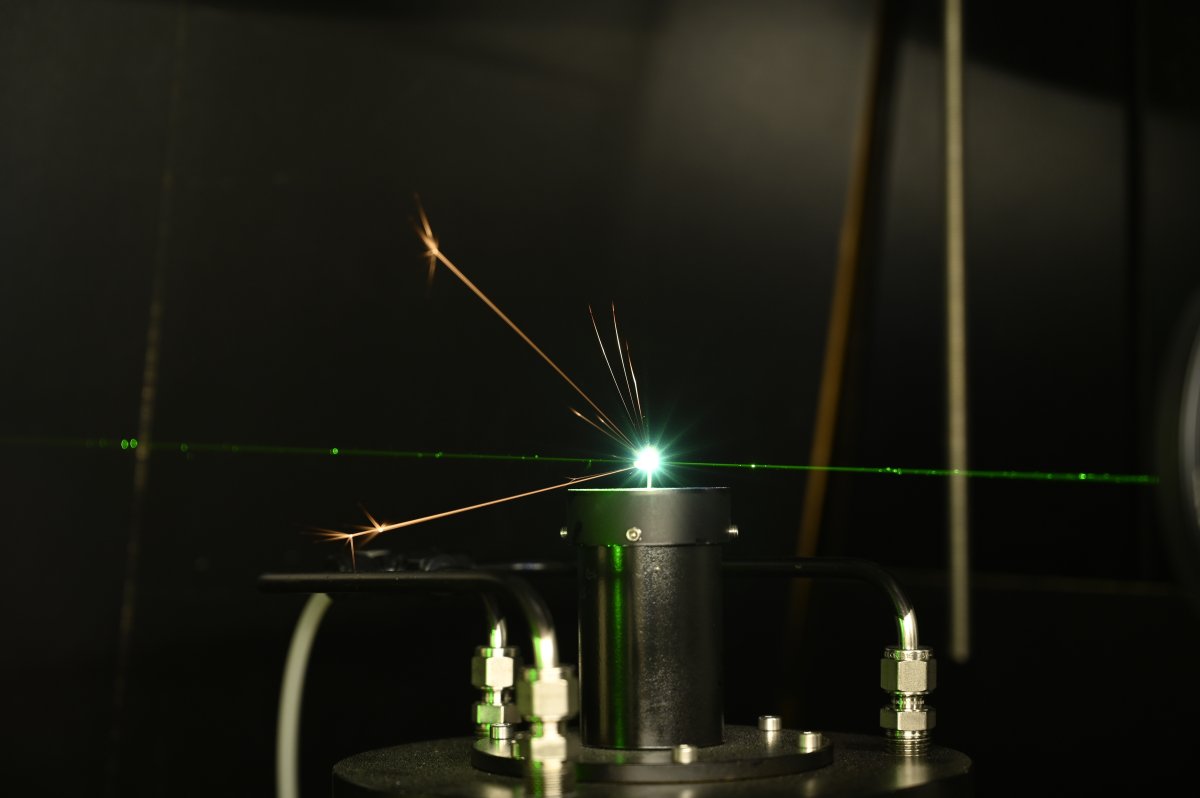
Metal microparticles have the advantage of high energy density and long potential storage times, making them well suited for storing renewable energy [1]. Iron oxide can be reduced by green hydrogen and later oxidized again to release energy in retrofitted coal fire power pants [2]. In-situ Libs can analyze the atomic composition of surfaces during rapid, high-temperature oxidation, overcoming the limitations of ex-situ or low-time-resolution studies. This data is required for developing combustion-kinetics models. Diagnostics present challenges such as overlapping element spectra from the particle plasma and the surrounding gas that has inadvertently been transferred into the plasma. The data can be distorted by the Lib-spectra of the gas transferred into the plasma which depends on the laser pulse length (nanoseconds vs. picoseconds) and is analyzed in this study.
Laser-Induced Breakdown Spectroscopy – An Overview
Libs uses high-intensity short laser pulses to convert small amounts of target material into plasma for optical analysis. Applicable to solids, liquids, and gases, it can detect elements without contact, enabling measurements without sample preparation and high time resolution.
Continue with login
No account yet?
Register now for free and get full access to all exclusive articles from wileyindustrynews.com.
With our newsletter we regularly send you top news from Automation, image processing and light and laser technology in industrial environments, as well as the latest e-issue.
Company
Topag Lasertechnik GmbHNieder-Ramstädter Str. 247
64285 Darmstadt
Germany


most read
Powerful in operation, intelligent in collaboration
How Faulhaber Drive Systems Are Bringing Humanoid Robotics Closer to Everyday Use
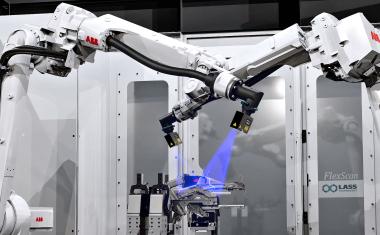
3D laser scanning for 100 percent inspection
Modern production requires precise, fast, and fully automated inspection processes. The robot-assisted inline measurement system Flexscan meets this requirement with two 3D compact sensors

From Gamescom to the Factory
How the Gaming Industry Is Driving Automation

It Does Not Always Have to Be a Humanoid Robot
Mythomorphic design adds a distinct perspective to social robotics. Inspired by myths and fantasy rather than humans or animals, the article classifies examples and examines related opportunities and risks.
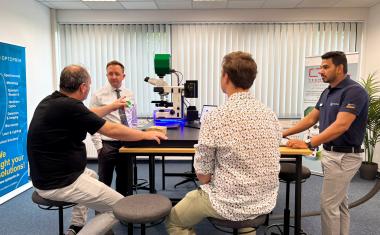
Microspectrophotometer in Practice
During a three-day Open House in Unterschleißheim near Munich, Optoprim Germany and Craic Technologies demonstrated integrated UV–visible–NIR and Raman microspectroscopy under real research conditions.