

Optronis: world’s first streak camera with semiconductor sensor
With the world’s first commercially available semiconductor-based streak camera, Optronis offers research a new instrument to enable detailed scientific investigations in the field of ultrafast processes.
Streak cameras allow measurements of optical phenomena in the range of pico-, up to femtoseconds. Conventional streak cameras based on vacuum tubes are not only cost-intensive, but also sensitive in terms of their handling. The all-new semiconductor-based S3C-1 model from Optronis is expected to bring a whole new level of cost, robustness and application to streak technology.
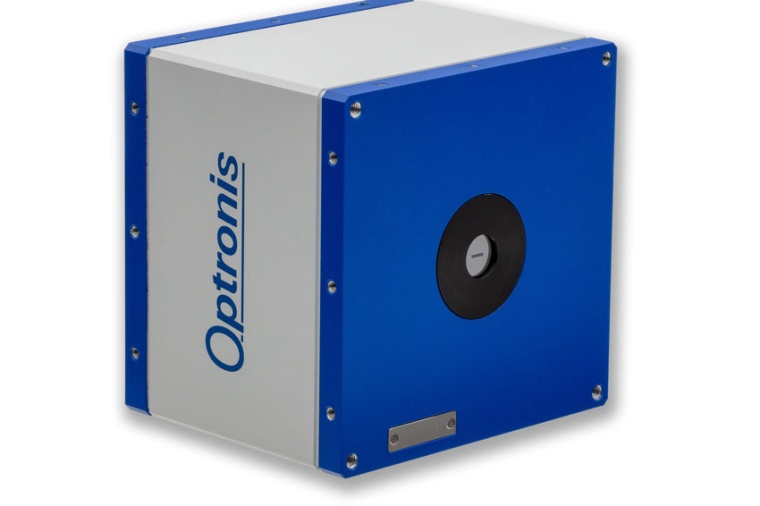

The application fields of the S3C-1 are in detonics, plasma research, microfluidics or even the analysis of fast micro movements (MEMS). Due to the robustness, the small dimensions of 12 × 12 cm and the weight of less than 2 kg, the camera can also be used in areas that are denied to tube-based cameras.
Optronis CEO Dr Patrick Summ, says: “Optronis wants to use current semiconductor technology to be able to cover applications with this streak camera that could not be economically served with conventional streak cameras. This camera brings innovation to anyone involved in the study of fast physical phenomena. Our goal is to be able to offer this global innovation at an attractive cost.”
Compared to tube-based streak cameras, the S3C-1 is more compact, more robust and less expensive. Also, measurements are now possible where no suitable trigger signal was previously available. A time window of 100 ns to 10 ms can be selected for acquisition. The time resolution is close to 1 ns.
Like tube-based streak cameras, the semiconductor-based S3C-1 detects light changes along a line. This is 65 µm wide and divided into two hundred elements along its length of 5 mm. Each element consists of a sensitive photodiode with a downstream amplifier. The brightness values are sampled and stored temporally at up to 2 GSamples/sec. Software is available to control the camera and analyze the measured values.
A new and special camera feature is the continuous recording. This makes it possible to record events where exact temporal information about their occurrence becomes available only after they have occurred. This ‘post-triggering’ simplifies or allows only certain applications.
The S3C-1 has been presented at SPIE Photonics Europe, Strasbourg, and will also be shown at the Laser World of Photonics, Munich, April 26 – 29, booth A6.108.
Company
Optronis GmbHLudwigstr. 2
77694 Kehl
Germany



most read

Schaeffler bundles Defense and New Space activities under new CEO
Celia Pelaz takes over the position of CEO Defence & New Space at Schaeffler on October 1, 2026 and becomes Chairwoman of the Management Board of Stech Defence GmbH.
Vision 2026 Breaks Exhibitor Record
About 500 exhibiting companies—about two-thirds of which are from abroad and about 30 percent of which are first-time exhibitors—are showcasing their products at the trade show.

IMTS 2026: America's Manufacturing Sector Focuses on Growth and Technology
The largest manufacturing trade show in the Western Hemisphere is bringing together 1,788 exhibitors this year, including about 400 companies participating for the first time.
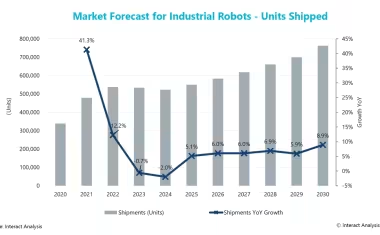
Forecast: Significant Growth in Industrial Robotics by 2030; Cobots Are Growing the Fastest
According to a recent analysis by Interact Analysis, global sales of industrial robots are expected to rise from about 550,000 units in 2025 to just over 760,000 units in 2030.

Siemens Consolidates Its Automation Business into a New Unit Called Automation
Rainer Brehm, who previously served as COO of the automation business and CTO of Digital Industries, was appointed president of the new unit.