

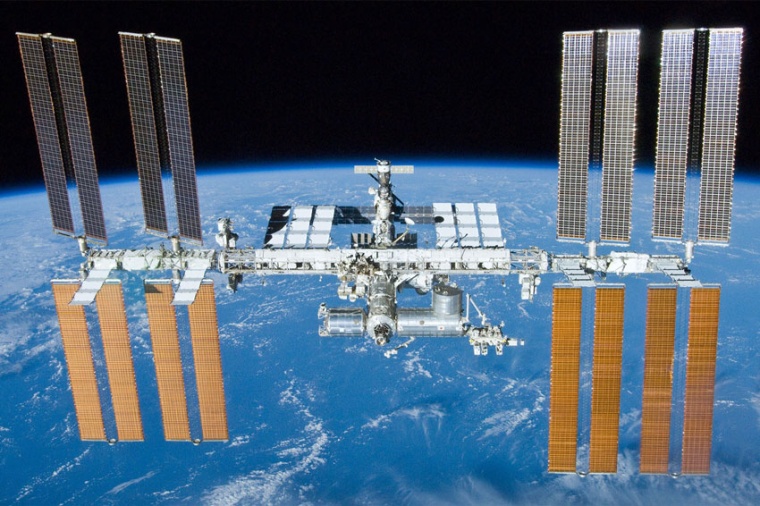
Li-Fi GigaDock installed on the ISS space station
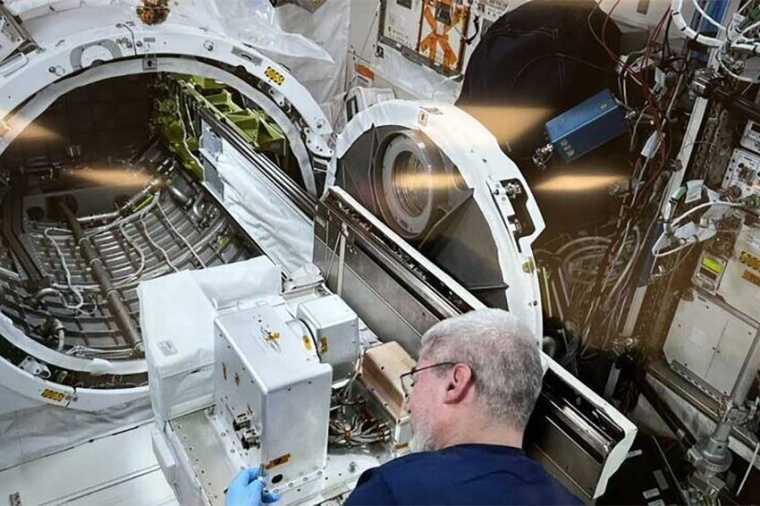
To ensure a problem-free interface between satellite components, Fraunhofer IPMS has developed a transceiver that was integrated into the iBoss GmbH interface and is on board the ISS for testing since February 2022.
There is international consensus in the space industry regarding the modularity of future satellite systems. In the future, such systems should be able to be flexibly disassembled and reassembled as in a modular system. The advantage of modular plug-and-play systems is that defective components can be replaced, thus significantly increasing the service life and function of a satellite. At the end of their lifetime, satellites either burn up in the earth's atmosphere or remain in earth orbit. As a consequence, space debris is produced, which already generates enormous costs and effort and can become a real danger to life in manned space flight. The new generation of satellites will therefore replace the traditional architecture with a more sustainable and modular concept.
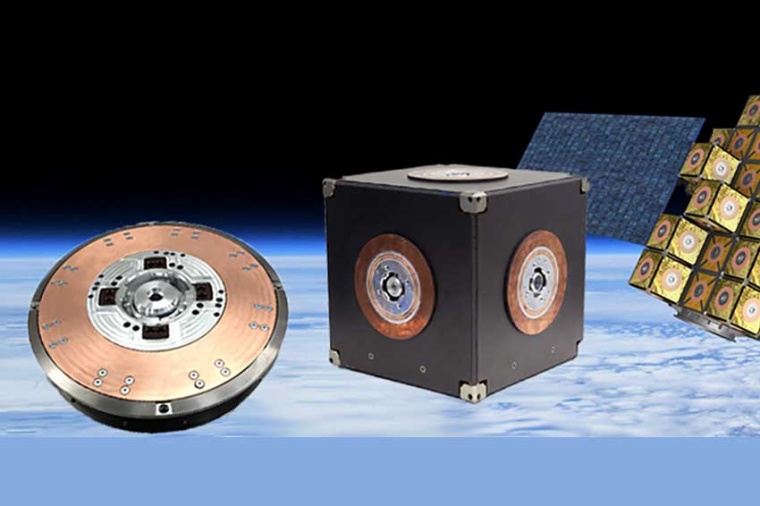
In order to be able to flexibly attach and detach modules directly in space, easy-to-couple and standardized components are particularly important. In addition to the mechanical coupling of the individual modules, it is essentially a matter of ensuring the transfer of data and energy between the individual modules so that satellites can be combined as required. For this reason, RWTH Aachen University applied for a patent years ago, which has now been brought to market by the spin-off iBoss GmbH as iSSI – intelligent Space System Interface – and forms a standard interface for such systems.
Fraunhofer IPMS technology in space
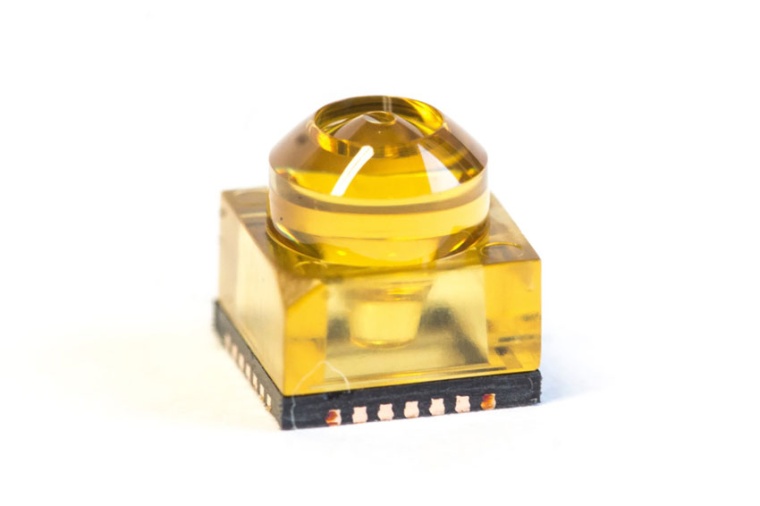
Part of the interface is a development of the Fraunhofer Institute for Photonic Microsystems IPMS in Dresden, Germany, known as Li-Fi GigaDock. The core of the technology is an optical wireless transceiver, a highly integrated device that enables contactless full-duplex and bidirectional data transmission with a data rate of up to 5 Gbps. The possible transmission distance of the optical data interface is five centimeters. The component can also be used for rotor-to-stator transmission, as the transceiver functions perfectly even at high speeds.
“Building on this component, Fraunhofer IPMS has developed a communication module for iBoss that has now made it into space, or to be more precise, even onto the ISS,” says a delighted Alexander Noack, head of development for optical wireless communication. “In addition to space travel, the component can be found in industrial communication systems, in medical technology as well as in docking applications,” he continues.
In February, the interface flew into space for testing and demonstration purposes and was mounted by a robot for the first time on the Japanese part of the ISS. The module is to remain there until mid-December and prove its operational capability under vacuum conditions and the influence of radiation.
Company
Fraunhofer Institut für Photonische Mikrosysteme IPMSMaria-Reiche-Str. 2
01109 Dresden
Germany


most read

Schaeffler bundles Defense and New Space activities under new CEO
Celia Pelaz takes over the position of CEO Defence & New Space at Schaeffler on October 1, 2026 and becomes Chairwoman of the Management Board of Stech Defence GmbH.
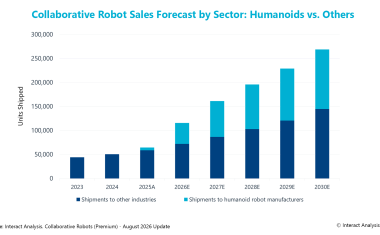
Humanoid robotics is driving demand for cobot arms and actuators
According to recent analyses, global production of humanoid robots exceeded the 20,000-unit mark in 2025 and is expected to more than triple in 2026.

Siemens Consolidates Its Automation Business into a New Unit Called Automation
Rainer Brehm, who previously served as COO of the automation business and CTO of Digital Industries, was appointed president of the new unit.

IMTS 2026: America's Manufacturing Sector Focuses on Growth and Technology
The largest manufacturing trade show in the Western Hemisphere is bringing together 1,788 exhibitors this year, including about 400 companies participating for the first time.
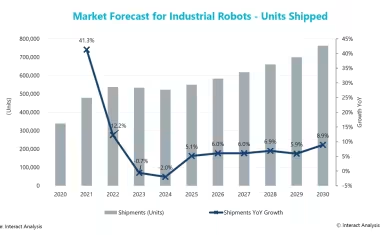
Forecast: Significant Growth in Industrial Robotics by 2030; Cobots Are Growing the Fastest
According to a recent analysis by Interact Analysis, global sales of industrial robots are expected to rise from about 550,000 units in 2025 to just over 760,000 units in 2030.