

IFR: "Sales of autonomous mobile robots are increasing rapidly".
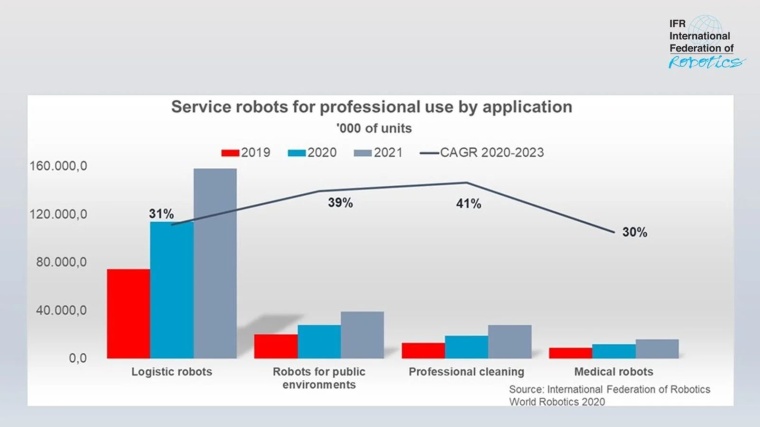
In the white paper "A Mobile Revolution", the International Federation of Robotics examines how mobility is impacting robotics and why this is a groundbreaking development. The use of autonomous mobile robots is increasing not only in industry and logistics, but also in public spaces.
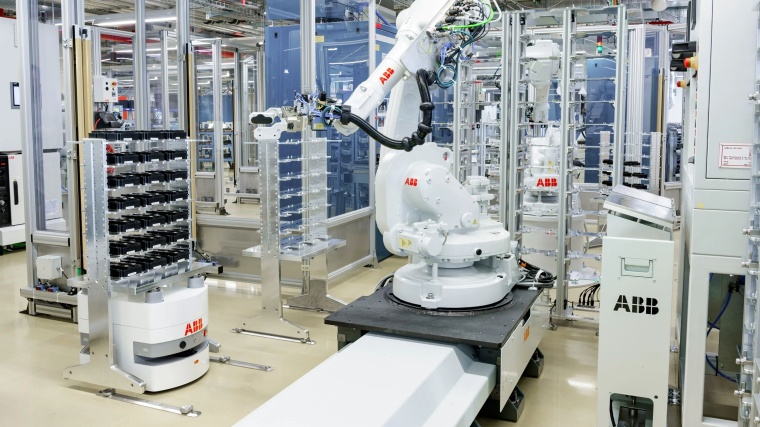
"Mobile robots have traditionally operated in industrial settings to transport parts throughout the factory or feed machines," says Milton Guerry, president of the International Federation of Robotics. "Today, AMRs also work in applications where contact with the general public is intended. They provide information to shoppers, deliver room service orders in hotels or support police officers by patrolling city areas. IFR´s mobile revolution paper gives an overview of the main use cases for mobile robots and their most significant impacts."
History of autonomous mobility
While researchers have been working on autonomous mobility technologies since the 1940s, autonomous mobile robots have only become commercially viable in the past decade. This is primarily because far more powerful and cheaper computers have become available since then. This has led to the rapid development of sensing, image processing and analysis technologies that enable robots to network with their environment in real time. Today, AMRs are experiencing double-digit growth. They now navigate autonomously and perform tasks in industrial and service sectors autonomously.
The future of autonomous mobile robotics
"Mobile robotics is a dynamic field of development and we expect exciting advances over the next decade," says Guerry. These advances are expected in hardware and software alike. Mobile robots are becoming lighter and more flexible. AMR and service robots will be able to navigate in more and more indoor and outdoor environments. Advances in sensors and algorithms mean that navigation and visual capabilities are becoming more accurate.
The whitepaper "A Mobile Revolution - How mobility is reshaping robotics" can be downloaded here:https://ifr.org/papers
Company
IFR International Federation of RoboticsLyoner Straße 18
60528 Frankfurt
Germany


most read

Solid-State Transformers for AI Data Centers
As part of a strategic partnership, Siemens and Reinhausen are developing a solid-state transformer for AI data centers with an 800-volt DC system.
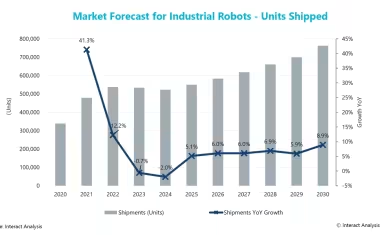
Forecast: Significant Growth in Industrial Robotics by 2030; Cobots Are Growing the Fastest
According to a recent analysis by Interact Analysis, global sales of industrial robots are expected to rise from about 550,000 units in 2025 to just over 760,000 units in 2030.

Siemens Consolidates Its Automation Business into a New Unit Called Automation
Rainer Brehm, who previously served as COO of the automation business and CTO of Digital Industries, was appointed president of the new unit.
Vision 2026 Breaks Exhibitor Record
About 500 exhibiting companies—about two-thirds of which are from abroad and about 30 percent of which are first-time exhibitors—are showcasing their products at the trade show.

IMTS 2026: America's Manufacturing Sector Focuses on Growth and Technology
The largest manufacturing trade show in the Western Hemisphere is bringing together 1,788 exhibitors this year, including about 400 companies participating for the first time.