

First autonomous imager for smartphones, smart-home appliances and automobiles
CEA-Leti announced the world’s first autonomous imager technology that activates smartphones and small appliances through face recognition or other specific patterns.
Called µWAI (microway) and sized as small as a 1-€ coin, the autonomous imager features a novel readout and processing architecture co-designed with an optimized algorithmic pipeline, in which the recognition results from a sequence of elementary algorithms, to provide ultralow-power wake-up modes and compact silicon implementation to keep costs down.
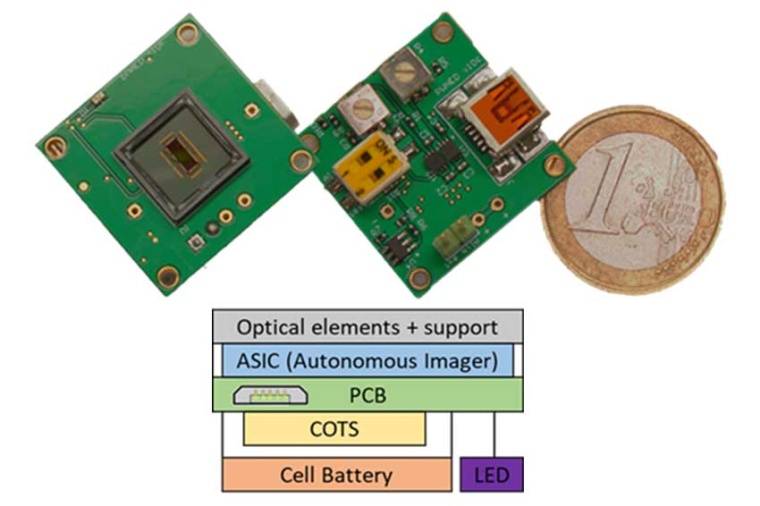

It is the first smart image sensor jointly featuring auto-exposure for all lighting conditions and 88 dB dynamic range, as well as motion detection and feature extraction for event-based functioning, and AI-based object recognition that triggers highly reliable identification. These key features also enable highly reliable decision taking for a few tens of pJ/pixel/frame, which outperforms existing off-the-shelf systems. The pJ/pixel/frame measures the energy spent by each pixel for each single image within a frame of images. A typical implementation requires about 10,000 times more energy than µWAI.
The autonomous imager is the world’s first highly efficient, compact and ultralow-power, smart-awaken system designed for everyday small appliances. It also includes: energy efficiency: consuming 10k less than low-power camera plus processor set; privacy-compliant, AI-based recognition: nearly human-detection performance (95 percent); wide operating lighting sensitivity to ensure accurate recognition in extremely variable conditions; five-year, always-on CR1025 battery lifetime, and 3 – 6 µW operation, which is required for the Internet of Things and can work with a button cell that lasts five years.
Applications and functions include automatic switching and face identification in mobile devices, contact-less smart switching of household appliances and sport-and-entertainment devices in smart homes. µWAI also provides face recognition, people counting, alarm triggering in smart buildings, vehicle-interior situation awareness, driver identification, parking-situation awareness and a smart-unlocking system in automobiles.
“The recognition engine is optimized to recognize faces when movement is detected. CEA-Leti’s team is working hand-in-hand with STMicroelectronics to develop specific smart-imager products as we consider extending the technology to other use cases,” said Antoine Dupret, CEA-Leti's industrial partnership manager. “We target adapting the recognition engine as IP embedded in various cameras and optimizing the performance of the imager to the requirements of our partner's customers.” (Source: CEA-Leti)
Company
STMicroelectronics International N.V.Chemin du Champ-des-Filles 39
1228 Geneva
Switzerland


most read
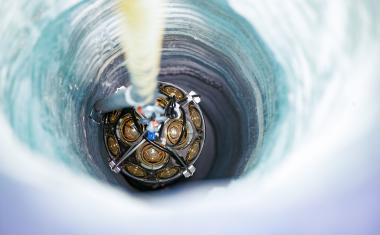
Icecube Neutrino Observatory: Hamamatsu Photonics Boosts Sensitivity with New Photodetectors
The detector array is installed in one cubic kilometer of clear Antarctic ice and detects Cherenkov light produced by neutrino interactions.

Schaeffler bundles Defense and New Space activities under new CEO
Celia Pelaz takes over the position of CEO Defence & New Space at Schaeffler on October 1, 2026 and becomes Chairwoman of the Management Board of Stech Defence GmbH.

Siemens Consolidates Its Automation Business into a New Unit Called Automation
Rainer Brehm, who previously served as COO of the automation business and CTO of Digital Industries, was appointed president of the new unit.
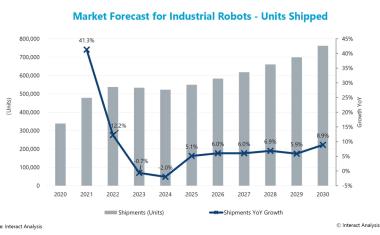
Forecast: Significant Growth in Industrial Robotics by 2030; Cobots Are Growing the Fastest
According to a recent analysis by Interact Analysis, global sales of industrial robots are expected to rise from about 550,000 units in 2025 to just over 760,000 units in 2030.
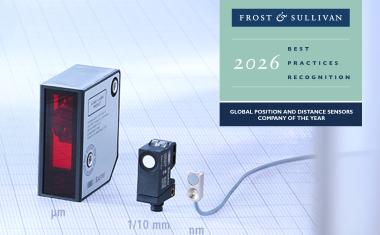
Baumer Honored as Company of the Year
Frost & Sullivan has named Baumer the 2026 Global Company of the Year in the Position and Distance Sensing category.