

Business unit moves from Fraunhofer FEP to Fraunhofer IPMS
The microdisplays and sensors branch transfers to the neighboring sister institute to bundle competencies, leverage synergies.
By pooling expertise and streamlining structures, the two Fraunhofer institutes anticipate the creation of synergies that will strengthen the research field, expedite development and thus benefit customers and partners. Both institutes are closely connected, particularly within this business unit, and share infrastructure at the Dresden site.
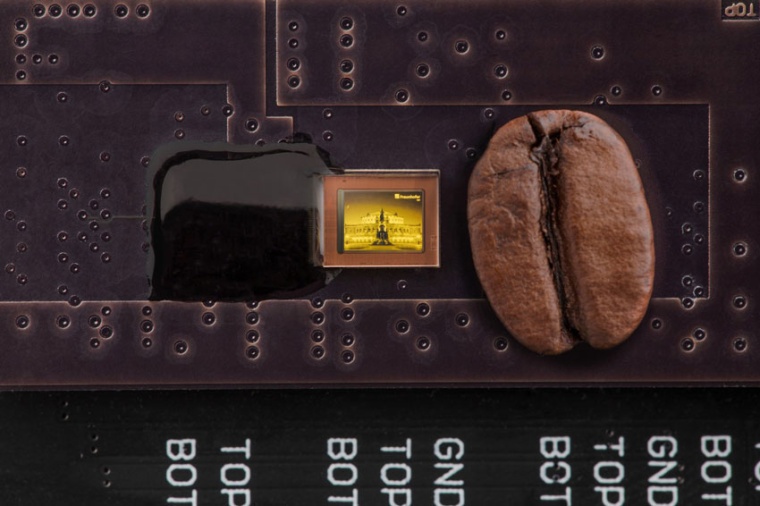
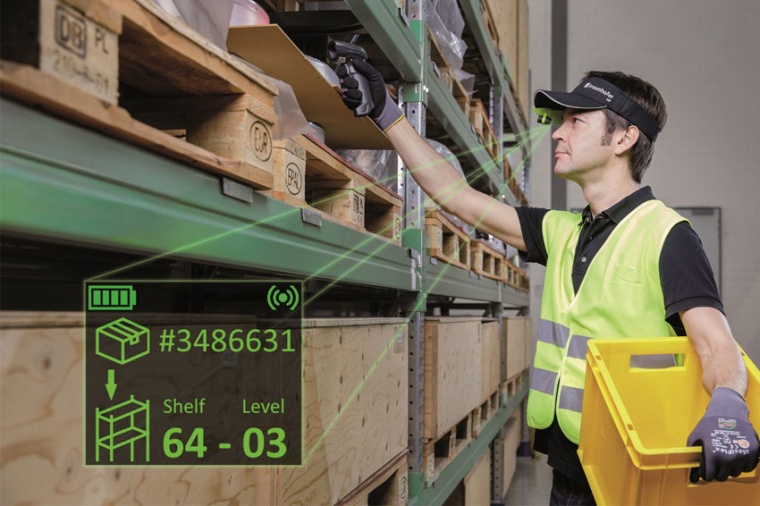
There is rapid development in the market for the microdisplays used in augmented reality (AR), virtual reality (VR) and mixed reality (MR) applications – often collectively referred to as extended reality (XR) – and this will be an important growth market of the future. The integration of OLED and µLED frontplane technologies in CMOS backplanes is not only the key to success in this sector but also the technological basis for near-to-eye visualization of information. IPMS and FEP have now decided, in consultation with the Fraunhofer-Gesellschaft, to integrate the Microdisplays and Sensors business unit into Fraunhofer IPMS. Their goal is to leverage synergies in the area of infrastructure, pool expertise and establish a unique profile for both institutes. IPMS has long been one of the leading institutes in microelectronics and microsystems engineering.
Over the past ten years, the Microdisplays and Sensors business unit has developed into a globally successful and established player under the umbrella of Fraunhofer FEP. At the current stage of development, the transfer to an institute specialized in microelectronics offers suitable conditions to further develop the business unit. This will also allow Fraunhofer FEP, as a process-oriented institute, to focus even more on its expertise in electron beam and plasma technology. This transfer provides technological solutions for the growing demand in the fields of energy, sustainability, life sciences and environmental technologies for industry and society — now and in the future.
“By integrating the Fraunhofer FEP Microdisplays and Sensors business unit into Fraunhofer IPMS, we are pooling our expertise and ensuring the best possible use of our infrastructure. This will also increase our chances to win projects with the Microelectronics group. The transfer is a good example of the strategic development of a research field and the leveraging of synergies across institutes,” says Prof Holger Hanselka, president of the Fraunhofer-Gesellschaft. “This will strengthen the research field and pave the way for new technological capabilities in the field of microdisplays by leveraging the synergies of the existing microelectronics infrastructure. The close relationship of the institutes at the Dresden site will ensure seamless and continuous advancement in this field. My special thanks go to all those involved for their contributions.”
Harald Schenk, director of Fraunhofer IPMS, added: “In the future, Fraunhofer IPMS will increase its activities in this area and focus more on the heterogeneous integration of various chiplet technologies in conjunction with CMOS microelectronics. This future-oriented technology includes the integration of organic semiconductors (e.g., OLEDs) and novel emitter technologies (e.g., µLEDs), which will open up new avenues in micro/optoelectronics and microsystems engineering.”
Elizabeth von Hauff, director of Fraunhofer FEP, said: “The Microdisplays and Sensors business unit has played a significant role in Fraunhofer FEP’s dynamic development. We are proud of this and would like to thank our employees and managers for their dedication. Transferring to the IPMS will open up additional development potential for the business unit and enable Fraunhofer FEP to focus on strategic topics in the field of electron beam and plasma technologies.”
Company
Fraunhofer-Institut für Organische Elektronik, Elektronenstrahl- und Plasmatechnik FEPWinterbergstraße 28
01277 Dresden
Germany

most read
Vision 2026 Breaks Exhibitor Record
About 500 exhibiting companies—about two-thirds of which are from abroad and about 30 percent of which are first-time exhibitors—are showcasing their products at the trade show.

ZVEI Calls for Swift Protection of Critical Power Infrastructure
The association has issued a statement in response to the recent attempted attacks on substations in Brandenburg and North Rhine-Westphalia and warns of the consequences for Germany's energy security.

Siemens Consolidates Its Automation Business into a New Unit Called Automation
Rainer Brehm, who previously served as COO of the automation business and CTO of Digital Industries, was appointed president of the new unit.

IMTS 2026: America's Manufacturing Sector Focuses on Growth and Technology
The largest manufacturing trade show in the Western Hemisphere is bringing together 1,788 exhibitors this year, including about 400 companies participating for the first time.

Solid-State Transformers for AI Data Centers
As part of a strategic partnership, Siemens and Reinhausen are developing a solid-state transformer for AI data centers with an 800-volt DC system.