Photo

Release 4 of the EMVA Standard 1288 for Adequate Characterization of Modern Image Sensors and Cameras

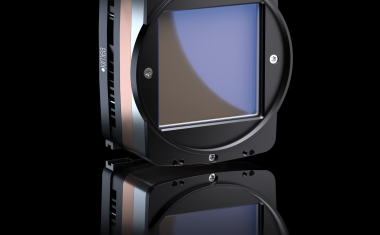
The EMVA Standard 1288 for objective characterization of industrial cameras, which is successfully used worldwide, has a successor. The new Release 4.0 takes into account the rapid development of camera and image sensor technology. The release candidate was published on March 16, 2021 to come into effect three month later on June 16, 2021. A new module ‘Release 4.0 General’ has been added to characterize non-linear cameras or cameras with unknown pre-processing.

Photo

Augmented Reality in Industry - Status, Development, Possibilities

A few years ago it was still science fiction, today technology is science fact. What inspires children and adults alike as a gimmick on the mobile phone and the pad, but also has great advantages in production and logistics. In this lecture you will find out what these are, how they can be implemented and what is already being used in practice. The Webinar is in German language.

Photo

Micro glass welding with millimeter-long filaments

The welding of glass with ultrashort-pulsed lasers (USP) is usually conducted with microscope objectives. Their short working distance limits the thickness of the work piece, the usable laser power and the feed rate of the process. To increase the possible dimensions of the welding partners and the process speed to industrial levels, a research team from Jena presents USP welding with a galvoscanner and a common F-theta lens. In a new article, they discuss differences between the well-known breakdown regime and the filamentation regime, and show tensile measurements.

Photo

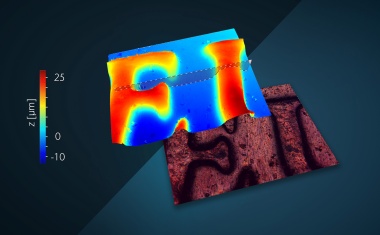
Easy 3D, non-contact surface profile measurements in air

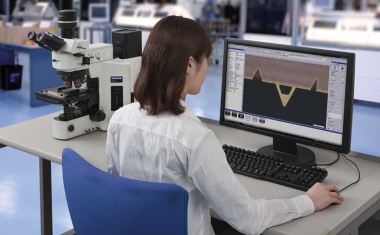
One of the factors that contributes to the recent considerable reduction in the size and high integration of electronics and other devices it is the miniaturization of the electronic components that they contain. In addition, new fine functional materials have been developed and widely used in industrial fields including the automobile, aviation, metal, and chemical industries. As a result, higher accuracy and resolving power are required for minute three-dimensional measurement of these components and materials. Although a variety of devices are available to satisfy these requirements, the confocal microscope is gathering attention as the device of choice for easy three-dimensional, non-contact surface profile measurements in air.

Photo

Can blue LEDs improve hygiene in clinics and public buildings?

Disinfection processes are of particular interest due to growing concerns over illnesses caused by microorganisms and the persistent problem of healthcare acquired infections. Additionally, because of the rise of antibiotic resistant bacteria, the investigation of novel non-antibiotic approaches for the prevention of infectious diseases has become highly topical. Blue light disinfection is such an approach and light-emitting diodes (LEDs) with an emission maximum in the range of 405-nm wavelength represent an attractive light source for this.

Photo

The Evolution of Time-of-Flight Sensors

Time-of-flight sensors have evolved significantly, and recent advances have both increased accuracy and reduced cost to the point where they are now suitable for widespread industrial use. Numerous recent innovations are also expanding the functionalities of these 3D sensors.

Photo

The winners of the inspect award 2021

The winners of the inspect award have been announced! A jury consisting of Anne Wendel, machine vision specialist in the Robotics + Automation Association at VDMA, Thomas Lübkemeier, General Secretary of EMVA, Prof. Dr.-Ing. Michael Heizmann, Professor at the Karlsruhe Institute of Technology (KIT) and Dr. Nick Leithold, until recently a cluster manager at Spectronet, as well as the readers of inspect and inspect online have decided.

Photo

Imaging Inside Out: SWIR for Apples

The food industry is changing. While it is still too early to measure the true impacts of COVID-19 on global trade and consumption, many other factors are driving changes to food production, particularly climate change and population growth. After all, it is vision technology that supports miscellaneous improvements: for example, it helps to ­deliver better apples.
1229 more articles

inspect America

New issue of inspect America available now!

New issue of inspect America available now!

Whats new in the vision market in the United States? The new issue of inspect America gives the answer.