Best Starting Point for Visual Intelligence
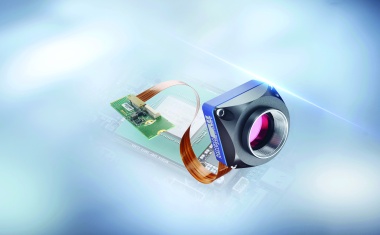
While the topic of embedded vision is not new, new opportunities are emerging with hardware developments. The following article provides an overview.

While the topic of embedded vision is not new, new opportunities are emerging with hardware developments. The following article provides an overview.

A new and promising technique for industrial applications is the use of near and short wavelength infrared light (NIR and Swir) to obtain information that is not visible to the human eye. In many cases, the information acquired at these wavelengths complements data from the visible spectrum (350 to 750 nm). This article defines that NIR wavelengths are in the range of 750 to 900 nm and Swir wavelengths are in the range of 900 to 2,500 nm.

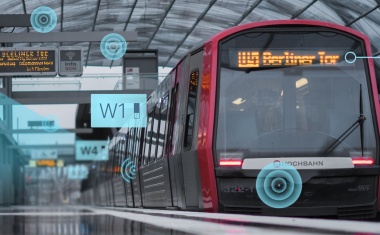
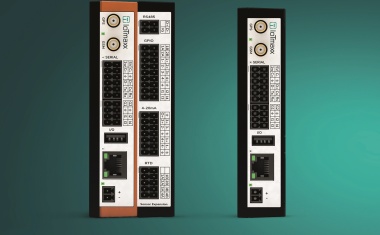
Costs and effort for digitization are high if analog systems for signal data processing in traffic applications, logistics and monitoring are to be replaced. Retrofit solutions that expand analog systems without having to replace the entire infrastructure provide a remedy.

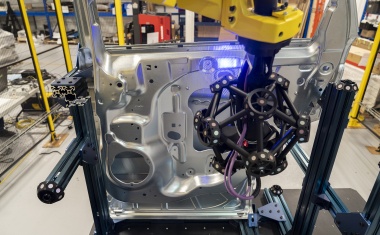
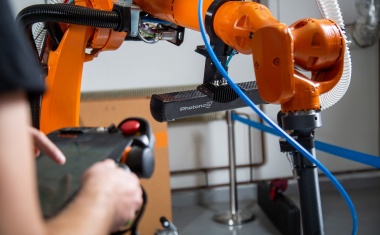
Despite artificial intelligence, automation and additive manufacturing, inspection systems remain essential to industrial production. What is changing above all are the components. Quality assurance must therefore transform, for example in the direction of robot-assisted automatic 3D measurement systems.

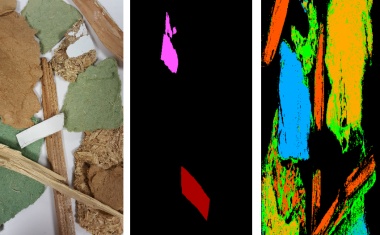
Hyperspectral imaging (HSI) is an integral part of quality control. Recently, hyperspectral cameras have also been used for the efficient reprocessing of construction timber.

The constantly increasing demand for bandwidth is leading to ever shorter communication technology cycles. The service life of capital goods in plant engineering thus sometimes significantly exceeds the availability of the selected data connection. The circuit-switched data service CSD is an example of this development. By the end of 2022, the existing communication solution must be replaced. A CSD over IP gateway allows plants communicating via CSD to continue using them with little effort instead of replacing them.

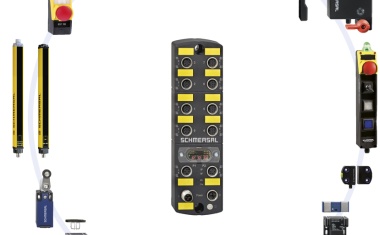
Digitalization has long since arrived in the packaging industry as well: Powerful control systems have taken the place of relay-based hardware and modern safety concepts are being implemented which, while providing the best possible protection, neither hinder processes nor encourage operators to tamper with them.

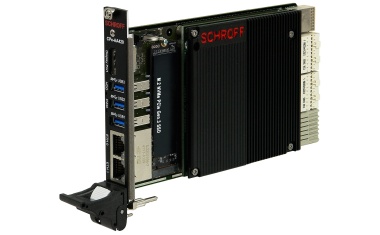
In the PXI Express housing, it's all about making the right use of the limited space. Together with an IPC partner, a housing manufacturer has now developed controller cards that are particularly narrow.

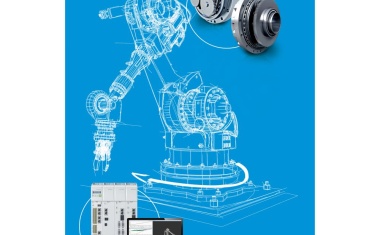
Machine tools still set the tone in terms of precision. But robots could soon challenge them for this top position in some areas of application. How? Answers are provided by the cooperation between the cycloidal gearbox specialist Nabtesco and the robot control expert Keba.

The eSIM (embedded SIM) is more than just a miniature version of the classic SIM card: with eUICC technology, it is possible to change network providers and tariffs at the click of a mouse. A closer look shows that networked companies cannot get around eSIMs.

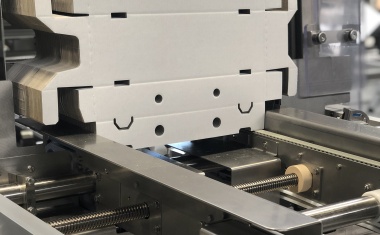
The Econo-Pak closing machines process filled folding boxes made of cardboard or corrugated board. The folding boxes are filled with food and non-food products beforehand and then closed with hot glue or air. The stable and uninterrupted throughput of the folding boxes is ensured by several upper rotors driven by AC housing motors.

The Pilot AOI system software is the interface for operating systems for automatic optical 3D inspection (3D AOI) and solder paste inspection (SPI) for electronics manufacturing. With version 6.7, users receive a comprehensive update that greatly shortens programming processes.

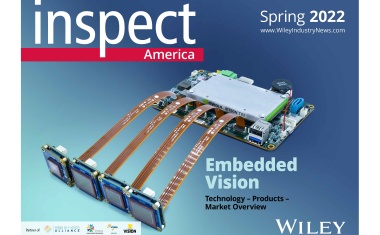
The first issue of inspect America is out and is all about embedded vision and is published on the occasion of the Embedded Vision Summit. You can expect a market report, an interview with the President of the Edge AI and Vision Alliance, Jeff Bier, and innovative products.
Since 2012, the Embedded Vision Summit has been the leading conference and trade fair for practical computer vision and AI applications in machine vision. This year’s conference, which will again be held in person in Santa Clara, California, boasts 55 exhibitors and 100 presenters. More than 1,000 machine vision experts are expected to attend.

Traditionally, 2D technology was the prevalent approach in the automation of the industrial sector. This has changed with the increasing complexity of applications that need to be automated, and 2D machine vision has gradually been pushed aside by 3D machine vision.

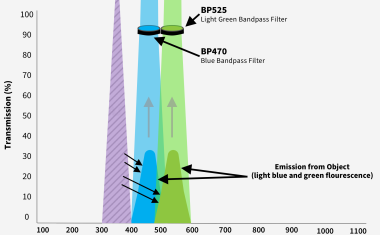
Railroad ties are mainly made of wood. In the production process fluorescent paint helps to determine the wood’s sap side orientation. A combination of red and green bandpass filters from MidOpt ensures that there is sufficient contrast between the fluorescent paint marker and the steel plates that are used to strengthen the wood.

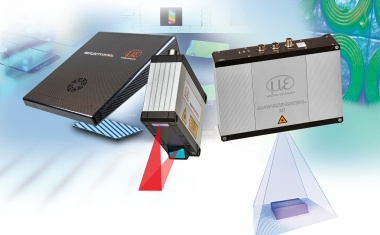
3D sensors for high-resolution geometry and surface measurements detect smallest deviations and measure most precisely.

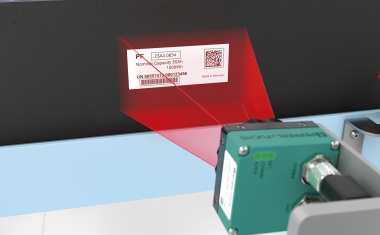
Using artificial intelligence can be very worthwhile when it comes to identifying the bar codes on goods. Interfering factors can be identified quickly and easily both during commissioning of a system and during operation.

Retrofitting lines in the press industry with vision technology avoids replacements and helps to keep up with the peers.

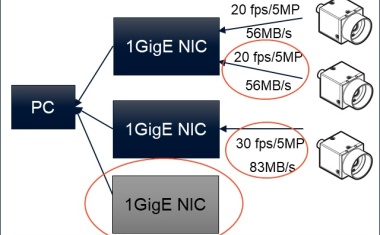
When getting the most amount of detail from a moving target is critical, system developers are constantly looking for ways to increase framerates without compromising on image quality, ideally at minimal or no extra cost.

Until now, users had to consider numerous aspects when choosing a level sensor: Frequency, media properties, environmental conditions, temperature range, process connection – to name just a selection. There was always a risk of choosing the wrong sensor. A new radar sensor now aims to remedy the situation by making it suitable for all applications.

Perfect timing: As Ethernet APL technology is being launched, users in the chemical industry are also eager to tackle the subject of safety. They’ve looked to the automotive industry, which has relied on the black-channel principle with Profisafe for many years.

Industry 4.0, connectivity and networking are also hot topics in machine safety. From the user’s perspective, there are a number of concepts – each slightly different, but all sharing one thing in common – their use can boost productivity, transparency and flexibility in production.

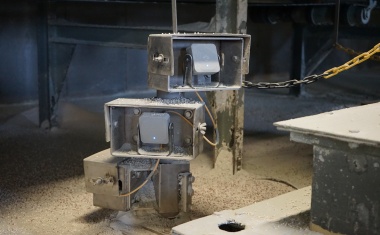
The challenge for any application is a safety concept that you scarcely notice. Particularly when there is poor visibility. So, at EuroChem in Antwerp, the gigantic conveyor with multiple discharge points, which is the central hub for storing and loading synthetic fertiliser, is now monitored using modern, safe radar technology.

Krones produces systems and machines for making, filling and packaging beverages and liquid food. With the development of edge rollers made of tribo-polymers, Krones achieved its goal to improve its system speed.

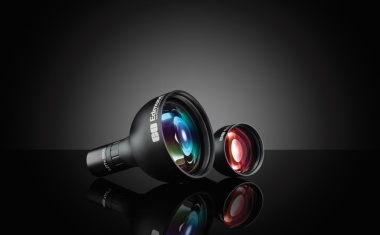
How do telecentric lenses work? And how exactly do they differ from fixed focal length lenses? This article introduces the peculiarities and explains why telecentric models are predominantly used in optical metrology.

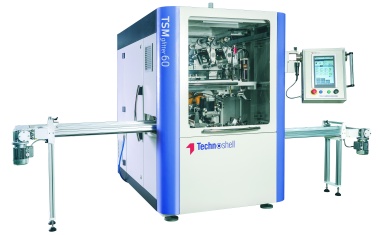
A hot foil stamping machine was taken to the next level by increasing output and mastering accuracy challenges. This became possible by integrating machine vision, PLC and HMI systems for optimum synchronization.

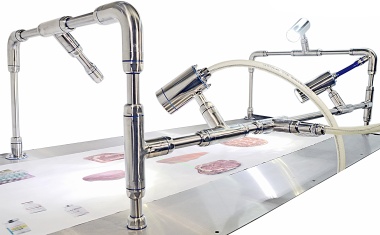
The world’s first complete, fully hygienic mounting system for imaging components combines a stainless-steel frame design with hygienic camera enclosures.

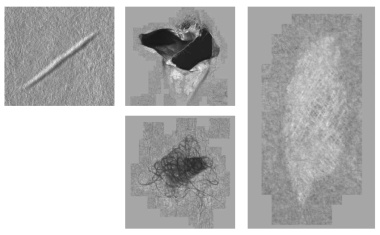
A special type of synthetic fiber, glass fiber is also known as fiber glass, and is a material consisting of numerous, extremely fine fibers of glass. Its growing use in nonwoven applications has increased the need for accurate, automated inspection.

Built for extreme environments, IP69K certified lights are specifically engineered to withstand everything from prolonged liquid immersion to high-pressure steam cleaning and corrosive washdown solutions.

Instrument Systems’ Drs Frank Münchow and Karthik Iyer explain in an upcoming PhotonicsViews article how to minimize the error budget of a VCSEL test system and provide highly accurate measured values for the eye safety of the laser source.

In a two-part tutorial in PhotonicsViews 1 and 2/2022, Joya Team share their experience of more than two decades with the professional community.

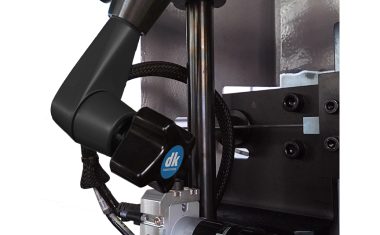
A cobot in combination with a 3D profile sensor and machine vision software has succeeded in saving 15 percent of production costs by automating the handling of luxury Italian porcelain teacups. This success is prompting the companies involved to consider further applications, for example in the food industry.

The 20th EMVA Business Conference kicks off in Brussels on May 12. At the top of the agenda is networking within the European machine vision industry.

CT systems UX20 and UX50 combined both state-of-the-art technology and the results of their open ears for customer requirements. As a result, the system is not only highly functional but also exceptionally user-friendly.