

Ein Sensor für innovative Auto-Cockpits
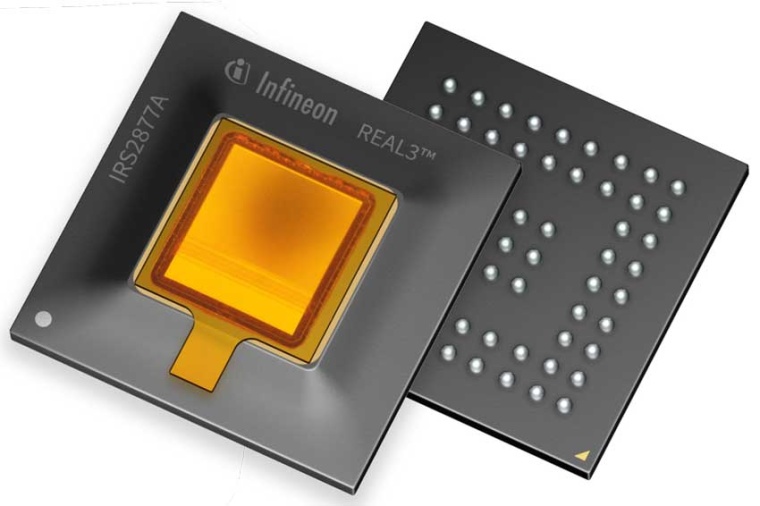
In Zusammenarbeit mit dem 3D-Time-of-Flight-Systemspezialisten PMD Technologies hat Infineon Technologies AG die zweite Generation des REAL3 Bildsensors für Automotive-Anwendungen entwickelt – einen ISO26262-konformen hochauflösenden 3D-Bildsensor.
Innovative car cockpits, seamless connectivity with new services and improved passive safety: 3D depth sensors play a key role in monitoring systems in the vehicle cabin. They are essential to meet regulations as well as NCAP ratings and to realize the vision of the driver becoming a passenger. “Leveraging our leadership in 3D sensors for consumer applications, we are now offering high resolution with a tiny image circle to the automotive world. This enables cars with functions from the consumer world, while maintaining automotive standards and even improving passive safety,” said Christian Herzum, vice president 3D sensing at Infineon. “For instance, reliable and secure facial authentication allows seamless connectivity for any type of service that requires authentication such as payment, battery charging or accessing private data.”
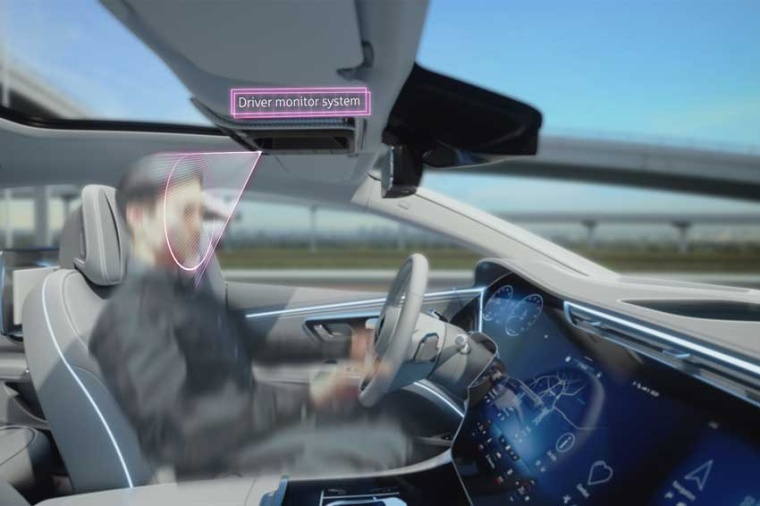
In addition, the same camera meets all requirements for driver monitoring to detect driver distraction and fatigue. This enables the offering of a driver monitoring system with secure 3D facial recognition using only one ToF camera.
“From the start we were focussed on improving the robustness of the underlying pmd-based ToF Technology against external influences such as sunlight or other disturbing light sources. For this reason, the new imager shows excellent and cutting edge performance even under harsh conditions”, said Bernd Buxbaum, CEO PMD Technologies.
The sensor comes in a 9 × 9 mm² plastic BGA package and offers a VGA system resolution of 640 × 480 pixels with a tiny image circle of 4 mm. This allows lens sizes similar to those known from smartphones, but now also for automotive applications. The high resolution of the REAL3 sensor also makes it suitable for camera applications with a wide field of view, such as complete front-row occupant monitoring systems. The resulting 3D body models enable accurate estimates of occupant size and weight, as well as highly precise passenger and seat position data, which is key information for intelligent airbag deployment and restraint systems. In addition to its small size, the single-chip solution is qualified to AEC-Q100 Grade 2 and is the first of its kind being developed according to the ISO26262 (ASIL-B) standard.
Besides safety critical applications, the 3D data allows for comfort features such as gesture control or intuitive interior lighting that follows passengers' movements. Additionally, the imager might be used in environmental perception scenarios as a flash lidar in the automotive space and – based on the safety conformity – it is also an ideal candidate for adjacent applications in mobile robotics, drones and other autonomous use cases in general where reliability and safety is a must to protect operators.
Anbieter
PMD Technologies GmbHAm Eichenhang 50
57076 Siegen
Deutschland


Meist gelesen

Sick steigert Umsatz 2025
Das Unternehmen hat im Geschäftsjahr 2025 seinen Umsatz auf 1,85 Milliarden Euro erhöht, ein Plus von 6,5 Prozent gegenüber dem Vorjahr.

Europäische Bildverarbeitung erwartet 2026 leichte Erholung und Wachstum
Laut VDMA-Fachabteilung Machine Vision wird ein Umsatzplus von rund 3 Prozent erwartet, nachdem 2025 noch ein Rückgang von 2 Prozent verzeichnet wurde.
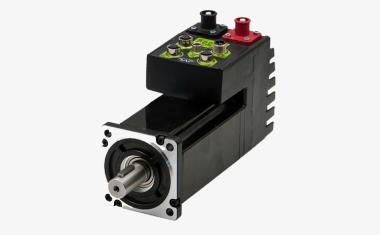
JVL erweitert Portfolio integrierter Motoren für Industrieautomation
Das Unternehmen stellt mehrere Neuerungen im Bereich integrierter Antriebstechnik vor
Schaeffler bündelt Defence- und New-Space-Aktivitäten unter neuer CEO
Celia Pelaz übernimmt zum 1. Oktober 2026 die Position der CEO Defence & New Space bei Schaeffler und wird Vorsitzende der Geschäftsführung der Stech Defence GmbH.

Humanoide Robotik in der Industrie: Advanced Humanoid Forum 2027
Im Fokus stehen reale Use Cases, technische Validierung und die Integration in bestehende Produktions- und Arbeitsprozesse.