

CrayoNano and AquiSense sign commercial frame contract
The contract contains sales of UV-C LED components valued at about 4 million NOK over the next 12 months.
The frame contract offers additional opportunities to increase the value beyond the minimum amount. Over the past nine months, AquiSense has tested and validated the CrayoLED UV-C LEDs to ensure high-quality standards for use in water disinfection systems for point of entry and point of use products.


“We are humbled to be chosen as a UV-C LED supplier to one of the world’s largest system integrators in the water disinfection market,” said Jo Uthus, CEO of CrayoNano.
“We are very happy to welcome CrayoNano as a supplier as the collaboration allows AquiSense to substantially grow our business globally across market segments, including the industrial and consumer markets,” agrees Oliver Lawal, CEO of AquiSense.
Company
AquiSense Technologies4400 Olympic Blvd.
Erlanger, 41018 KY
US


most read
Solid-State Transformers for AI Data Centers
As part of a strategic partnership, Siemens and Reinhausen are developing a solid-state transformer for AI data centers with an 800-volt DC system.

European machine vision expects slight recovery and growth in 2026
According to the VDMA Machine Vision department, sales are expected to increase by around 3%, following a decline of 2% in 2025.
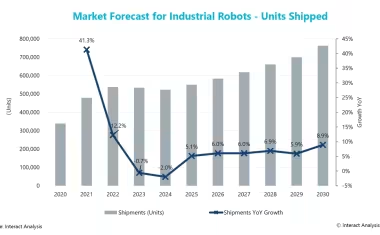
Forecast: Significant Growth in Industrial Robotics by 2030; Cobots Are Growing the Fastest
According to a recent analysis by Interact Analysis, global sales of industrial robots are expected to rise from about 550,000 units in 2025 to just over 760,000 units in 2030.

IMTS 2026: America's Manufacturing Sector Focuses on Growth and Technology
The largest manufacturing trade show in the Western Hemisphere is bringing together 1,788 exhibitors this year, including about 400 companies participating for the first time.
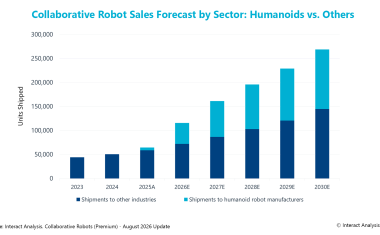
Humanoid robotics is driving demand for cobot arms and actuators
According to recent analyses, global production of humanoid robots exceeded the 20,000-unit mark in 2025 and is expected to more than triple in 2026.