

16 million euros for photonic quantum processors
Seven universities and research institutions as well as Vanguard Automation GmbH employ a measurement-based quantum computing approach in the BMBF project PhotonQ.
Quantum computers will one day be able to solve problems at high speed that cannot be handled by classical computer stems. However, in order for these computers to become practical, they must process a significantly higher number of qubits and have lower error rates. A research project led by Prof Stefanie Barz from the University of Stuttgart is now developing a photonic quantum processor for this purpose, which allows the realization of quantum algorithms with only a few qubits and, in the future, should enable rapid scaling to qubit numbers that are relevant for practical applications.
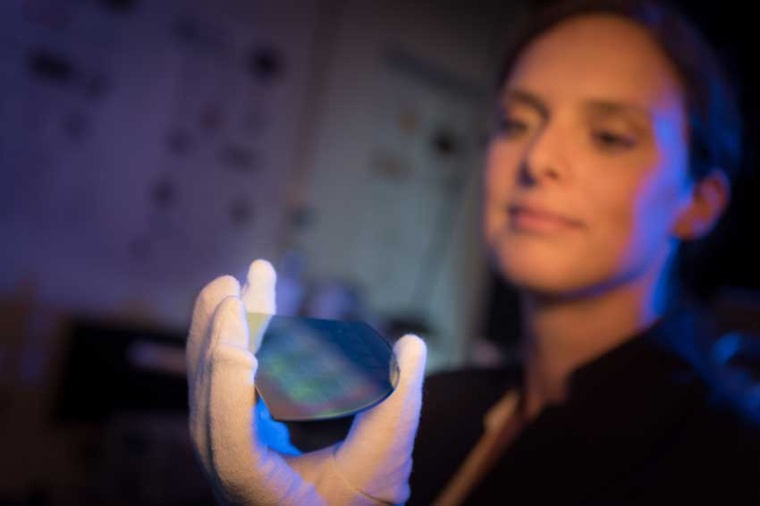
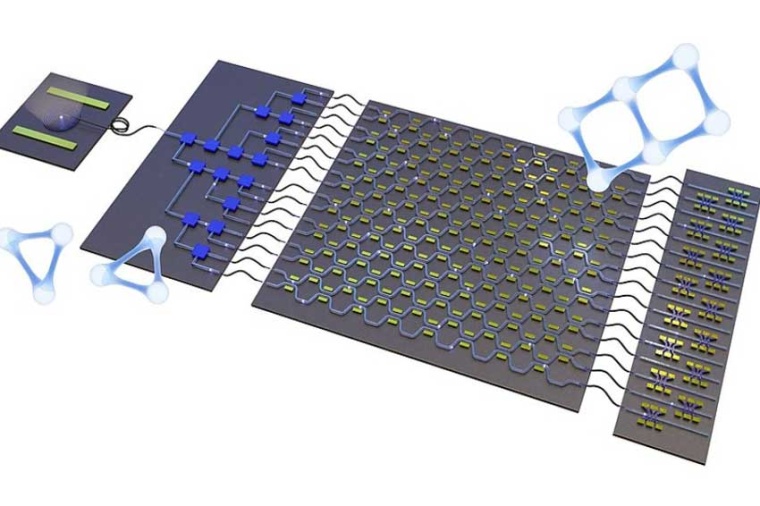
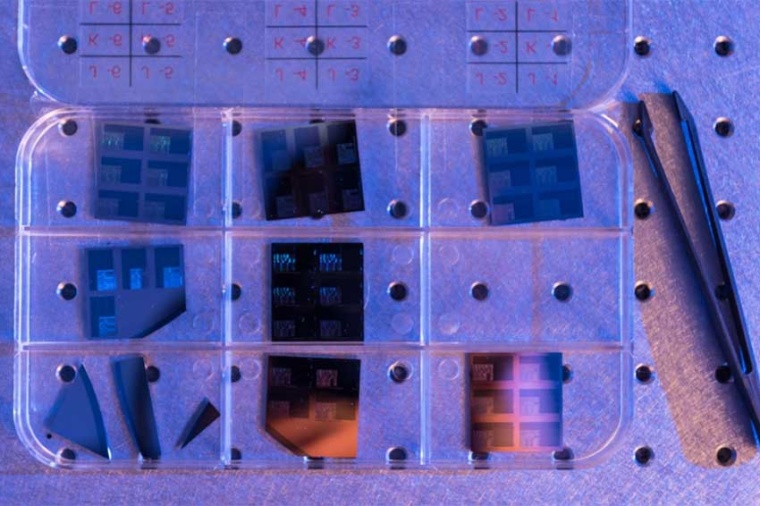
There are many different approaches to researching new, scalable quantum processors: atom and ion traps, superconductors, semiconductors or entangled photons. In PhotonQ, funded by the Federal Ministry of Education and Research (BMBF) with 16 million euros, the universities of Stuttgart, Würzburg, Mainz and Ulm, the Technical University of Munich, the Institute for Microelectronics Stuttgart and Vanguard Automation will develop a photonic quantum processor. The heart of the quantum processor is an integrated photonic chip.
The starting point for a measurement-based quantum processor is a highly entangled quantum state. Entanglement means that a measurement on one particle can change the state of another particle regardless of distance. To perform universal quantum computations, (adaptive) measurements are made on a large entangled state adapted to the computational problem at hand. “The challenge here is to produce and process such a state in a photonic system with high efficiency and quality. The development of integrated optical components and circuits plays a central role here. Very importantly, optical losses in the system must be kept as low as possible. At the same time, there must be a high level of efficiency in the generation and detection of photons. This requires the development of new or significantly improved components in all subsystems,” explains project coordinator Stefanie Barz from the Institute for Functional Matter and Quantum Technologies (⬈ FMQ) at the University of Stuttgart. Accordingly, deterministic photon sources, scalable silicon photonic circuits, better interconnection technology and novel single photon detectors will be realised in the ⬈ PhotonQ project.
The overall system of the quantum processor will be built at the University of Stuttgart. It will demonstrate quantum information processing with eight qubits and prove the fundamental suitability of the measurement-based principle for photonic quantum computing. Over the project period of four years (2022 – 2025), four generations of processors will be developed, which will increase in complexity. The partners are developing special hardware components or theory and software concepts for optimizing and characterizing the processor.
PhotonQ is already the second project at the University of Stuttgart funded under the BMBF’s ⬈ Quantum Processors and Technologies for Quantum Computers measure. Both projects underline the research strength of the University of Stuttgart in its profile area of quantum technology.
Company
Universität StuttgartKeplerstr. 7
70174 Stuttgart
Germany


most read

Solid-State Transformers for AI Data Centers
As part of a strategic partnership, Siemens and Reinhausen are developing a solid-state transformer for AI data centers with an 800-volt DC system.

Schaeffler bundles Defense and New Space activities under new CEO
Celia Pelaz takes over the position of CEO Defence & New Space at Schaeffler on October 1, 2026 and becomes Chairwoman of the Management Board of Stech Defence GmbH.
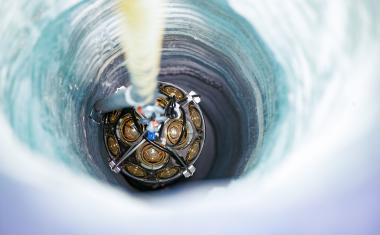
Icecube Neutrino Observatory: Hamamatsu Photonics Boosts Sensitivity with New Photodetectors
The detector array is installed in one cubic kilometer of clear Antarctic ice and detects Cherenkov light produced by neutrino interactions.
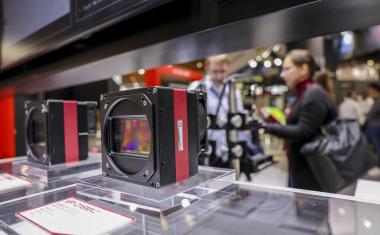
Vision 2026 Breaks Exhibitor Record
About 500 exhibiting companies—about two-thirds of which are from abroad and about 30 percent of which are first-time exhibitors—are showcasing their products at the trade show.

European machine vision expects slight recovery and growth in 2026
According to the VDMA Machine Vision department, sales are expected to increase by around 3%, following a decline of 2% in 2025.